
Here is the mistake almost everyone makes: dipping the rice side of a roll straight into the soy dish. The rice drinks the sauce, oversalts the bite and falls apart before it reaches your mouth. Get that one habit right and maki sushi stops being intimidating; because the rest is simpler than the menu makes it look.
What is Maki Sushi?
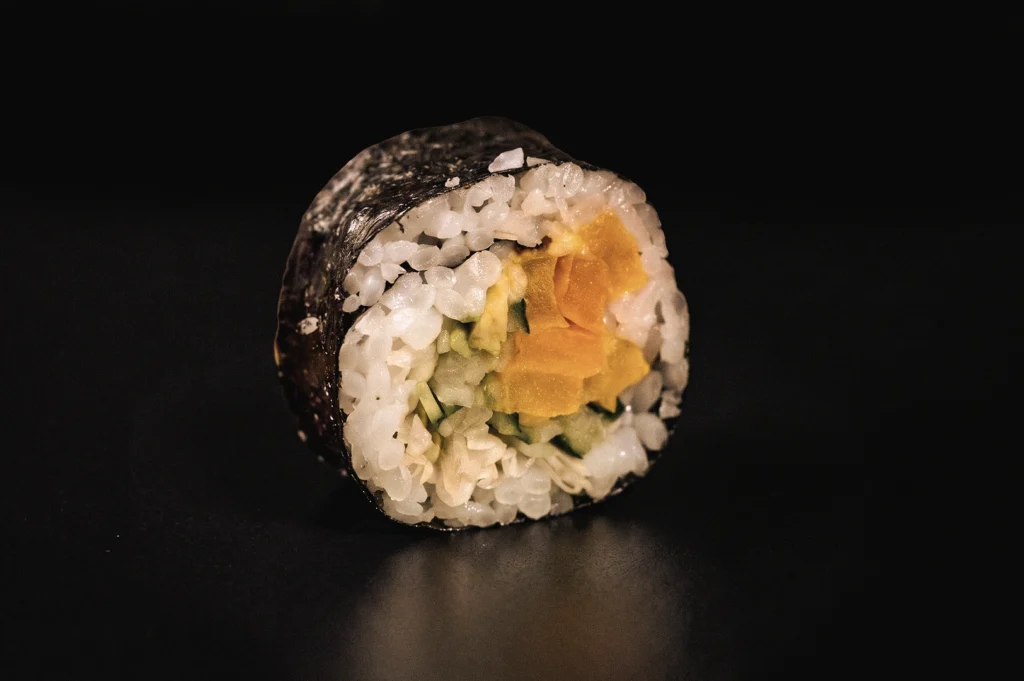
Maki means rolled sushi. The word comes from maku, “to roll or wrap”, and the full term is makizushi, sometimes called norimaki: vinegared rice and fillings rolled in nori and sliced into neat rounds.
In a traditional roll, the toasted nori sits on the outside. It does two jobs: (1) holds the whole thing together, and (2) adds a subtle oceanic savour you’d miss if it weren’t there. Some versions swap the nori for a thin omelette, soy paper, cucumber or shiso, but the nori-wrapped round is the one most people picture.
Where Maki Comes From: Nori, Edo and the Bamboo Mat
Nori sheets came first. Producers in early 18th-century Edo (today’s Tokyo) began making them using techniques borrowed from papermaking, pressing seaweed into thin, dryable sheets. Rolled sushi as we know it followed in the late 18th century, once those sheets were reliable enough to build on.
The tool that made it repeatable is the makisu, a bamboo mat. It gives the roller even pressure across the whole length, so the rice packs firm without crushing and the round holds its shape when the knife comes through. No mat, no clean roll.
How Maki is Made, from Makisu to the Final Cut
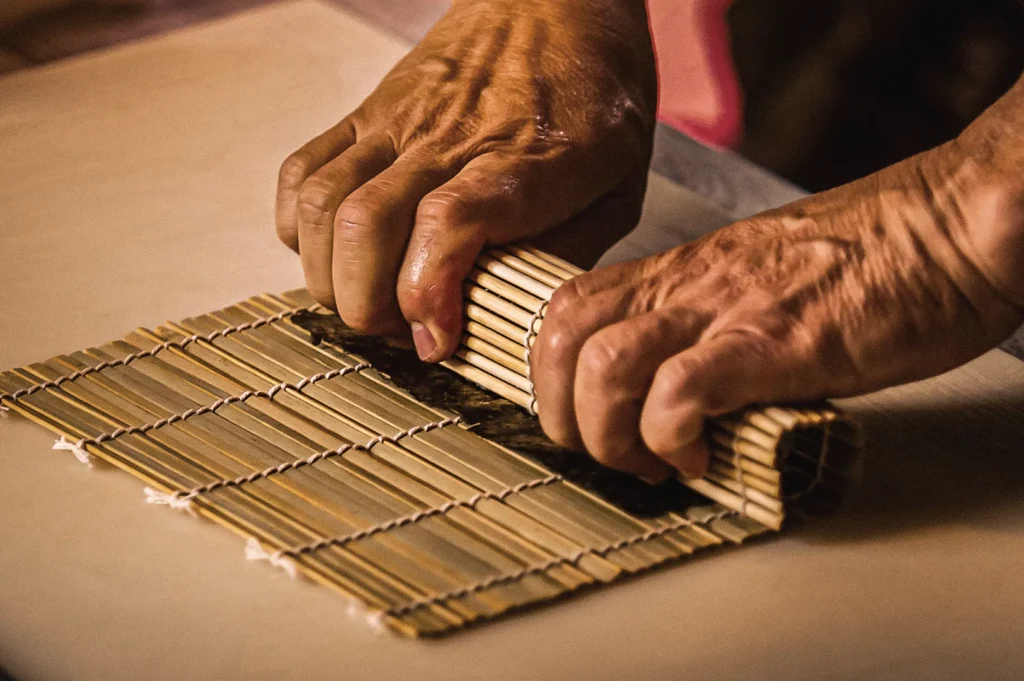
A roll is built in a set order, and the order is the craft. The nori goes shiny-side down on the mat, then a thin layer of rice is spread across it, leaving a clean border at the far edge so the roll can seal. Fillings are laid in a single line across the centre, then the whole thing is rolled away from you under even pressure.
The cut matters as much as the roll. A sharp knife, wiped wet between each pass, slices the log into six or eight pieces; hosomaki, the thin roll, is usually six. The pieces are plated cut-side up so you can see the spiral and the filling sitting dead centre. Sloppy cutting shows immediately.
The Main Types of Maki (and How They Compare)
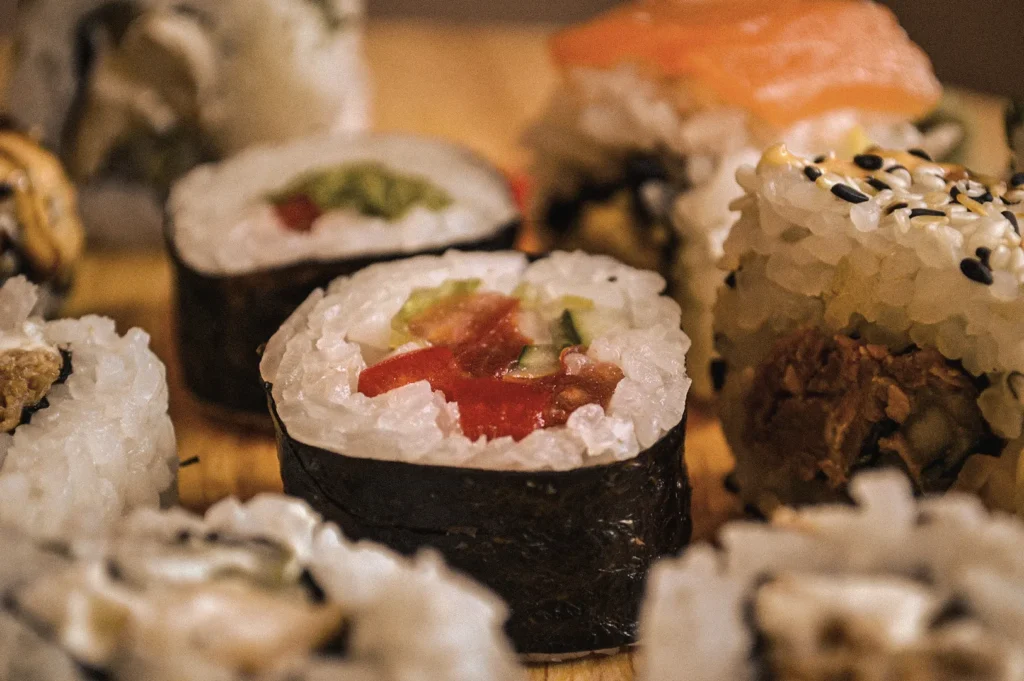
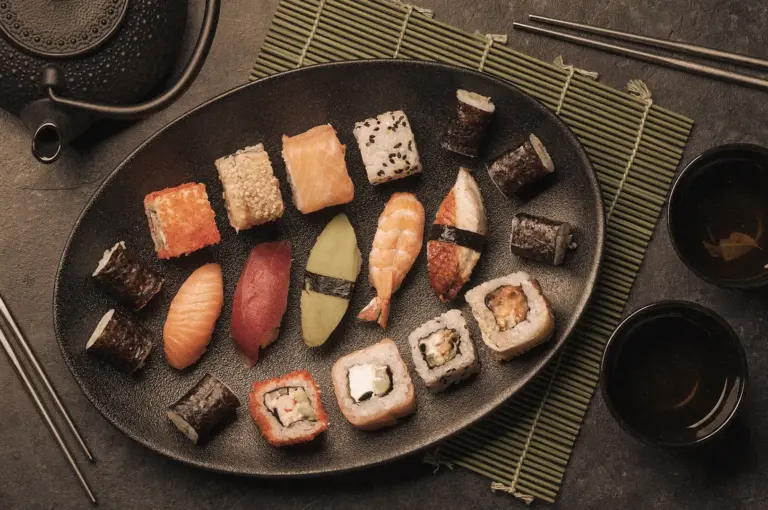
There are four rolls worth knowing, and once you can name them, any menu reads more easily. Hosomaki is the thin roll, about 2.5 cm across, built on a half-sheet of nori with a single filling and a deliberately thin rice layer (roughly 80 g) so the filling stays the star. Futomaki is the thick roll, 5–6 cm across, with two to five fillings chosen for complementary taste and colour; it often leans vegetarian and is eaten whole and uncut as ehomaki, a lucky roll, at the Setsubun festival.
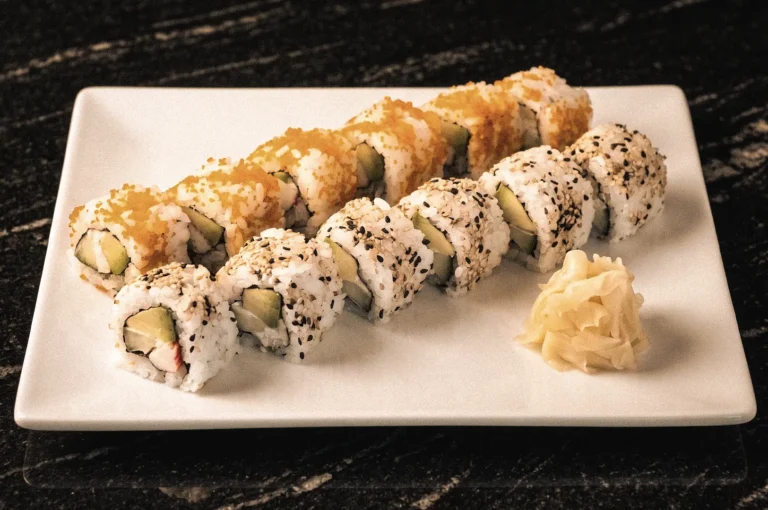
The other two are more recent or more casual in form. Uramaki, the inside-out roll with rice on the outside, is a North American invention from the 1960s–70s; the California roll being the famous example, though its exact origin is disputed. Temaki is a hand-rolled cone, left uncut, eaten straight away with your fingers before the nori goes soft.
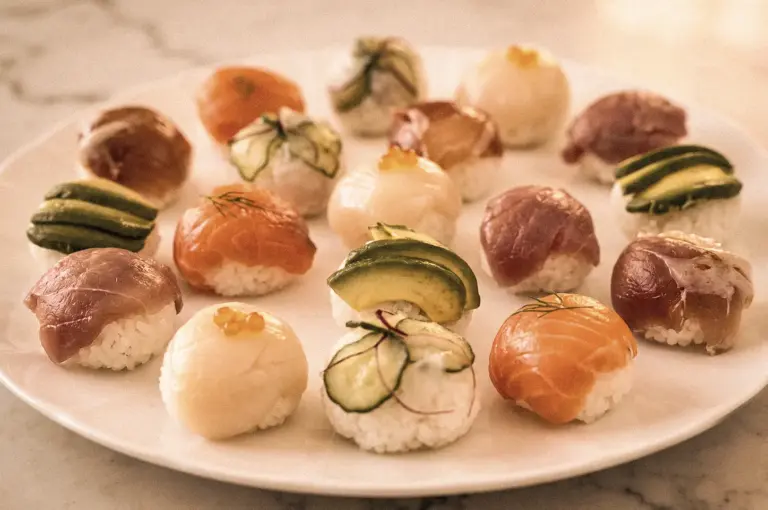
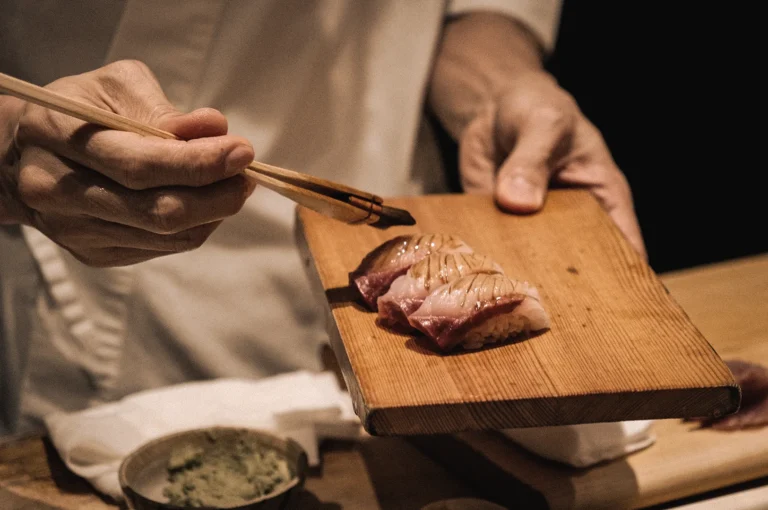
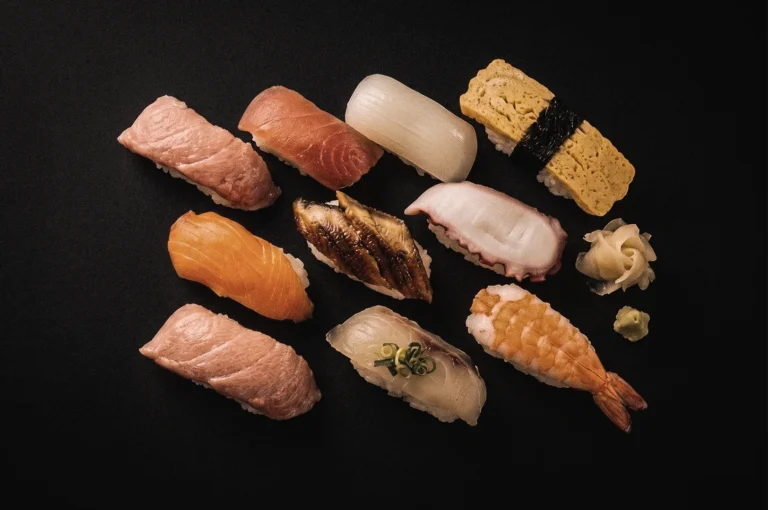
This is also where the family sorts itself out. In the maki vs nigiri question, maki is rice and filling rolled in nori and sliced, while nigiri is a hand-pressed mound of rice with fish laid on top: no roll. Sashimi isn’t in the running at all: it’s sliced fish with no rice, which means it isn’t technically sushi.
For the fillings, start with the classics. Tekkamaki is raw tuna, named for the tekkaba gambling dens where it was eaten one-handed; kappamaki is cucumber, named after the kappa water imp and used as a palate cleanser; kanpyomaki is dried gourd strips simmered sweet-savoury. Kanpyo is dried shavings of calabash gourd, over 90% of it grown in Tochigi Prefecture, rinsed, salt-rubbed, briefly boiled, then simmered in dashi with soy, mirin and sugar until tender and translucent; more work than most people realise, as our our guide to kanpyo explains. Negitoro, natto, shinko and umeshiso round out the roll call.
How to Eat Maki Like a Regular
Eat each piece in one bite where you can; two is fine for the larger rolls. When you dip, touch the nori or the filling edge to the soy sauce, not the exposed rice; that’s the mistake that undoes an otherwise good roll.
A few more habits mark you out as a regular. Fingers are perfectly acceptable for maki, a legacy of its street-food past. The ginger is a cleanser for between pieces, not a topping to stack on, and you never mix wasabi into the soy dish; the chef has already judged how much belongs in the roll.
Maki at Sushi To Sumi: Rolled to Order, Eaten in Seconds
Nori crispness is a clock, and it starts the moment hot vinegared rice touches the sheet. Steam begins softening the nori straight away; within minutes it turns leathery instead of shattering crisply when you bite. The only fix is speed.
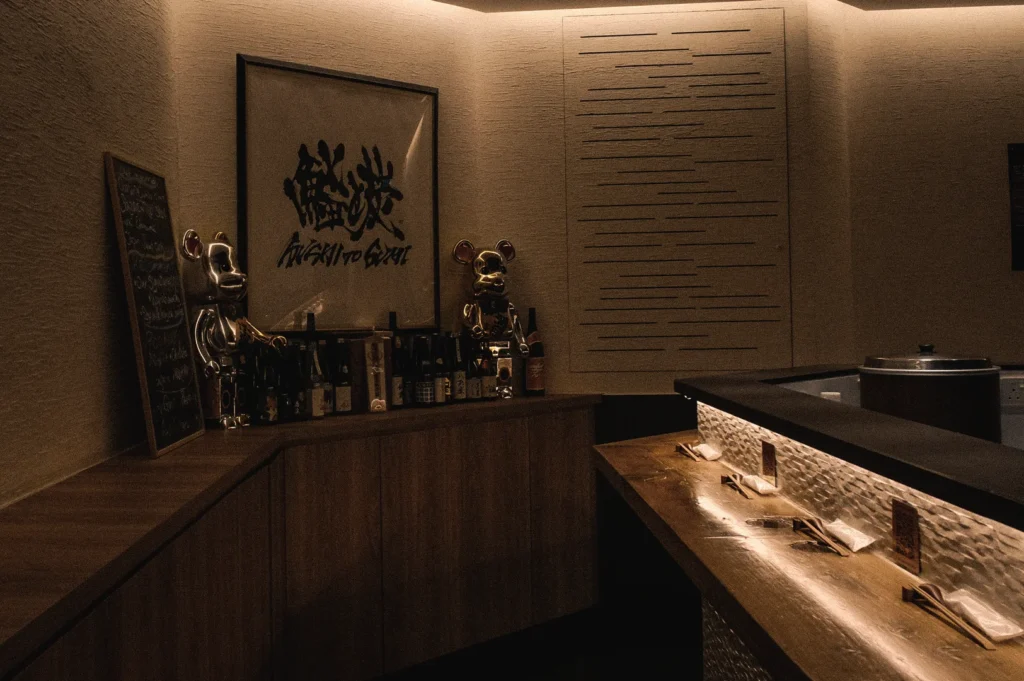
That’s why we roll maki to order and get it to you within seconds, so the first bite still crackles. Sushi to Sumi is a standing sushi bar and charcoal-grilled seafood counter, backed by Araya Shoten, a Japanese fishmonger with sourcing lines reaching beyond Tokyo’s Toyosu Market up to Hokkaido. For tekkamaki, the buyers pick tuna whose lean akami can be cut into strips of the right thickness, so one bite lands crisp nori, seasoned rice and clean tuna in balance.
The menu changes with the day’s catch, and lunch runs 30–45 minutes at around $108. We’re open 11:00–14:00 and 18:00–22:00, Monday to Saturday, if you’d like to plan your visit.
Maki Sushi Questions, Answered
Is maki sushi raw? Not necessarily. Plenty of classic maki contain no raw fish at all: kappamaki is cucumber, kanpyomaki is simmered gourd, and futomaki is often fully cooked or vegetarian. What makes it sushi is the vinegared rice, not the topping.
What is the difference between maki and nigiri? Maki is rice and filling rolled in nori and sliced into rounds. Nigiri is a hand-pressed mound of rice with a piece of fish laid over it: no roll, no nori wrap.
Is a California roll a maki? Yes, it’s a type of maki; specifically an uramaki, or inside-out roll, with the rice on the outside. It’s a North American creation rather than a traditional Japanese one, which surprises a lot of people, since in Japan the benchmark roll is the slim, single-ingredient hosomaki. Simplicity, not size, is the point.
If you’d rather taste the difference than read about it, we’re at 20 Cecil St, one floor up. Book a spot at the bar.