
Here is the thing people brace for and get wrong: they see a slab of mackerel on top of pressed rice and assume it is raw. It isn’t. Battera sushi is one of the most famous examples of pressed sushi in Japan, and its mackerel has been cured (salted, then soaked in vinegar) long before it reaches your plate. Once you know that, the whole dish stops being intimidating and starts making sense.
What is Battera Sushi?
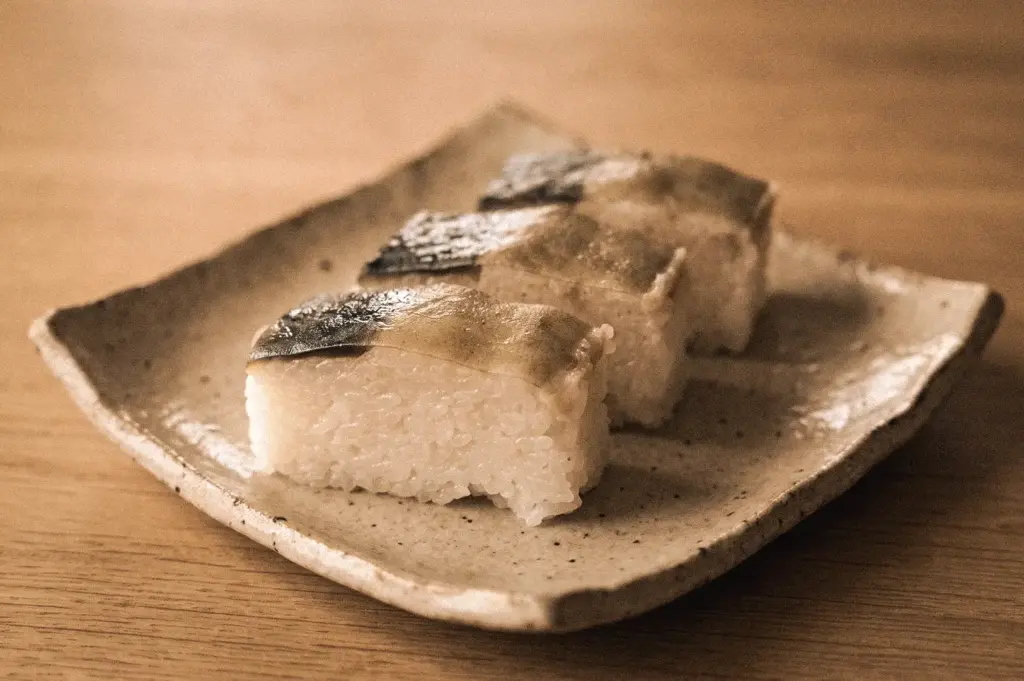
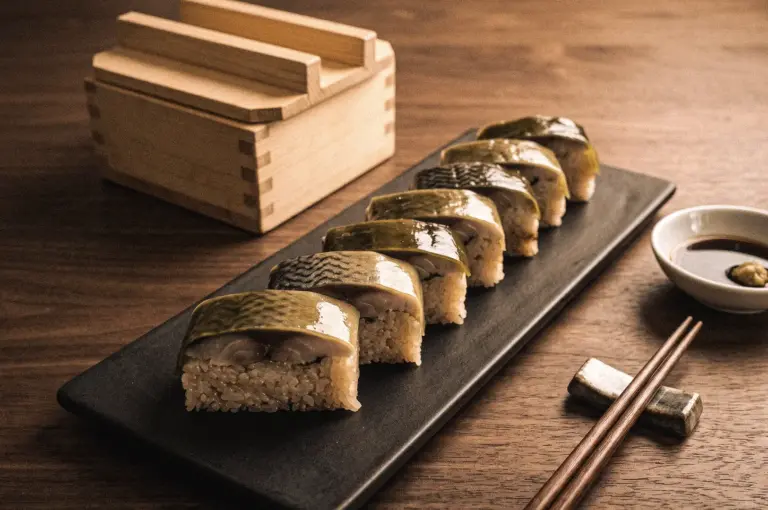
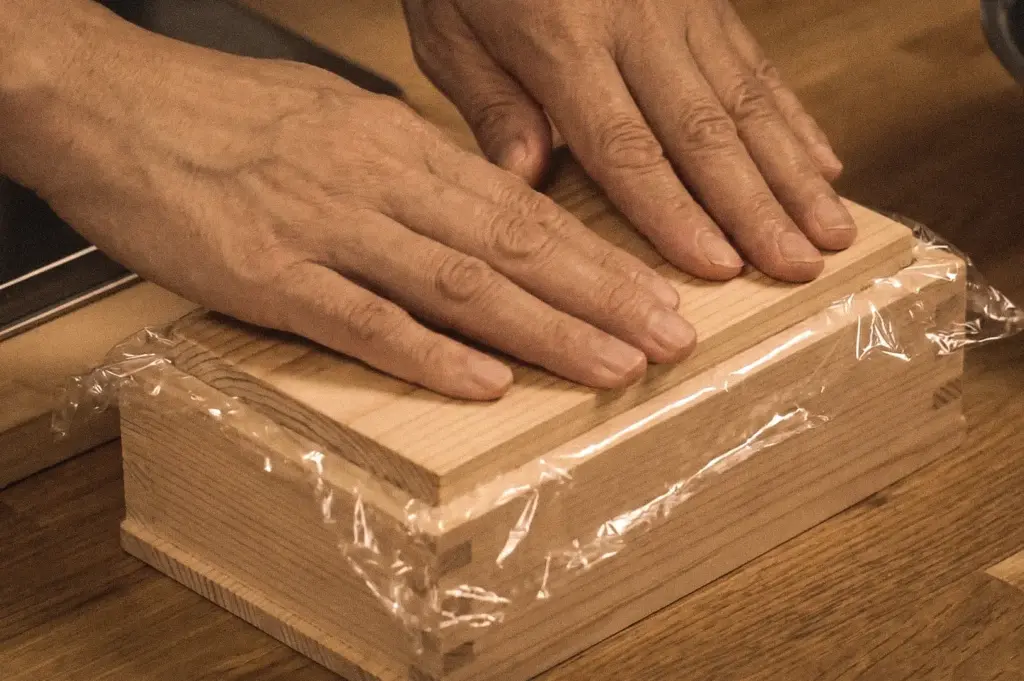
Battera is an Osaka style of oshizushi, or pressed sushi. Vinegar-cured mackerel (saba) is layered over vinegared rice, pressed firmly in a rectangular wooden mould called an oshizushi bako, then turned out and cut into six to eight tidy rectangles. In Osaka you will also hear it called hakozushi, “box sushi”, named for the pressing box itself.
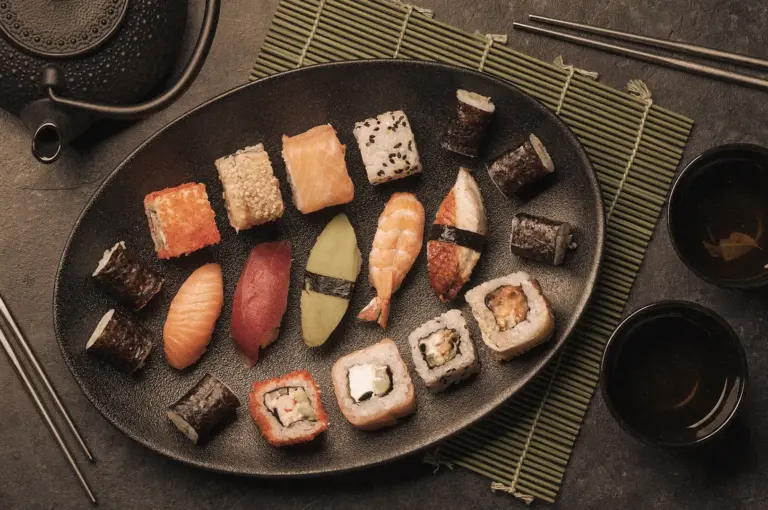
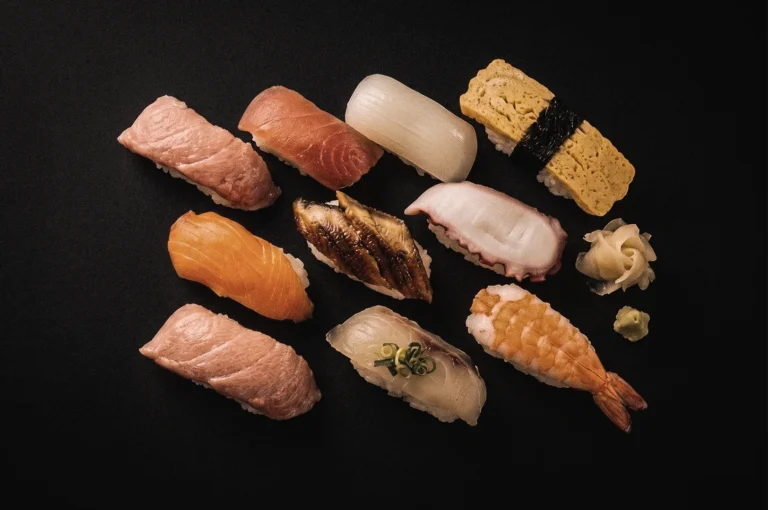
That mould is the whole difference. Nigiri is shaped one piece at a time by hand; battera is built as a single block and sliced. It comes out dense, square-edged and holding its shape — a very different creature from the loose, fragile piece you know from the counter.
Osaka, a Boat-Shaped Mould and a Portuguese Word: How Battera Got Its Name
The name is not Japanese at all. Battera comes from bateira, Portuguese for “small boat”, after the boat-shaped mould and the boat-like profile of the early sushi. Customers nicknamed it, and over time bateira drifted into battera.
The dish is credited to Tsunekichi Naka, founder of the Osaka restaurant Sushi Tsune, and said to date from the late 1880s to 1894. It was not mackerel at first. Sushi Tsune’s original pressed sushi used konoshiro, gizzard shad caught in Osaka Bay, but as konoshiro grew scarce and costly, mackerel took over; and the square box mould became the standard we know today.
How Battera is Made: Cure, Press, Rest
Everything begins with the cure, because mackerel spoils faster than most fish. The saba is prepared as shime saba: salted first to draw out moisture, then marinated in vinegar, which firms the flesh, preserves it and mellows its richness. This is not a shortcut. It is the reason battera exists at all.
Then comes the green sheet on top, and it is not garnish. Battera wears shiroita kombu, “white board kelp”: a thin sheet of kelp simmered in amazu, sweet vinegar, until it turns soft and a translucent jade green. It seasons the fish with umami, shields it from drying out, and is eaten with the sushi, never peeled off.
Fish and kelp are laid into the oshizushi bako, packed over the vinegared rice, and pressed firm. The block is unmoulded and cut into six to eight rectangles. Left to rest, the flavours meld: the cure, the sweet kombu and the seasoned rice settling into one thing.
How Battera is Eaten, and Where You Will Meet It
Reach for the soy sauce and you will usually be missing the point. The mackerel is already vinegar-cured and the sweet-vinegared kombu seasons every piece, so battera is eaten as-is, no dipping needed. If you want to understand soy sauce and how it should be used elsewhere on the sushi table, that is a separate lesson; battera simply does not ask for it.
That self-contained seasoning is also why battera travels so well. Pressing and curing let the flavours settle rather than fade, so you will find it across Osaka in supermarkets, convenience stores, bento boxes and souvenir counters. It is the classic takeaway sushi; made to be carried, eaten hours later, and none the worse for it.
Battera vs. Sabazushi: Osaka’s Square Against Kyoto’s Stick
The battera vs. sabazushi question trips people up, because both are cured mackerel sushi. They are siblings, not twins. Osaka’s battera is square-pressed in a box, the mackerel cut into thin slices of near-uniform thickness to minimise waste, and finished with that shiroita kombu sheet.
Kyoto’s sabazushi takes the opposite approach. It is bozushi, “stick sushi”: a rounded, stick-shaped roll built around a thick half-fillet, shaped to show off the fish rather than stretch it. It grew from salted mackerel carried overland from Wakasa to Kyoto along the old “mackerel road”. Same fish family, two regional answers: one thin-sliced and thrifty, one thick and proud.
Cure, Press, and Patience: What Battera Shares with the Sushi To Sumi Counter
Battera is really a dish about judgement. Cure timing follows the fish, not the clock; a good hand reads each mackerel’s fat content and the season, then adjusts the salt and vinegar hours to match. Too little and the flesh stays soft; too much and it turns chalky. That read is what separates a decent battera from a forgettable one.
The kombu tells the same story of craft over shortcut. Shiroita kombu is the core left after Sakai artisans hand-shave oboro kombu ribbons (shavings as fine as 0.01mm) from vinegar-softened Hokkaido ma-kombu, a skill leaning on Sakai’s 600-year blade tradition with only a handful of practitioners left. That Hokkaido kelp reached Osaka in the first place along the old Kombu Road, the trading route that made the dish possible.
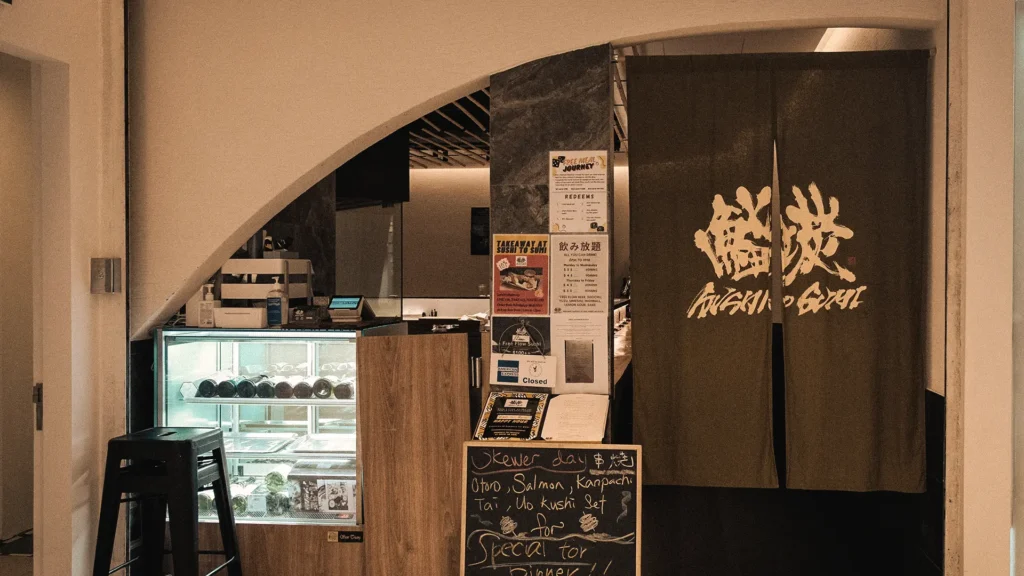
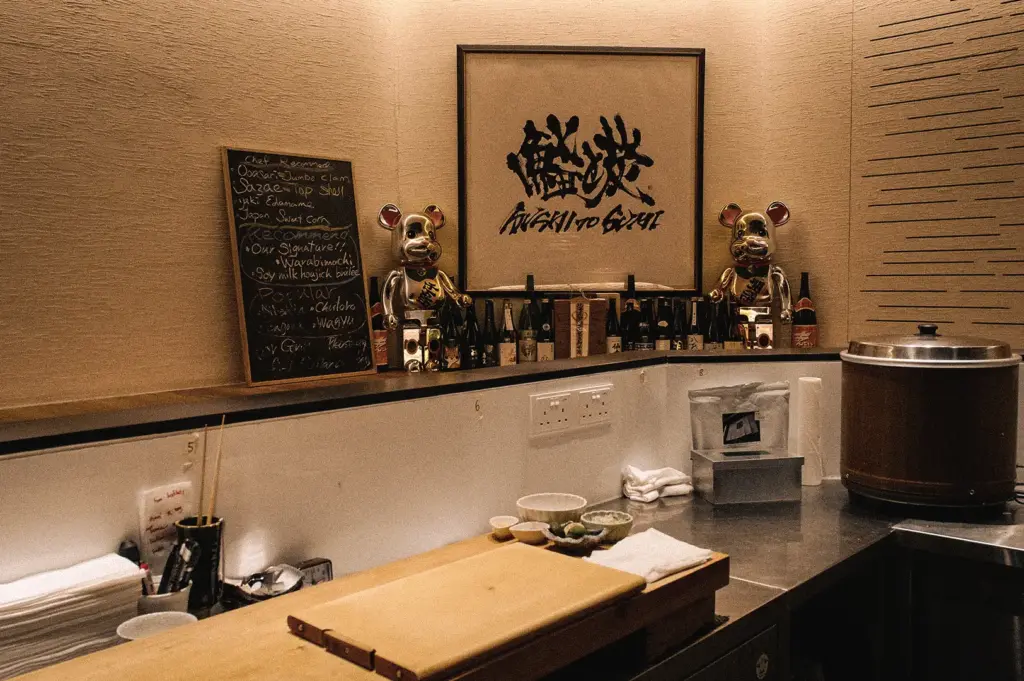
Sourcing plus judgement is exactly what a fishmonger-backed kitchen can speak to. Our sushi counter in Singapore is backed by Araya Shoten, with sourcing lines running beyond Tokyo’s Toyosu Market up to Hokkaido, so the fish and the kelp both come from a supply chain that knows its source. The zero-waste kitchen shares battera’s thrift (grilled kama, soup from the day’s bones, nothing thrown that can be used) and the binchotan charcoal handles the grilling side. The menu changes daily with the season and the market; lunch runs 30–45 minutes at around $108.
Common Questions About Battera
Why is it called battera sushi? The name comes from bateira, Portuguese for “small boat”, after the boat-shaped mould and the boat-like profile of the early sushi. Bateira drifted into battera over time.
Is battera sushi raw? No. The mackerel is always cured as shime saba (salted, then marinated in vinegar) a preservation craft developed precisely because mackerel degrades faster than other fish. Nothing about battera is simply raw.
Do you eat battera sushi with soy sauce? Usually not. The vinegar cure and the sweet-vinegared kombu already season each piece, so battera is meant to be eaten as-is; one reason it works so well as takeaway.
Battera sushi rewards a little knowledge: a cured mackerel pressed sushi where the kombu matters as much as the fish, and where soy sauce is beside the point.
If you’d rather taste the difference than read about it, we’re at 20 Cecil St, one floor up. Book a spot at the bar.