
The single biggest mistake with a hand roll is letting it sit. Order one, get distracted, come back two minutes later, and the crisp nori has turned to something closer to a chewy plaster. Temaki is built to be eaten the moment it lands in your hand, and once you know why, the whole thing makes sense.
What is Temaki?
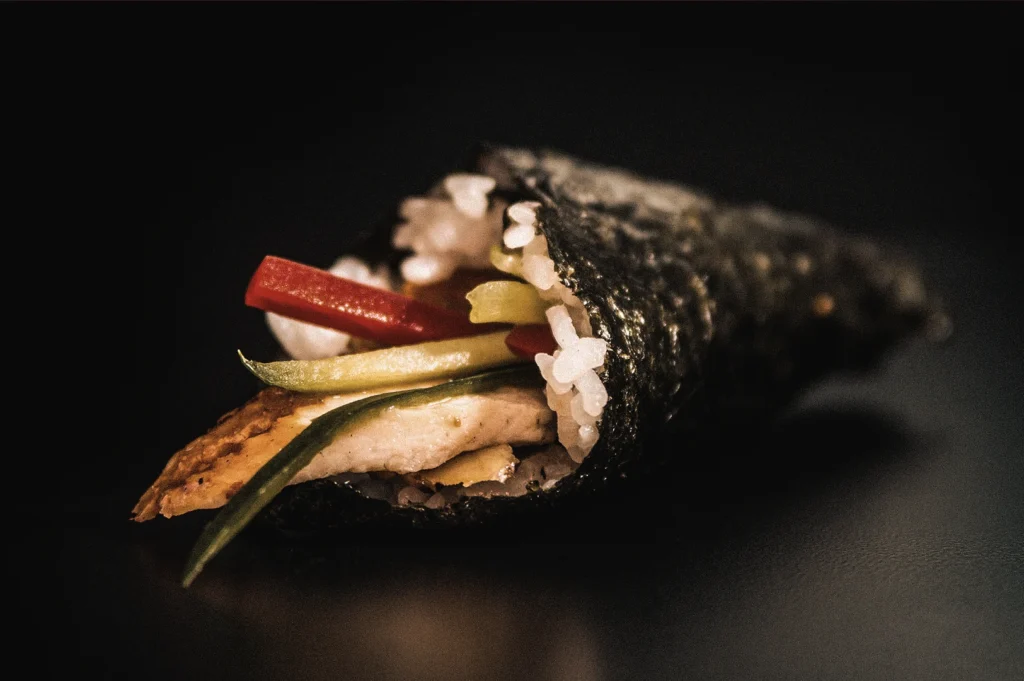
Temaki, or temakizushi, is written from te, “hand”, and maki, “to roll”, literally “hand roll”. It sits under the makizushi umbrella, the family of rolled sushi, but it breaks the family rules on shape. Rather than a tube sliced into rounds, temaki is shaped by hand into a cone and eaten whole, never cut.
That cone is the whole point. A sheet of nori, a bed of seasoned rice, a few strips of filling, and your hand. No plate strictly required, no chopsticks, no fuss.
A Modern Invention: Where Temaki Comes From
Here is the part that surprises people: the cone-shaped hand roll is not ancient. It was invented in 1971 by Tsukiji Tamazushi, when the shop opened its Ginza branch. The staff called it suehiro-maki, and they modelled the shape on the soft-serve ice-cream cone that had become popular after the 1970 Osaka Expo.
The design had one job: to be held in one hand and eaten while the nori was still paripari, the Japanese word for that dry, shattering crispness. It launched at 100 yen, sold over a million rolls a year at its peak, and the shop still runs a monthly “Temaki Day“. You will sometimes read that hand rolls date back to Edo-period gamblers who wanted portable food. Treat that as legend; no primary Japanese source backs it up, and 1971 is the date that does.
How Temaki is Made from Nori to Cone
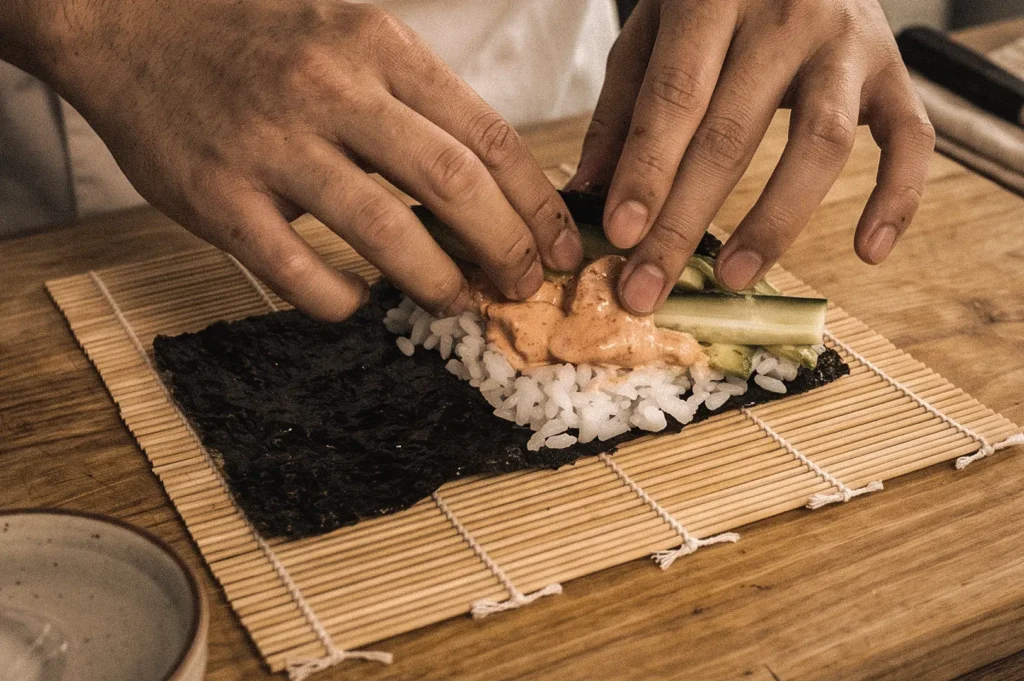
The build is quick but exact. Half a sheet of nori goes shiny-side down on the palm, then sushi rice is spread over the left half or third in a rough triangle. Fillings are cut into long strips and laid diagonally across the rice, and the bottom-left corner folds up before the whole sheet rolls into a cone. A few grains of rice, crushed against the seam, glue the tip shut.
Rice quantity is smaller than you would guess. At home, around 25–30g does it; Tamazushi’s hand-roll masters use about 40g, “slightly larger than a golf ball”. One cone is one serving, two to four bites, and a practised master rolls one in roughly 11 seconds. The speed is not showmanship; it is the only way to get the cone into your hand before the clock starts.
How to Eat Temaki (and Why You Cannot Wait)
Eat it with your hands, held at the narrow end, like an ice-cream cone. If you want soy sauce, dip only the open top (the filling side) lightly, or spoon a little over the top. Never soak the rice or the cone; the nori drinks it up and collapses.
Then eat it. That is not a figure of speech. The nori wicks moisture from the warm rice within minutes, and once it turns soggy and chewy the roll is a different, lesser thing. Chef Takashi Yagihashi puts it plainly: “Temaki should be served and eaten immediately. Otherwise the nori will become soggy and chewy.” This is exactly why serious hand-roll bars make each cone to order, serve it within seconds, and refuse to sell temaki to go. A hand roll in a plastic box has already lost.
Temaki vs. Maki vs. Nigiri: What is the Difference?
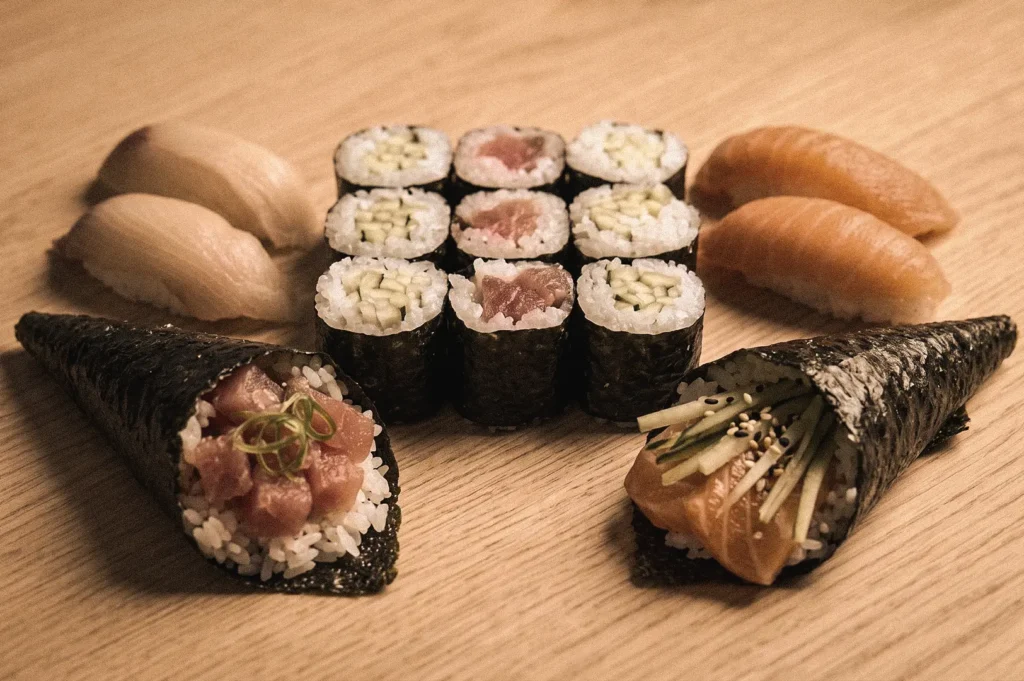
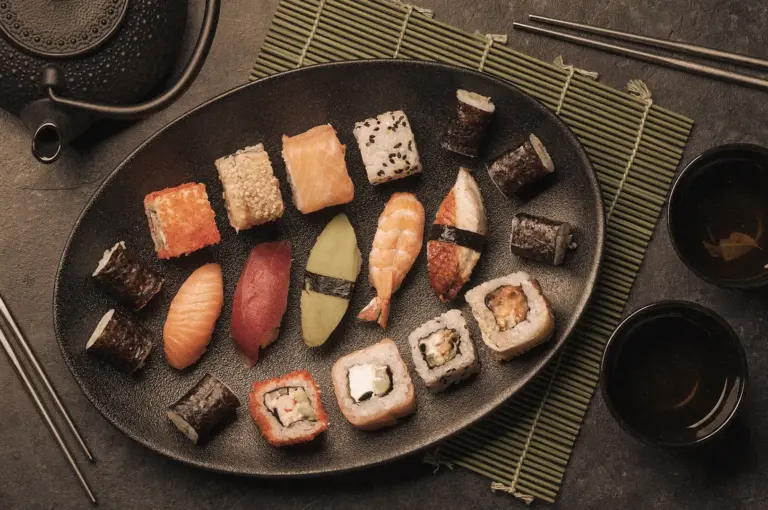
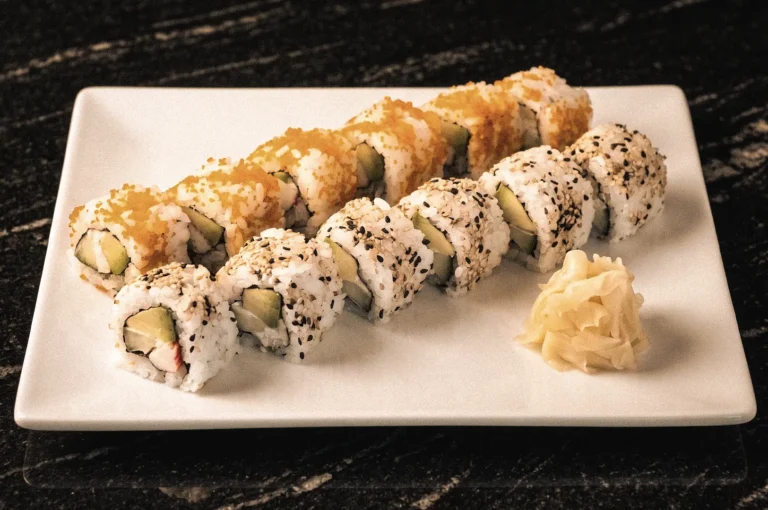
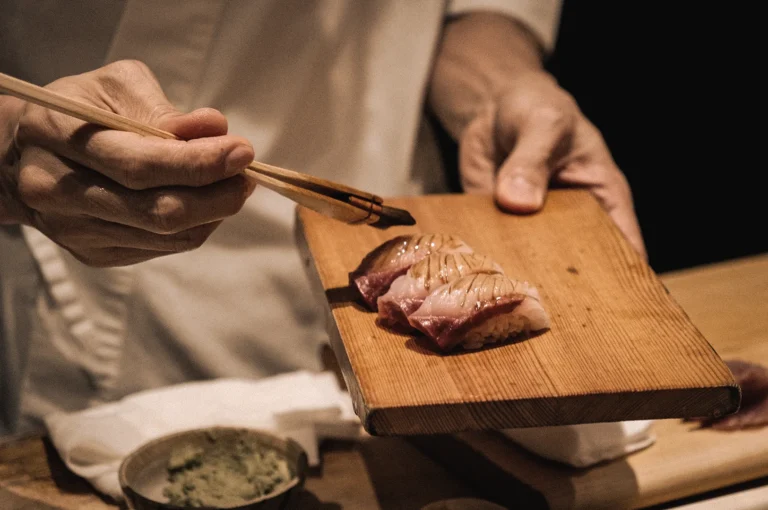
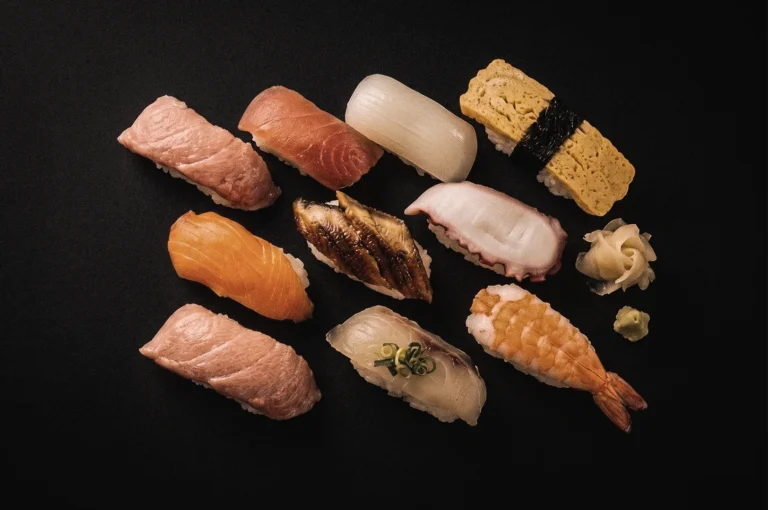
The temaki vs maki question trips people up, so here is the clean version. Maki is rolled on a bamboo mat into a tight tube, then sliced into six to eight pieces and eaten with chopsticks. Temaki is rolled by hand, never sliced, eaten whole with the fingers, and it is a single serving rather than a shared log. Nigiri is different again; a hand-pressed mound of rice with fish laid over the top, no nori wrap at all.
So the common line that “temaki is just an uncut maki roll” is wrong on both mechanics and intent. Temaki is rolled without a mat, built as one cone for one pair of hands, and engineered entirely around nori crispness; hand-roll bars even commission different nori for cones than they use for cut rolls.
Classic Temaki Fillings to Order
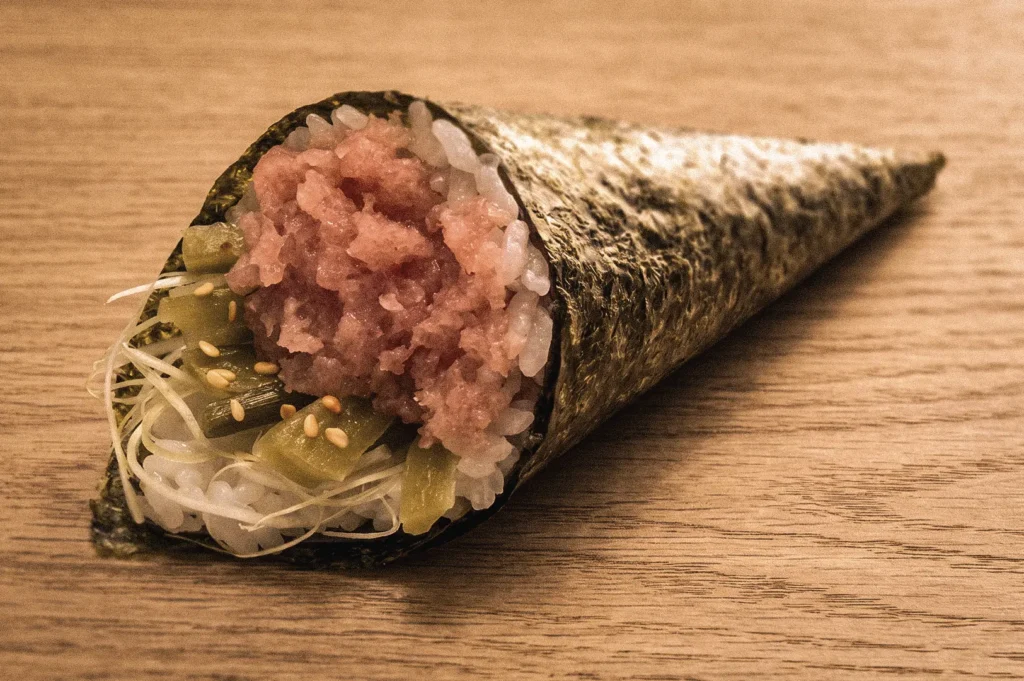
The signature filling is negitoro, and it is worth knowing what real negitoro actually is. It began as nakaochi: the sweet, fatty meat scraped with a spoon from around the tuna’s spine and collar bones after the loins have been taken. The name comes from negitoru, “to scrape off”, not from negi, the spring onion, as many menus imply. Only a shop that breaks down whole tuna can serve genuine nakaochi-style negitoro rather than minced off-cuts, and that spoonable texture is precisely why it makes such a good hand roll.
Beyond negitoro, the classics run wide. If you want a parallel shortlist to order from:
- Rich and raw: spicy tuna, uni, ikura, tuna, salmon or yellowtail sticks
- Cooked and savoury: grilled salmon skin, ebi tempura, tamago
- Fresh and light: cucumber, shiso, kaiware, takuan, umeboshi, natto
Tamazushi alone offers more than thirty varieties, from toro-taku to hotate. Reckon on roughly 110–230 kcal per hand roll, depending on what goes inside. If you want the bigger picture on where all this fish culture comes from, how Tokyo’s fish markets shaped sushi is a useful read.
Temaki FAQs
Is temaki raw? Not always. Plenty of hand rolls use raw fish (negitoro, uni, tuna) but grilled salmon skin, ebi tempura, tamago and the vegetable options are all cooked or entirely meat-free. Temaki describes the shape, not the contents.
How many calories are in a hand roll? Roughly 110–230 kcal, depending on filling. A cucumber roll sits near the bottom; a tempura or fatty tuna cone near the top.
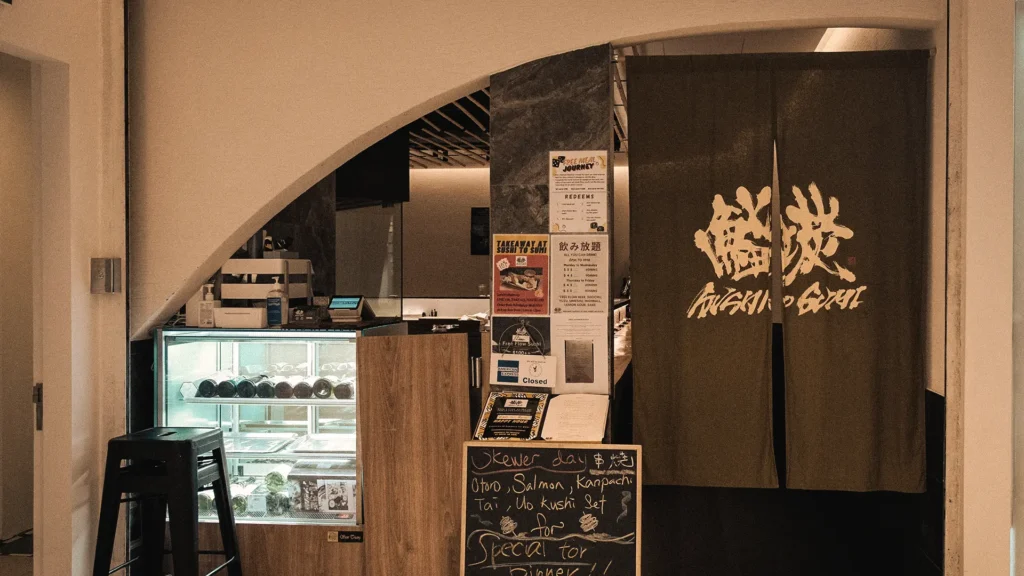
Can you take temaki away? You can, but you shouldn’t. The nori softens within minutes, so a hand roll is at its best made and eaten on the spot. A cone rolled in seconds and passed straight across is the natural sushi of a standing format like the Sushi to Sumi counter, where nothing sits and waits.
If you’d rather taste the difference than read about it, we’re at 20 Cecil St, one floor up. Book a spot at the bar.