
Here is the mistake most people make with chirashizushi: they treat it like a Japanese poke bowl and pour soy sauce straight over the top. The rice goes soggy, the fish loses its edge, and the whole thing turns to mush before the third bite. It looks like a sashimi bowl, but the vinegared rice underneath is doing all the quiet work, and once you understand that, ordering it stops feeling like a gamble.
What is Chirashizushi?
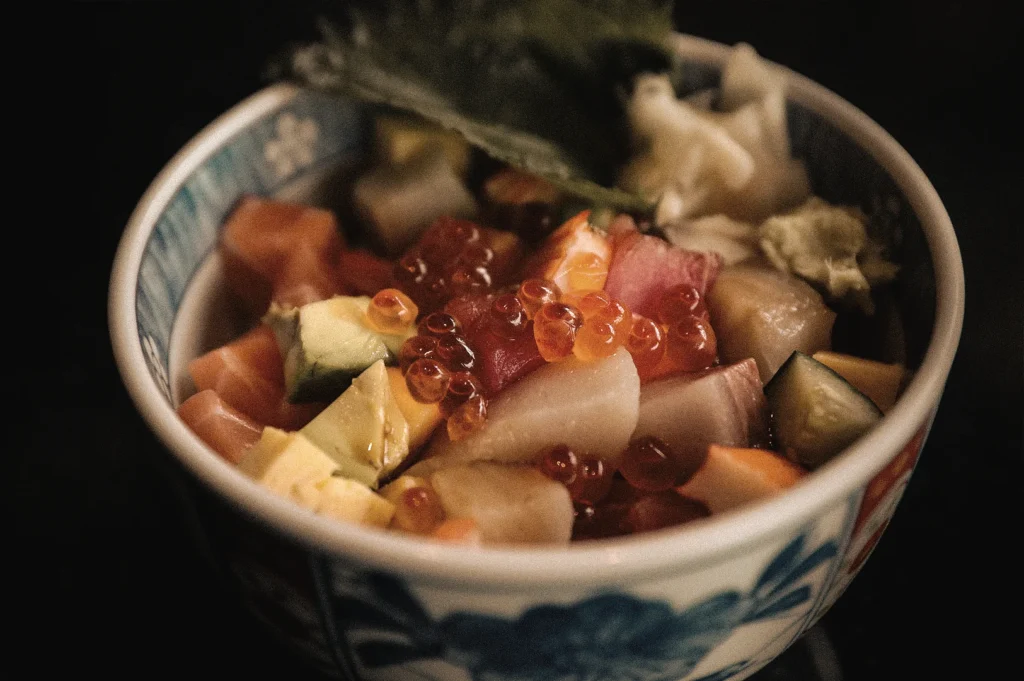
Chirashizushi means “scattered sushi”, chirashi is the verb “to scatter”. It’s sushi rice with toppings scattered over it, or mixed into it, and served in a bowl or box rather than hand-shaped into pieces.
The rice is the part that matters. The base is always short-grain rice seasoned with vinegar, sugar and salt, served at room temperature against chilled fish. That seasoned rice is precisely what makes it sushi and separates it from the look-alike bowls sitting next to it on the menu. No vinegared rice, no chirashi.
Where Chirashizushi Comes From
The most-told origin story starts in Okayama. A frugality edict is said to have limited people to one dish per meal, so cooks buried chopped fish and vegetables under seasoned rice to sidestep the rule: barazushi, hidden in plain sight. As the dish spread, the ingredients migrated from under the rice to the top, where you see them now.
There’s a second, more workaday story too. Busy Edo sushi chefs would scatter sashimi offcuts over a bowl of rice for a quick staff meal, no shaping required. Both stories point at the same thing: chirashi was never precious. It was practical food that happened to taste very good.
What is in a Chirashi Bowl: Rice, Fish and Toppings
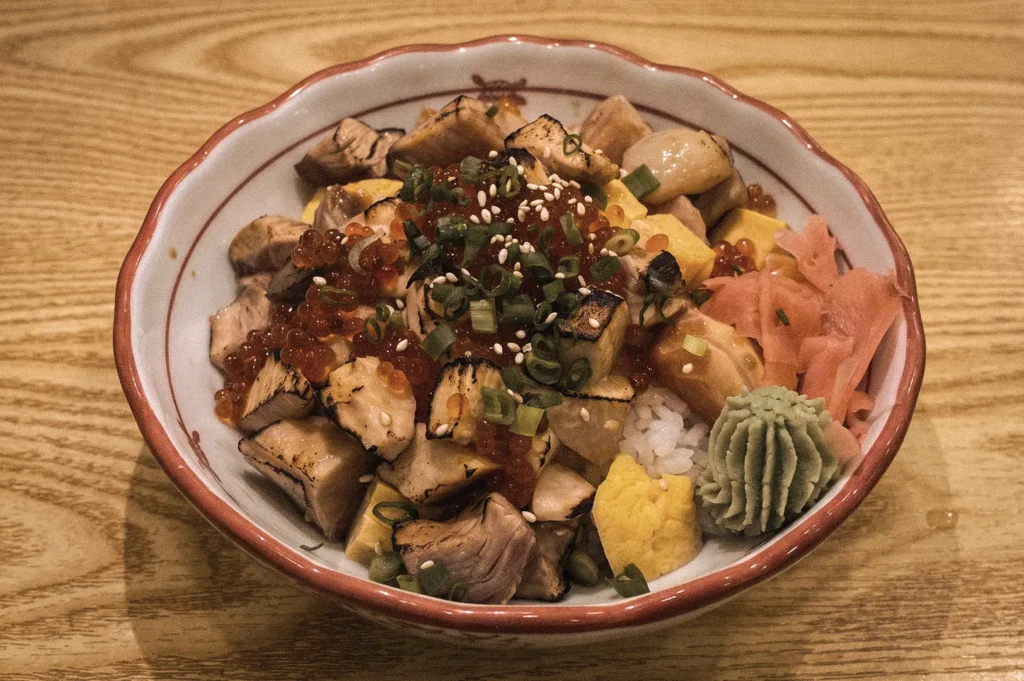
Start with the base and build up. Vinegared short-grain rice goes in first, then the toppings; and what lands on top depends entirely on the style and the day.
Edomae bowls lean on sashimi slices: tuna, salmon, yellowtail, snapper and squid, plus boiled shrimp, ikura (salmon roe), tamago (sweet omelette), shiso leaf and cucumber. Home and Kansai versions swap in cooked and pickled ingredients: simmered shiitake, kanpyo (dried gourd), carrot, lotus root, snow peas, shredded nori and sakura denbu (sweet pink fish floss). The colour balance of red, yellow and green is deliberate, not accidental.
One garnish is the signature: kinshi tamago, or “golden thread egg”. It’s a paper-thin, lightly sweetened omelette, rolled and sliced into fine golden ribbons, and it’s the finishing touch that marks a proper chirashi.
Edomae, Kansai and Bara Chirashi: The Main Styles Explained
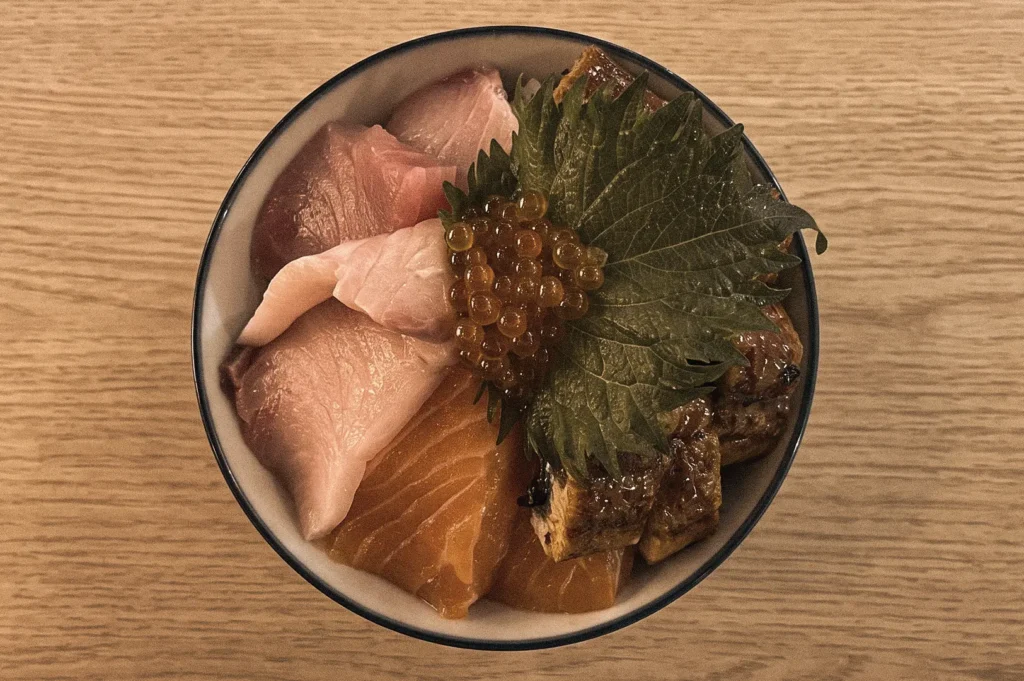
There are two main regional camps, plus one variant worth knowing. The Kanto or Edomae style, from Tokyo, arranges assorted sashimi on top of the vinegared rice: fish first, rice underneath, nothing mixed. The Kansai style, from Osaka and Kyoto and much of the rest of Japan, mixes cooked seasoned ingredients into the rice itself and decorates the top with shredded omelette and nori; you’ll see it called gomokuzushi or barazushi.
Bara chirashi is its own thing again. In Edomae restaurants, the toppings are cut into small diced pieces, sometimes marinated, then scattered loosely over the rice. In Singapore, the bara chirashi don (diced, often soy-and-mirin-marinated sashimi over vinegared rice) is a well-known and usually lower-priced take on the classic chirashi don. It’s the version most CBD lunchers have already met without knowing the name.
Chirashi vs. Poke, Kaisendon and Donburi
This is where the confusion lives, and the tell is always the rice. Kaisendon looks identical to chirashi (sashimi over rice) but it sits on plain steamed rice, which means it isn’t sushi at all. Chirashi is built on vinegared sushi rice. That’s the whole difference.
The chirashi vs poke question is just as simple. Poke is Hawaiian: fish cubed and marinated in soy, sesame oil and onion, served over any rice you like. Chirashi uses unmarinated slices over vinegared short-grain rice, with the focus on the quality of the fish rather than the dressing. And donburi is the broad umbrella for Japanese rice bowls (oyakodon, katsudon and the rest) usually hot plain rice under cooked toppings. So “scattered sushi” is not a Japanese poke bowl; the vinegared rice is the entire point.
How to Eat Chirashizushi at the Counter
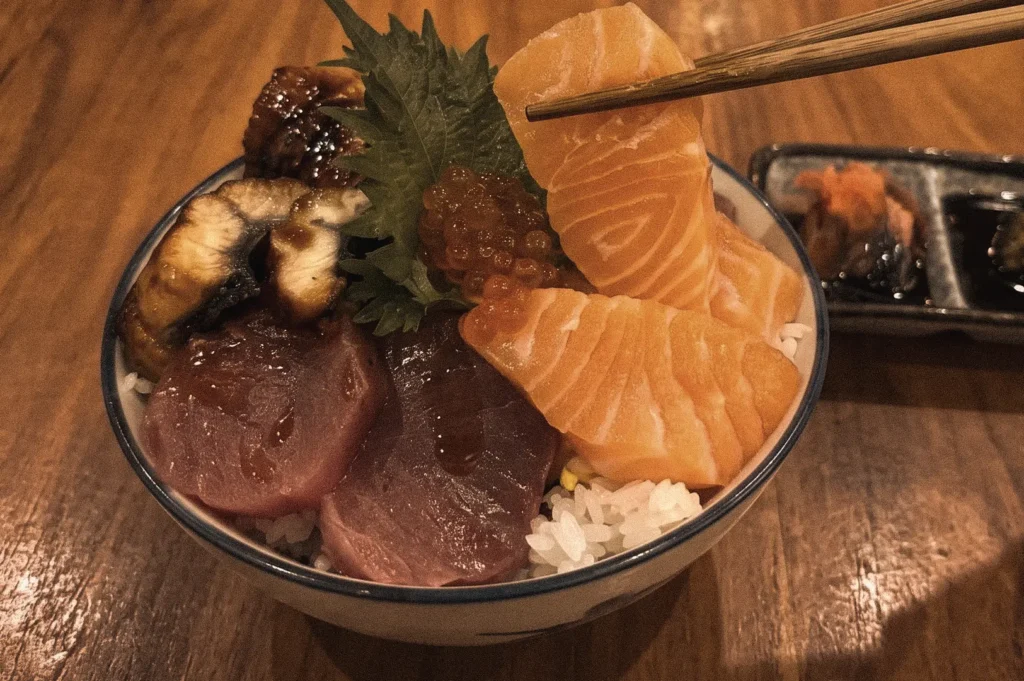
Keep the soy sauce off the rice. Wasabi and soy come on the side for a reason: dab a little wasabi on a piece of fish, dip the fish (not the rice) lightly in soy, and eat the toppings piece by piece with the rice underneath. Pouring soy over the whole bowl waterlogs the rice and is poor form at a serious counter. There’s no single “correct” way, but that one habit saves the bowl.
Timing matters too, though a bowl is more forgiving than a hand-pressed piece. The rice sits at room temperature against chilled fish, and that balance holds for a while; the bowl gives you a little more room than nigiri does, but the same clock applies, which raises the question of how fast should you eat nigiri after it is served. Eat it at a steady pace and it stays right.
Here’s the part only a fishmonger-backed kitchen will tell you. Backed by Araya Shoten, the Sushi to Sumi counter cuts its chirashi from the same whole fish delivered for the nigiri that morning, not a separate lower-grade supply kept for bowls. When the chefs break down a whole fish, the pristine but awkwardly shaped pieces (the end of a loin, the cut beside the collar) go into the bowl. Nothing is second-tier. Only the geometry is different, and the toppings change daily with the season and the market.
Chirashizushi FAQ
Is chirashi always raw? No. The raw-fish version is specifically the Edomae restaurant style. Home-style and Kansai chirashi are often fully cooked or vegetarian: simmered vegetables, pickles and shredded omelette over seasoned rice.
Is chirashi good value? Often, yes. The “offcuts” history describes shape, never freshness, and a chirashi bowl is a cross-section of the day’s freshest fish and a clear window into the chef’s style. In Singapore, bara chirashi dons at around S$12–20 are famous value plays, which is exactly why regulars order it.
How is it different from a poke bowl? Poke is marinated cubes of fish over any rice; chirashi is unmarinated fish over vinegared sushi rice. Same silhouette, different dish; the rice is what makes chirashizushi sushi.
If you’d rather taste the difference than read about it, we’re at 20 Cecil St, one floor up. Book a spot at the bar.