
Here is the thing people get backwards about oshizushi: they assume the pretty seared salmon block is a modern trend, some recent invention dressed up for a photo. In truth, pressed sushi is one of the oldest sushi styles in Japan; centuries older than the nigiri you know from the counter. Only the searing is new.
What is Oshizushi? Pressed Sushi, Box Sushi and Hakozushi Explained
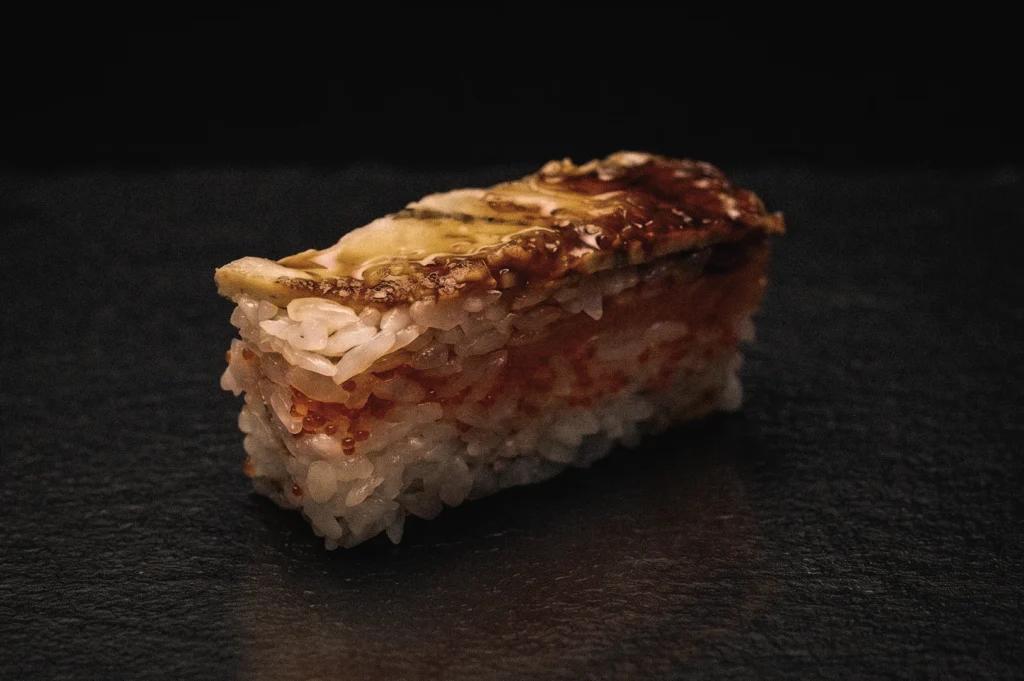
Oshizushi means “pressed sushi”, from osu, “to press”. You will also see it called hakozushi, “box sushi”, and regionally Osaka-zushi, because this is a specialty of Osaka and the wider Kansai region.
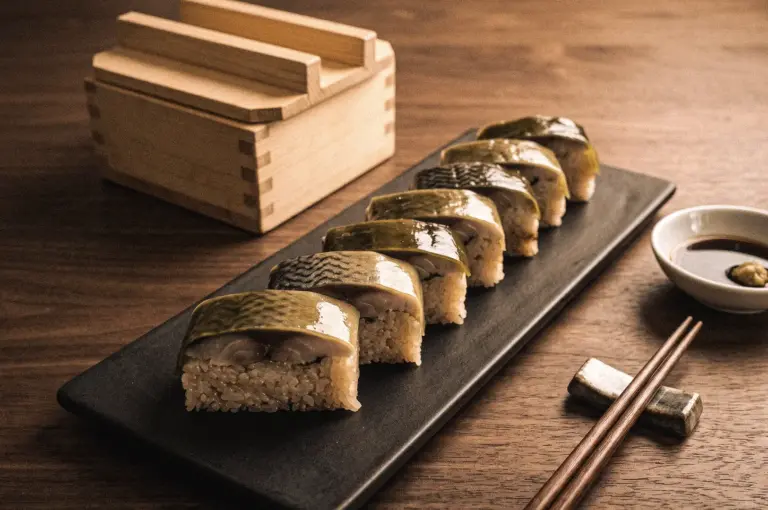
The idea is simple. Cured or cooked toppings and vinegared rice are packed into a wooden mould, pressed firm, then turned out as a solid block and sliced into neat rectangles. It is made one block at a time, not shaped piece by piece; and that single difference drives everything else about how it tastes and holds together.
Older than Nigiri: How Pressed Sushi Began as a Way to Preserve Fish
Sushi did not start as fresh fish on rice. It started with narezushi, fish fermented for months in salted rice; Japan’s original sushi, and a slow, pungent thing. From there came hayazushi, “fast sushi” made with vinegar instead of months of waiting, and pressing fish and rice in wooden frames became established in Edo-period Osaka.
That puts oshizushi at over 400 years old, comfortably predating the nigiri that Hanaya Yohei popularised in Tokyo around the 1820s. The point of pressing was practical: it expelled air, melded the flavours and helped the fish keep without refrigeration. A pressed block travels well and lasts longer than a loose piece of nigiri, which is exactly why it became classic ekiben, or station bento; Toyama’s masu no sushi, trout pressed sushi wrapped in bamboo leaves, remains one of Japan’s most famous.
Inside the Oshibako: How Oshizushi is Made
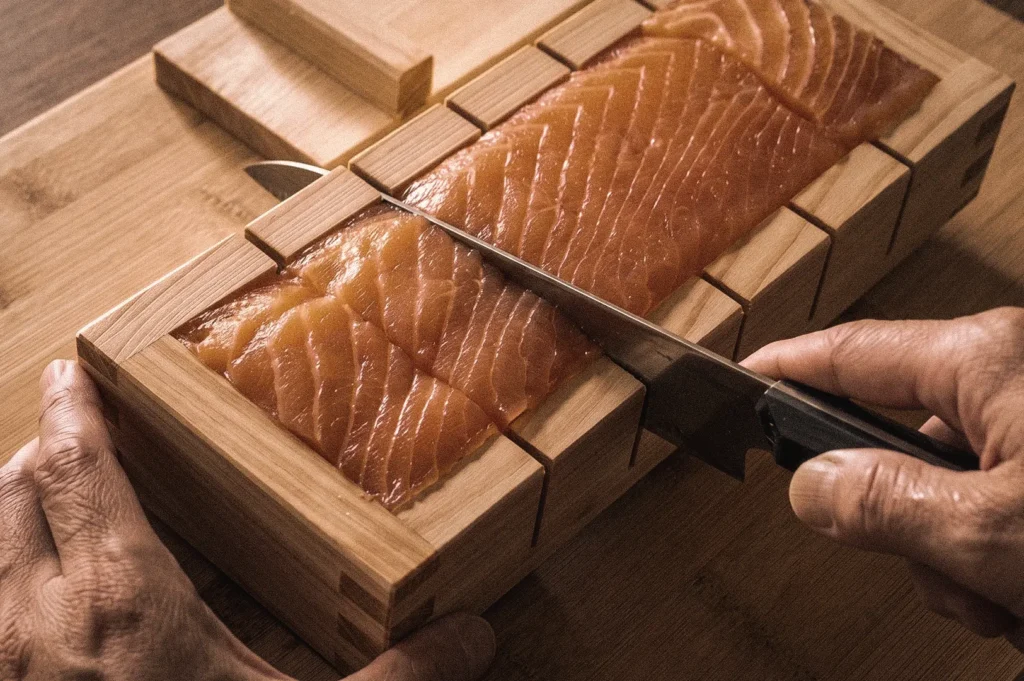
The tool is a wooden mould called an oshibako, traditionally a three-part box (base, frame and pressing lid) often cut from hinoki cypress. The chef lines the bottom with toppings, packs vinegared rice on top, then presses down the lid to form a compact block before unmoulding it and cutting it into rectangles.
The pressure is the craft, and it is easy to get wrong. Press too lightly and the block will not hold or slice; press too hard and you crush the grains into paste. The aim sits between those two failures: firm enough to expel the air, as the old preservation logic demands, but never so hard the rice loses its texture.
Battera, Saba-zushi and Other Classic Types of Oshizushi
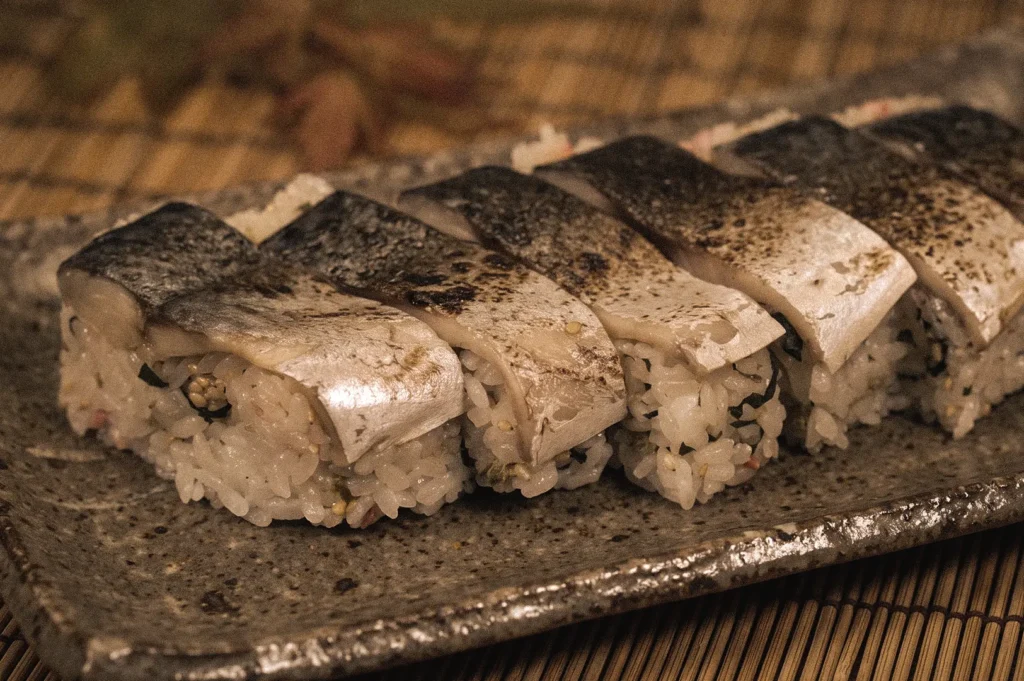
The classic oshizushi is battera: thinly sliced vinegar-cured mackerel, saba, pressed with vinegared rice and topped with a translucent veil of shiroita-kombu, white kelp simmered in sweet vinegar. The name comes from the Portuguese bateira, “small boat”, after its shape. It is said to have been created in 1894 by Tsunekichi Naka of Osaka’s Sushi Tsune, originally using konoshiro gizzard shad, with mackerel taking over as shad prices climbed.
Here is what actually decides a good battera, and it is not the press. The saba is salt-cured first, a step called shiojime, to draw out moisture and fishiness, then marinated in rice vinegar for a length of time judged against the fish’s fat; fattiest in autumn and winter. Leave it too long and the flesh turns chalky; too short and it will not slice cleanly. The kombu veil then bastes the mackerel with sweet-vinegar umami and stops it drying out. So the fishmonger’s read of each day’s saba decides the cure, and the cure decides the press; the sequence matters that much. For more on that curing craft, see our guide to battera.
Kyoto’s saba-zushi is a close cousin but a different animal. It is bozushi, “stick sushi” (half a mackerel shaped by hand with a cloth or mat rather than pressed in a box) and it grew along the old “Saba Kaido“, the mackerel road that carried fish from Wakasa to Kyoto. Both are mackerel sushi; only battera comes out of the oshibako.
Oshizushi vs Nigiri vs Maki: What is the Difference?
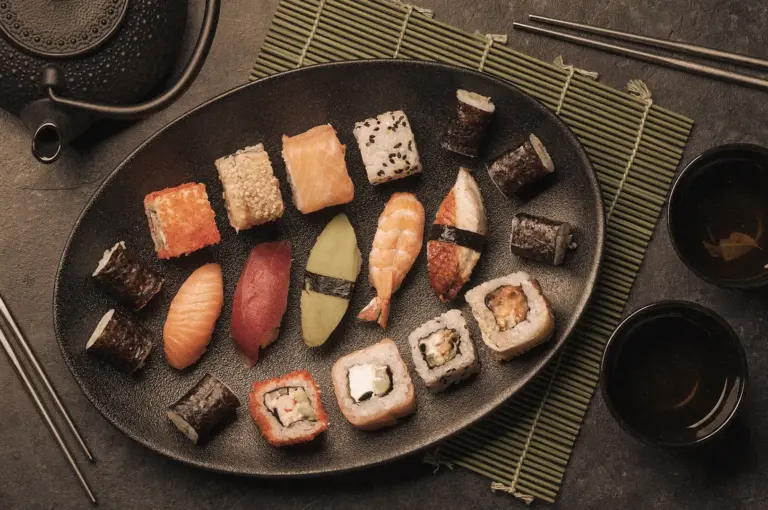
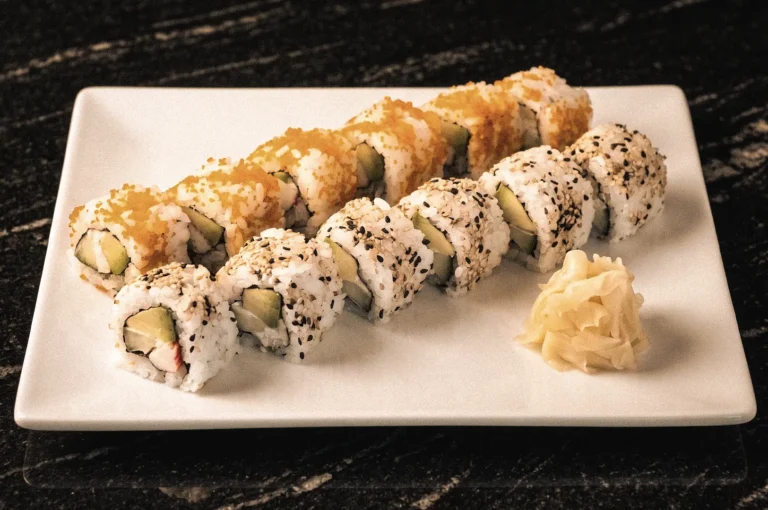
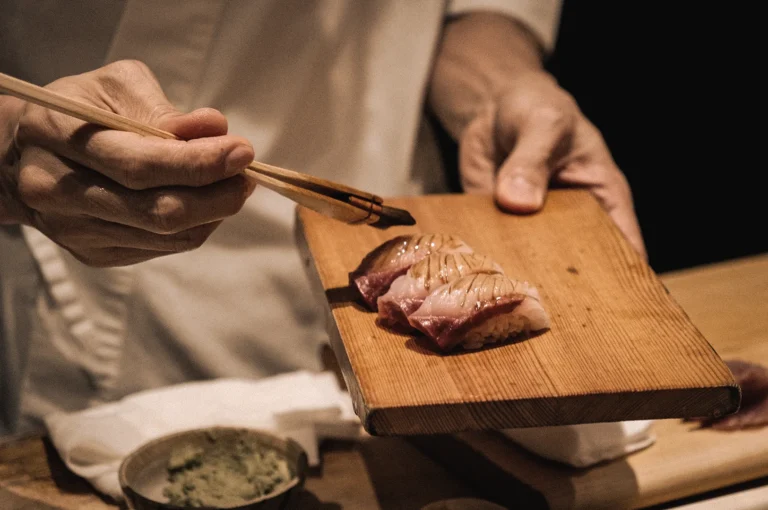
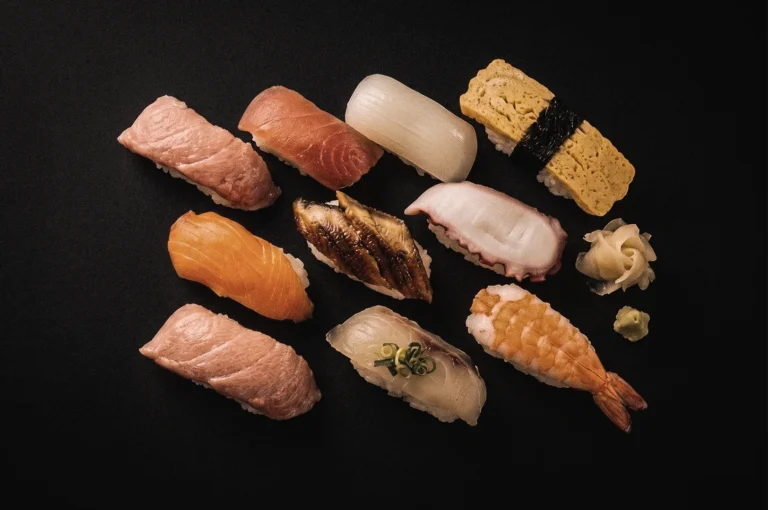
Line the three up and the differences are clean. Nigiri is hand-formed one piece at a time, born in Edo (old Tokyo), usually raw and eaten within moments of being made. Maki is rolled inside nori with a bamboo mat, then sliced.
Oshizushi is neither. It is mould-pressed as a single block, from the Kansai side of Japan, and its toppings are usually cured or cooked rather than raw. It is denser, holds its shape, and slices into tidy rectangles: a sturdier, longer-keeping cousin to the fresh, fragile piece of nigiri.
How to Eat Oshizushi (and Why it Often Needs No Soy Sauce)
Reach for the soy sauce out of habit and you will usually be missing the point. Traditional Osaka-style oshizushi arrives already cured and seasoned (the vinegar cure, the salt, the sweet kombu are the seasoning) so it frequently needs no soy sauce or wasabi at all.
If it is served in a style that suits a dip, keep it light: touch the fish, not the rice. And because a pressed block keeps and travels so well, this is the sushi that ends up in a bento box or given as a gift, eaten hours after it was made rather than seconds.
Seared and Modern: The Rise of Aburi Oshizushi
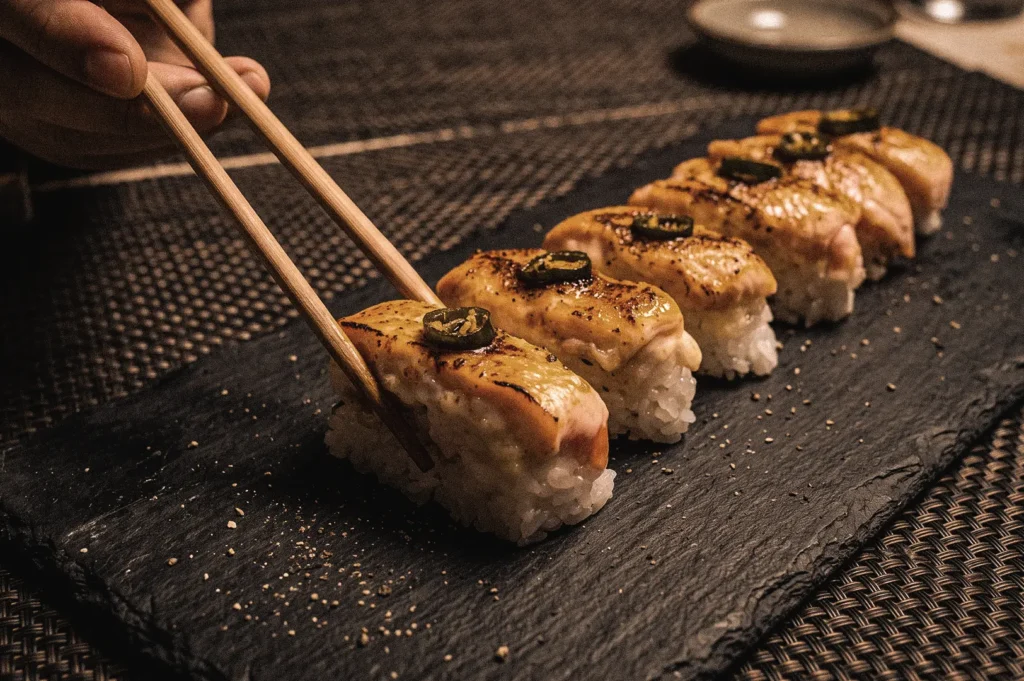
Now for the one genuinely modern chapter. Seared aburi oshizushi (pressed sushi flame-torched or grilled on top) was pioneered by Vancouver’s Miku in 2008, and aburi salmon oshizushi has since become everywhere in North America, if still uncommon in Japan. The searing softens the fat and adds a smoky edge the classic version never had.
That searing works best over charcoal, which is where a place like Sushi to Sumi comes in. We are a standing sushi bar and charcoal-grilled seafood counter, backed by Araya Shoten (a fishmonger with sourcing lines running beyond Tokyo’s Toyosu Market up to Hokkaido) and the binchotan charcoal that does our grilling is the same fuel that gives aburi its clean sear. The menu changes daily with the season and the market, lunch runs 30–45 minutes at around $108, and if you want to plan a visit you can find us here.
Oshizushi rewards a little knowledge: a 400-year-old craft where the cure matters more than the mould, and where soy sauce is often beside the point. Learn to read it and the whole pressed-sushi family opens up.
If you’d rather taste the difference than read about it, we’re at 20 Cecil St, one floor up. Book a spot at the bar.