
The California roll you ate at your desk last week is a piece of American engineering, not Japanese tradition. That roll is an uramaki, the inside-out roll, and it was built to solve a problem: diners who would not eat visible seaweed. The rice sits on the outside, the nori hides within, and that single flip changed how the world eats sushi. It is worth knowing why.
What is Uramaki?
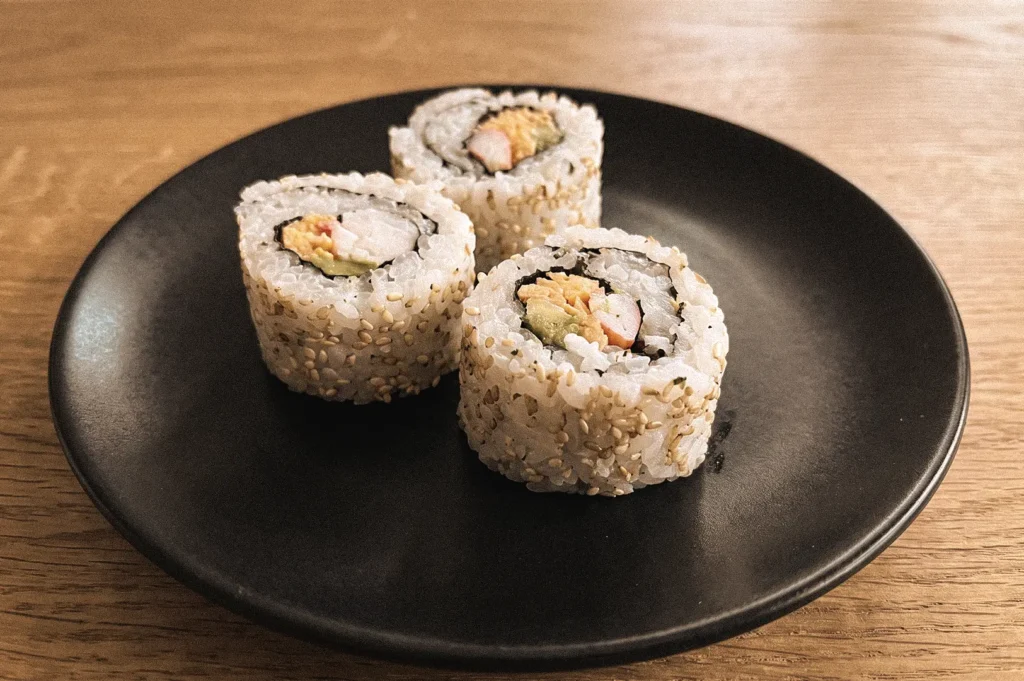
Uramaki is the inside-out sushi roll. The word splits cleanly: ura means “reverse” or “inside,” and maki means “roll.” So the name is a plain description of what happened to the fish.
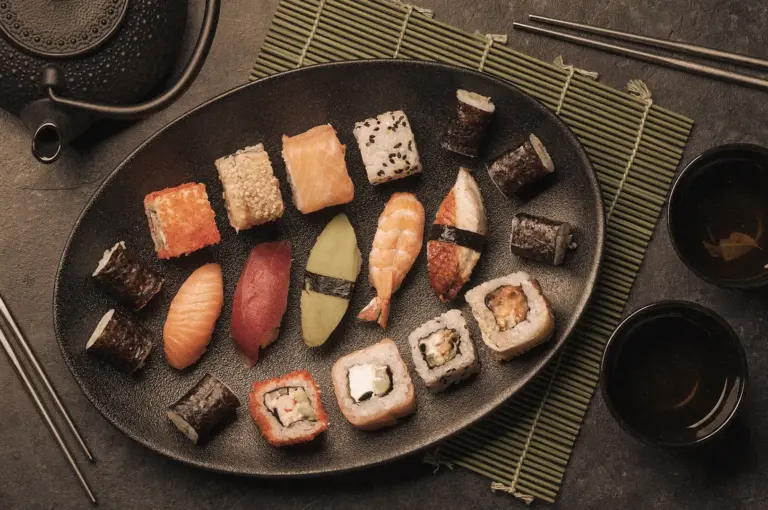
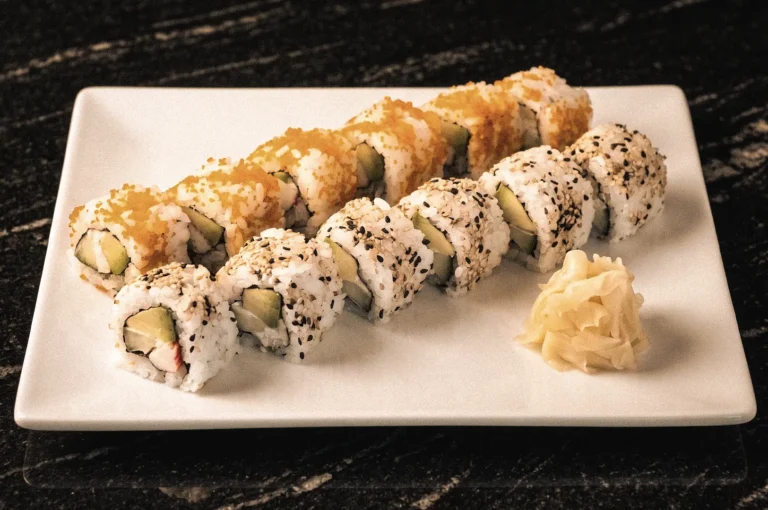
In a standard roll, the nori (dried seaweed sheet) wraps the outside and the rice sits within. Uramaki turns that arrangement around. The vinegared rice faces out, the nori is tucked inside wrapped directly around the fillings, and the whole thing reads white instead of black. That inversion is the entire point.
How the Inside-Out Roll Happened in 1960s Los Angeles
The person most widely credited with the inside-out roll is Chef Ichiro Mashita, working at the Tokyo Kaikan restaurant in Little Tokyo during the 1960s. He was developing what became the California roll. This was the same neighbourhood where Kawafuku had opened what is credited as America’s first genuine Tokyo-style sushi counter around 1961, backed by Noritoshi Kanai of Mutual Trading Company.
The reason for the flip was blunt. American diners of the era disliked the sight and chew of black nori, part of a wider aversion to “black foods,” so Mashita hid the seaweed inside and let the rice do the talking. He also swapped avocado for fatty tuna, judging its creamy, oily texture a convincing stand-in for toro (tuna belly). Two problems solved with one roll.
The origin is genuinely disputed, and honesty demands saying so. Chef Ken Seusa of Kin Jo in Hollywood was credited in an Associated Press story in late 1979, and Vancouver Chef Hidekazu Tojo claims he independently invented the inside-out roll, his “Tojo-maki,” in the late 1970s. The earliest known print reference to “California roll” is the Los Angeles Times, 25 November 1979. Three claims, one roll, no settled verdict.
How an Uramaki is Built, and How to Eat One
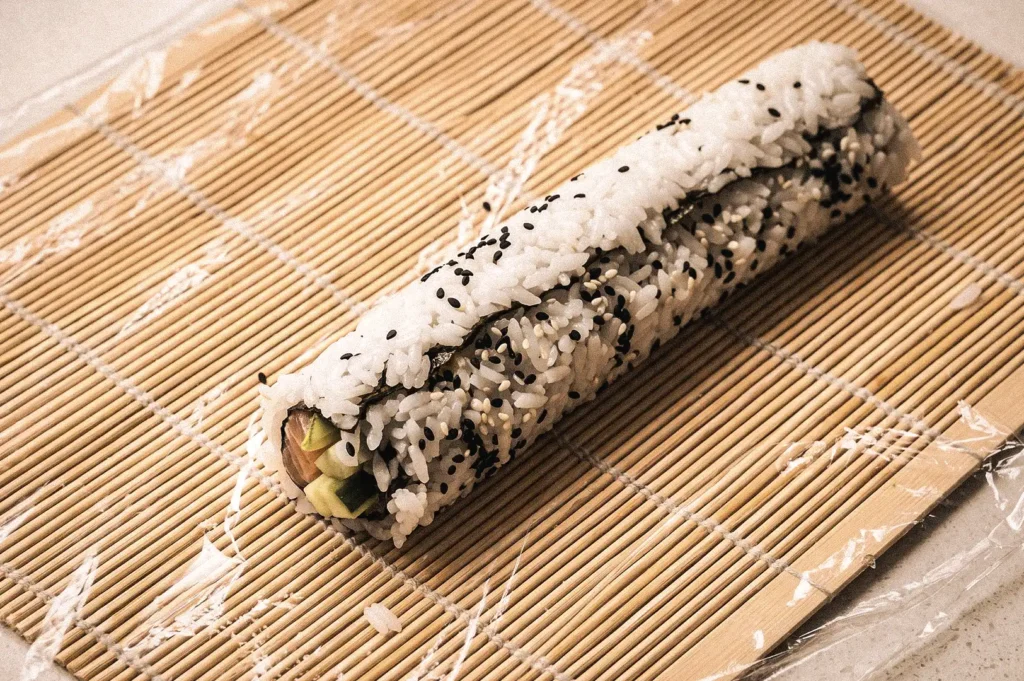
Building an uramaki takes one extra step that ordinary rolls skip. Because sticky rice faces outward, the bamboo mat, or makisu, is wrapped in plastic film first so nothing glues itself down. Rice is spread over a half-sheet of nori, sprinkled with sesame, then the whole sheet is flipped so the rice faces the mat. Fillings go on the nori, and the roll is pulled tight.
Cutting matters as much as rolling. Uramaki is sliced into 6 to 8 pieces with a sharp, wet knife, wiping the blade between cuts so the exposed rice does not stick or tear. As for eating it, treat it like any maki and take it in one bite where the size allows. Half a piece dropped on the plate is a roll that has lost the argument.
Uramaki vs. Maki: What the Flip Really Changes
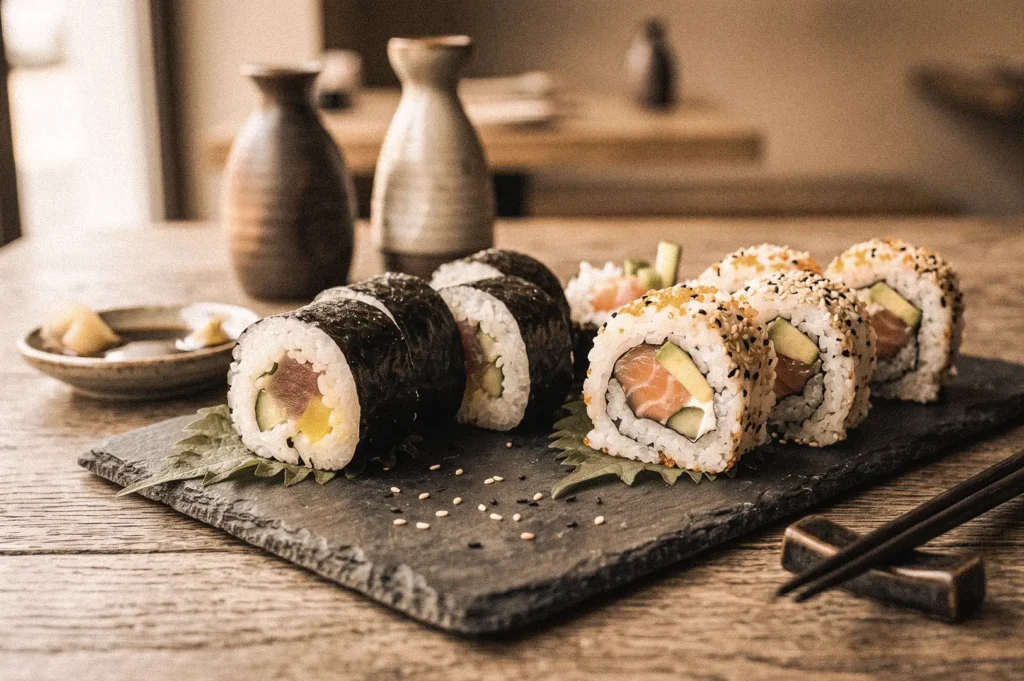
The maki vs. uramaki difference looks cosmetic and is not. Traditional maki keeps the nori on the outside, where the sheet acts like a corset holding everything in shape. Flip the roll and that corset disappears.
With rice on the outside, the shari (vinegared rice) has to hold together on its own. There is no seaweed shell to hide behind, so seasoning, temperature and pressing pressure carry the whole roll. Get the rice wrong on a standard maki and the nori still saves you. Get it wrong on an uramaki and it falls apart on the board.
The California Roll and the Rolls It Inspired
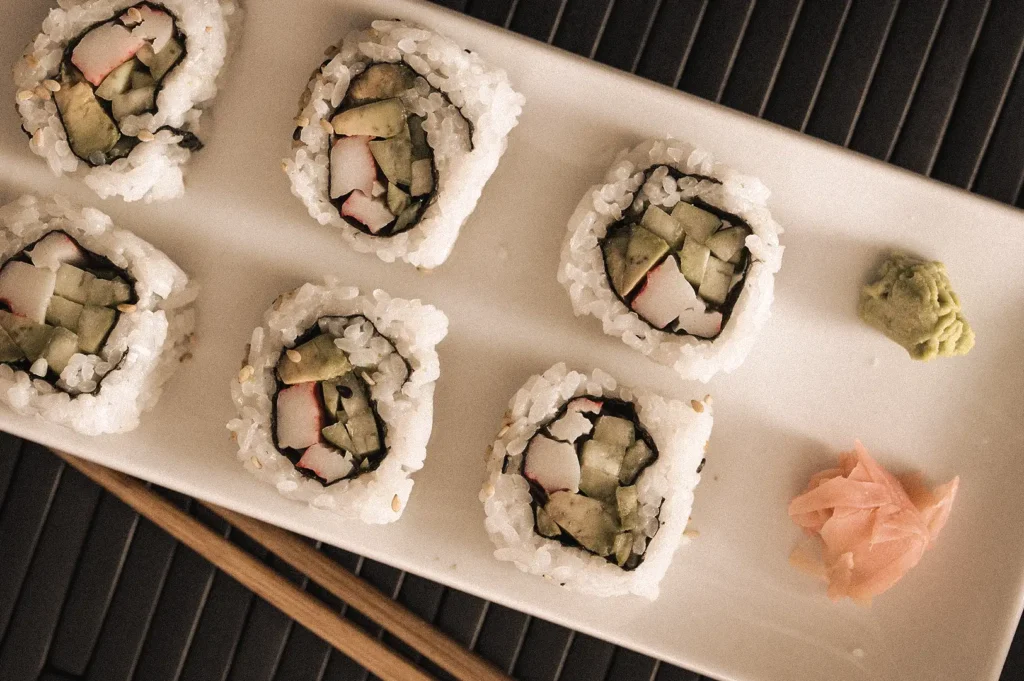
The classic California roll build is simple: imitation crab or real crab, avocado and cucumber, with the outside rice finished in sesame seeds or tobiko (flying-fish roe) pressed onto it. That exposed rice turned out to be a canvas, and cooks noticed.
Once the rice faced outward, you could coat it or drape things across it, and a whole family of decorated rolls followed. The rainbow roll layers assorted sashimi on top; the dragon roll uses avocado scales; the caterpillar roll does much the same; the Philadelphia roll pairs salmon and cream cheese; the spider roll hides soft-shell crab tempura inside. The California roll became the starter sushi because it removed the two biggest Western barriers at once. No raw fish, and no visible seaweed.
What Uramaki Taught Us About Rice, and What We Kept at Sushi To Sumi
A fishmonger-backed kitchen reads the California roll honestly. It knows real crab and surimi are two different ingredients, because it sells both, and it grades the roe pressed onto the rice: tobiko should pop cleanly, not leak dye. Those are small tells that separate a serious roll from a lazy one.
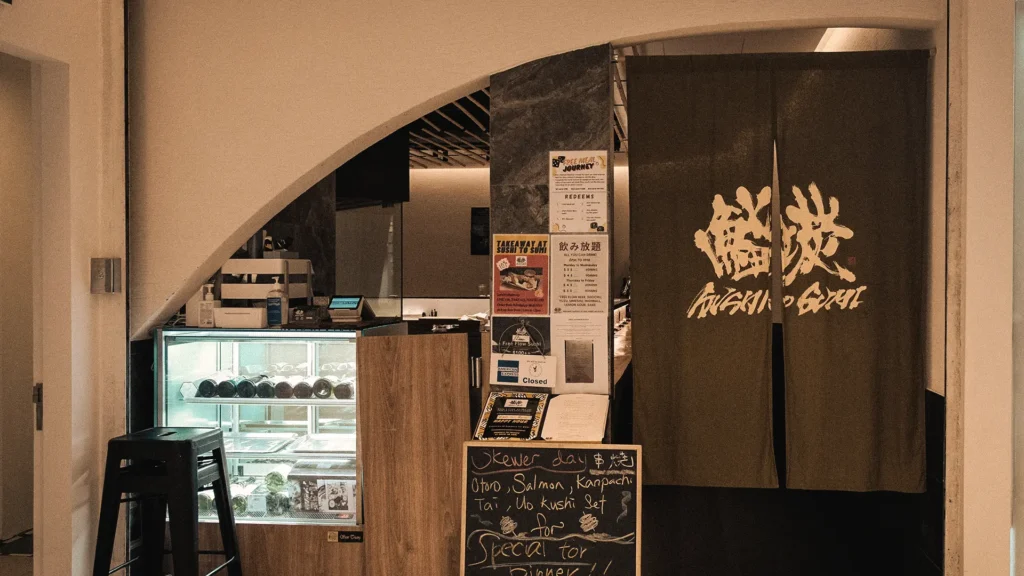
The deeper lesson is the one uramaki taught everyone. With the rice exposed, the roll stands or falls on the shari, so seasoning, temperature and pressing pressure are not optional. That same rice discipline runs through every piece at Sushi to Sumi in Raffles Place, roll or nigiri, backed by Araya Shoten sourcing that reaches beyond Tokyo’s Toyosu Market to Hokkaido. If you want the small plates that sit alongside the sushi, see our guide to tsumami explained.
Common Questions About Uramaki
Why is uramaki rice on the outside? To hide the nori. American diners of the 1960s were put off by visible black seaweed, so the roll was inverted to show rice instead.
Who invented the California roll? Most often Chef Ichiro Mashita at the Tokyo Kaikan, though Ken Seusa and Hidekazu Tojo hold competing claims. The history is contested, not settled.
Is the California roll actually Japanese? Not in origin. Uramaki is a Western invention from the 1960s; traditional Japanese maki always keeps the nori on the outside. The style proved so popular it later travelled back to Japan.
Uramaki is proof that a good idea does not care where it starts. It began as a workaround and became one of the most recognised types of sushi rolls in the world.
If you’d rather taste the difference than read about it, we’re at 20 Cecil St, one floor up. Book a spot at the bar.