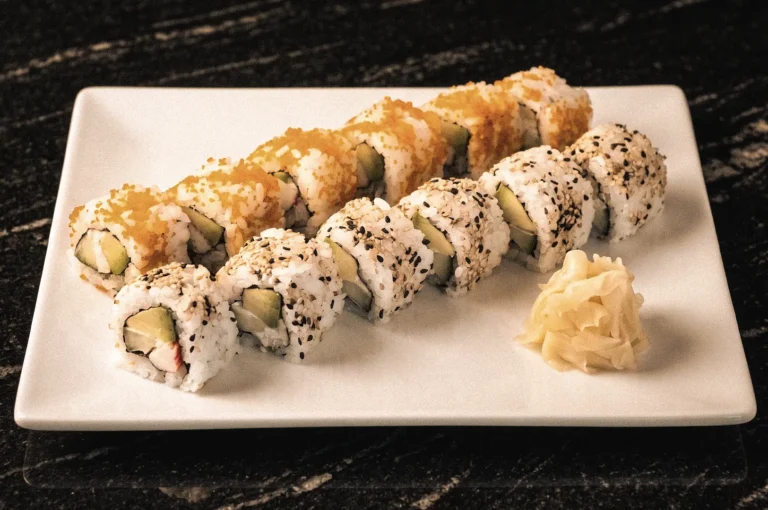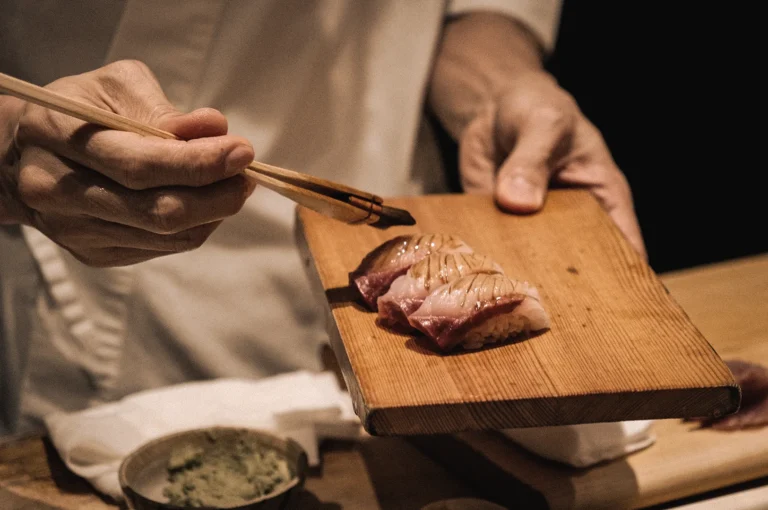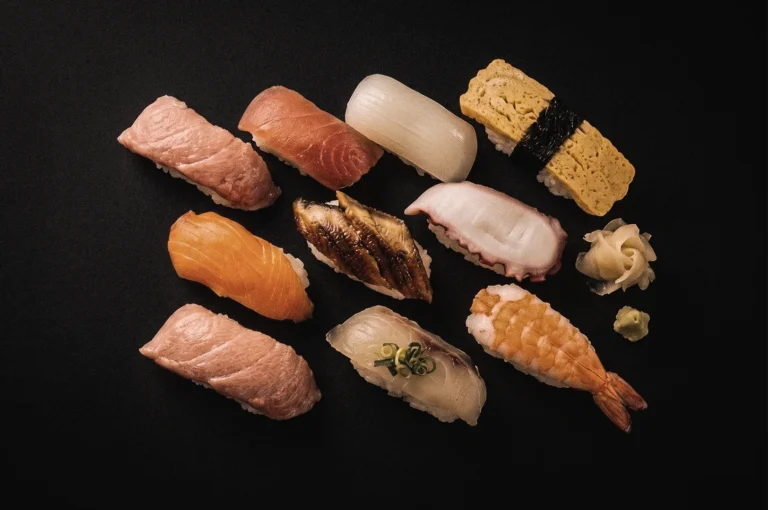

Here is the mistake almost everyone makes: using “sushi” to mean any raw fish on a Japanese menu. It doesn’t. A slice of tuna on its own is sashimi, and the moment you understand what the word “sushi” actually points to, the whole menu untangles itself.
Sushi vs. Sashimi: The Difference in One Line is Rice
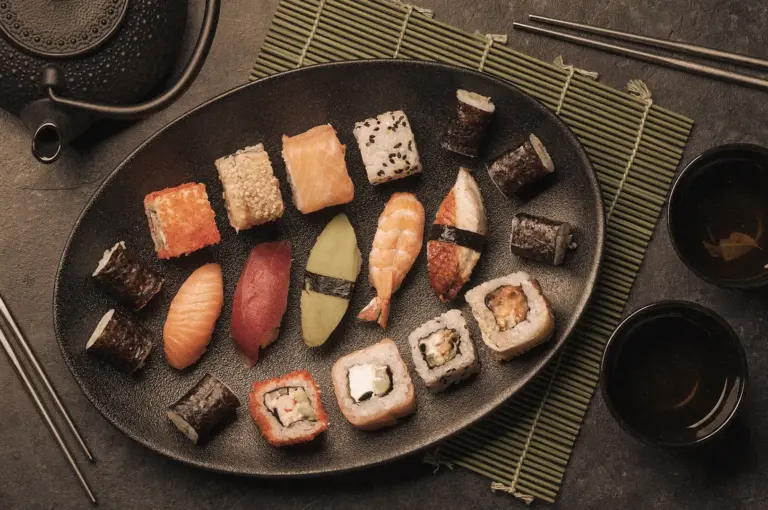
The sushi vs sashimi question has a one-line answer, and it is rice. Sushi is defined by vinegared rice: shari, sometimes called sumeshi. Sashimi is sliced raw fish or seafood served with no rice at all.
So the dividing line is not the fish; it is the rice underneath it. Anything built on vinegared rice is sushi, whatever the topping. Sashimi has no rice, which means, strictly speaking, sashimi is not sushi: it sits alongside sushi on the menu rather than inside the category.
What Sushi Actually Means (Hint: It is not Raw Fish)
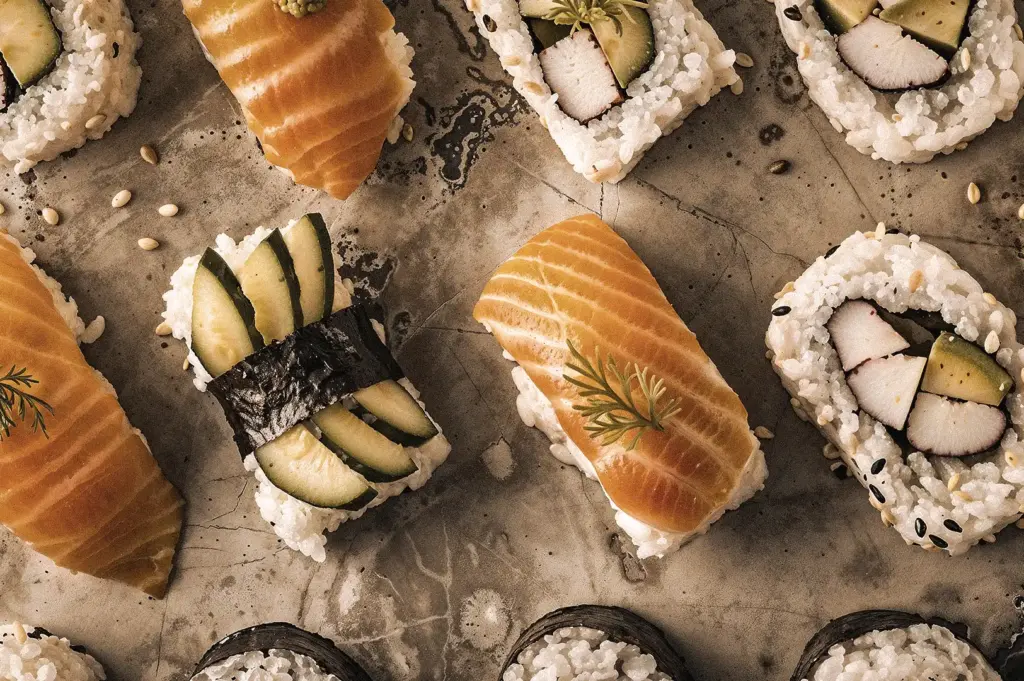
The word “sushi” comes from an old Japanese term for “sour”. It describes the sour, vinegar-seasoned rice, not the fish resting on it. Raw fish is common on sushi, but it was never the thing the word meant.
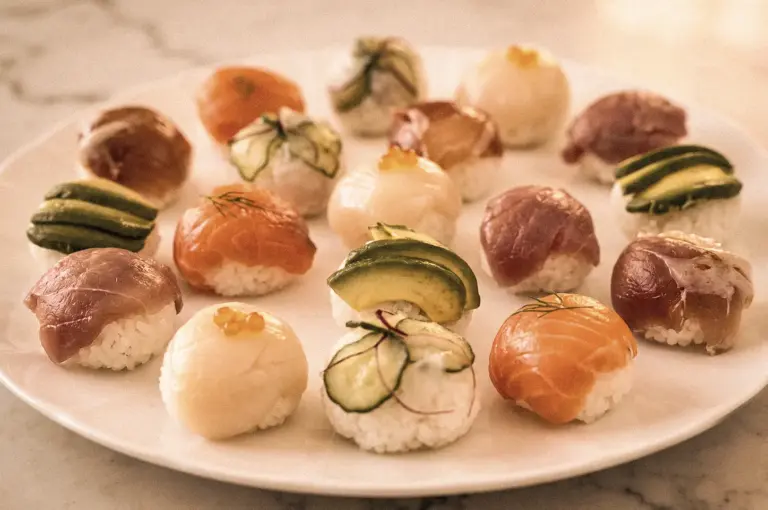
That is why cooked and vegetarian sushi are entirely normal. Tamago (sweet omelette), ebi (boiled shrimp), grilled unagi and anago (freshwater and saltwater eel), kappa maki (cucumber roll) and inari (a sweet tofu pouch) are all sushi, and not a slice of raw fish among them.
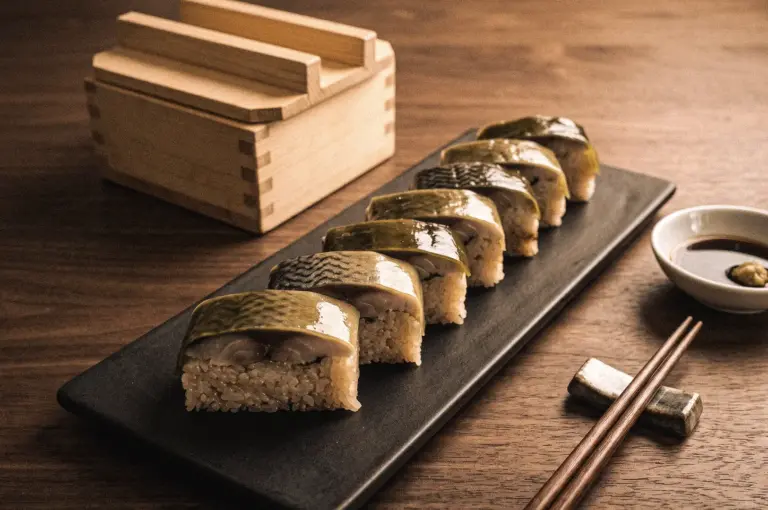
The dish has a long timeline behind it. It began as narezushi, fish fermented in rice for months with the rice then discarded, which reached Japan around the 8th century. Later came hayazushi, where vinegar was added to the rice to shortcut the fermentation, and finally nigiri (hand-pressed rice topped with fish) credited to Hanaya Yohei in 1820s Edo as street fast food.
Where Sashimi Comes From: From Courtly Namasu to the Counter
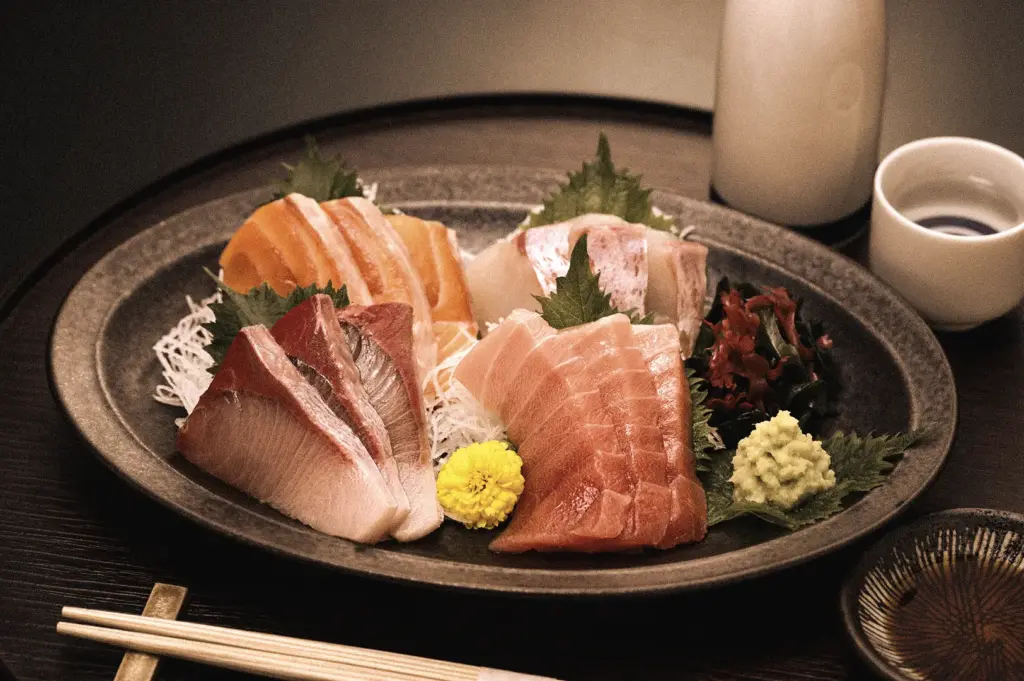
Sashimi is the older idea in spirit. Its ancestor is namasu, finely sliced raw fish and vegetables dressed with vinegar, served at the imperial court in the Heian period, from 794 to 1185. The word namasu traces back to namashishi, “raw meat”.
The name “sashimi” itself means “pierced flesh”, from sashi (pierce) plus mi (flesh). The story goes that the “pierce” character was chosen because the plainer word kiru, “to cut”, carried samurai sword connotations nobody wanted at the dinner table. The word appears in a Muromachi-period diary, the Kofuki, in an entry dated 15 August 1448; which is why 15 August is marked as Sashimi Day in Japan. In Kansai the same dish is traditionally called otsukuri; “sashimi” was the Kanto, or Tokyo, term by the late Edo period.
And it is not only fish. Squid, octopus and scallop are staples, and in Japan the category stretches to beef, chicken and even horse, basashi. The word describes the slicing and the raw service, not the species.
How Sushi and Sashimi are Prepared Differently
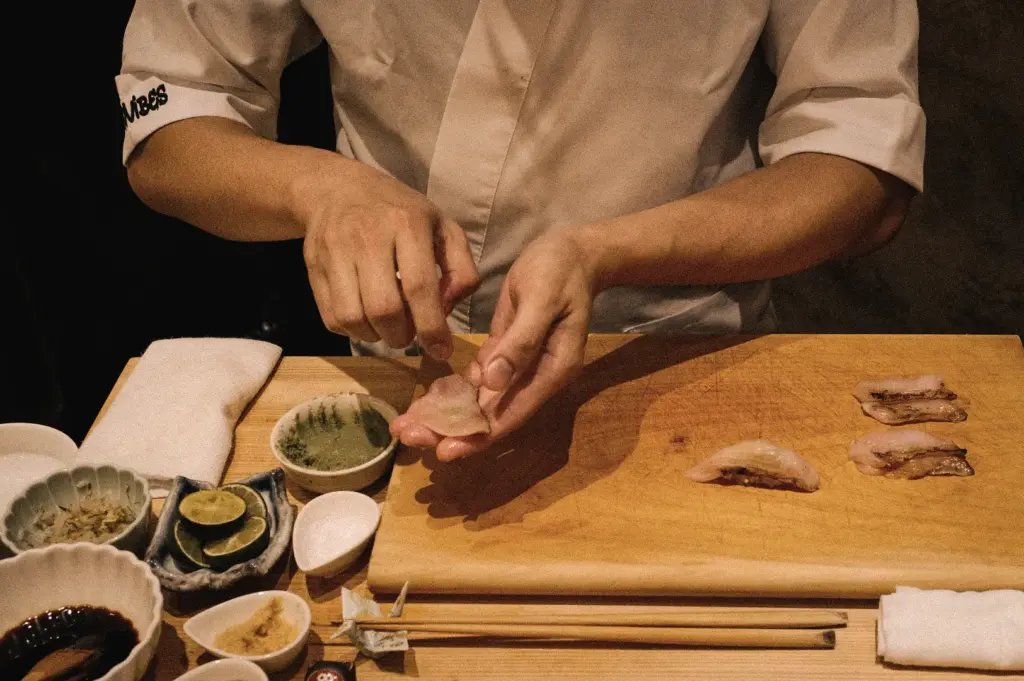
Sushi is rice work as much as knife work. The vinegared shari has to be seasoned, cooled and shaped, and the fish is one part of a built object. Sashimi is the opposite: pure knife work, with nowhere to hide behind rice or seasoning.
The cuts are codified. Hira-zukuri is the standard rectangular block cut; usu-zukuri is paper-thin slicing for lean white fish; kaku-zukuri gives you cubes; and ito-zukuri produces thread-like strips, often used for squid; which is also why ika is scored before it is served, to make it tender and easy to bite. The garnish earns its place too. Shredded daikon, shiso leaf, chrysanthemum petals and benitade sprouts (collectively tsuma) freshen the palate and frame the fish rather than just decorate the plate.
How to Eat Each One, and What to Order When
The etiquette splits neatly. Nigiri is traditionally eaten with the fingers; sashimi is eaten with chopsticks, each slice dabbed with a little wasabi and dipped lightly in soy. Sashimi usually opens a Japanese meal, before the rice-based courses arrive.
The choice between them can also be a practical one. Sashimi is close to pure protein, roughly 30 to 50 kcal per serving with negligible carbohydrate. A piece of nigiri runs about 40 to 65 kcal, with around 6g of carbohydrate from the rice. If you want something lighter, order sashimi; if you want a meal that fills you, the rice does that work.
Both, Side by Side, at the Sushi To Sumi Counter
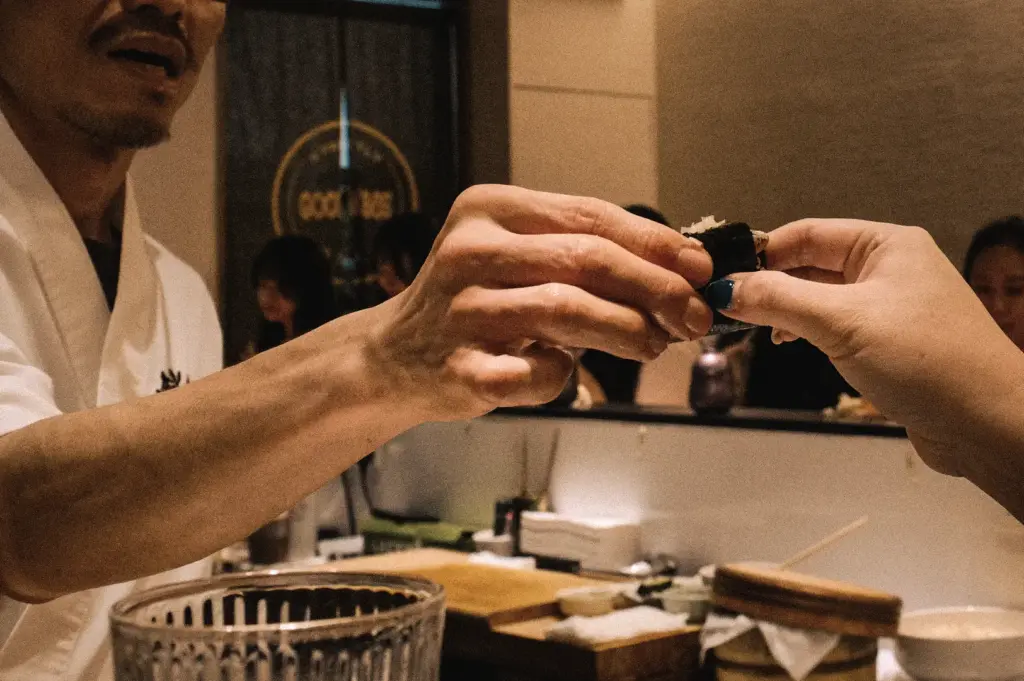
Sashimi is the dish with nowhere to hide, which makes it the fishmonger’s true test. A good cut is made across the grain in a single drawing stroke (hiki-giri) so the flesh’s cells are not crushed and the surface stays clean. The cut style follows the fish: thick hira-zukuri for a rich, fatty fish, translucent usu-zukuri for a lean white one, decided by the condition of each fish that morning.
Here is the part most people get backwards: freshest is not always best. A fishmonger-backed kitchen knows which fish eat better after a day or two of controlled resting (jukusei ) and which must be served the day they arrive. That judgement is made at the market, not the pass, which is the advantage of being backed by Araya Shoten, with sourcing lines running beyond Tokyo’s Toyosu Market up to Hokkaido. It is one reason you can find omakase-grade sushi in Singapore without the ceremony here; the daily-changing menu follows the season and the catch, the kitchen runs zero-waste, and lunch is 30 to 45 minutes at around $108.
Common Questions About Sushi and Sashimi
Is sashimi a type of sushi? No. Sushi is defined by vinegared rice, and sashimi has none. It is its own category (sliced raw protein judged on fish quality and knife work) which is why it usually opens a meal rather than sitting among the rice courses.
Does sushi always contain raw fish? No. Sushi refers to the rice, so cooked options like ebi, unagi and tamago, and vegetarian ones like kappa maki and inari, are all sushi. Plenty of raw fish, meanwhile, is served as sashimi and is not sushi at all.
Which is healthier, sushi or sashimi? It depends on what you are after. Sashimi is lighter and near carb-free, around 30 to 50 kcal a serving; nigiri carries about 6g of carbohydrate from the rice and sits a little higher in calories. Neither is unhealthy; the sashimi is simply leaner.
So the whole sushi vs sashimi puzzle comes down to one grain: rice in, it is sushi; rice out, it is sashimi.
If you’d rather taste the difference than read about it, we’re at 20 Cecil St, one floor up. Book a spot at the bar.