
Here is the mistake people make with the pink flecks in a thick roll: they assume it’s pickled ginger. It isn’t; it’s usually sakura denbu, sweet pink fish floss, and it tells you the roll was built by someone following tradition rather than a laminated menu. Once you understand hosomaki vs futomaki, the whole rolled-sushi section stops being a guessing game.
What are Hosomaki and Futomaki?
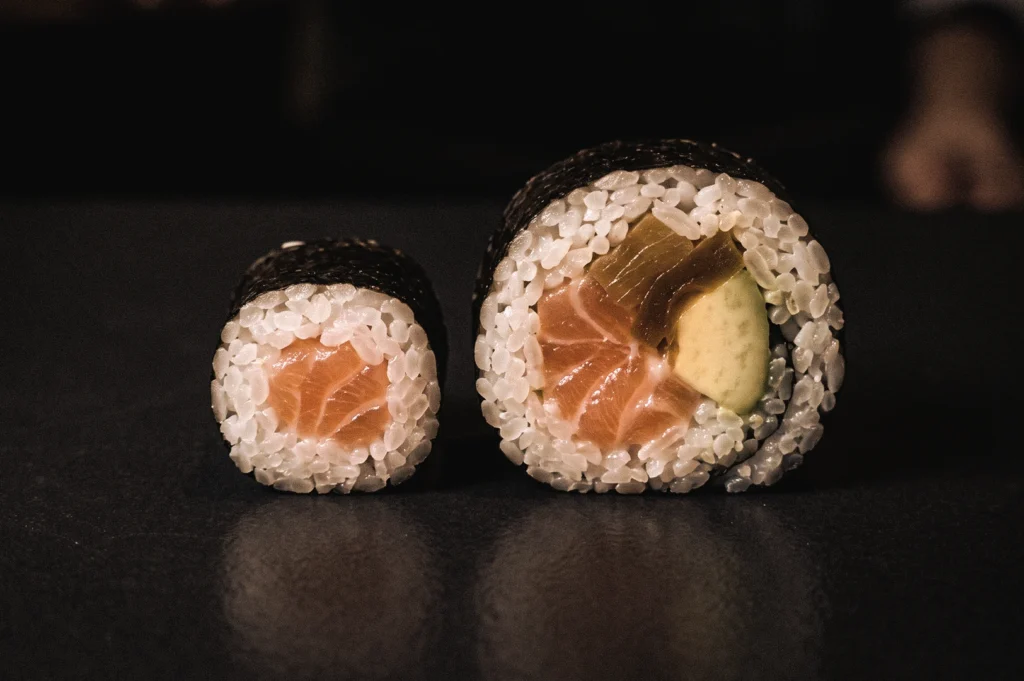
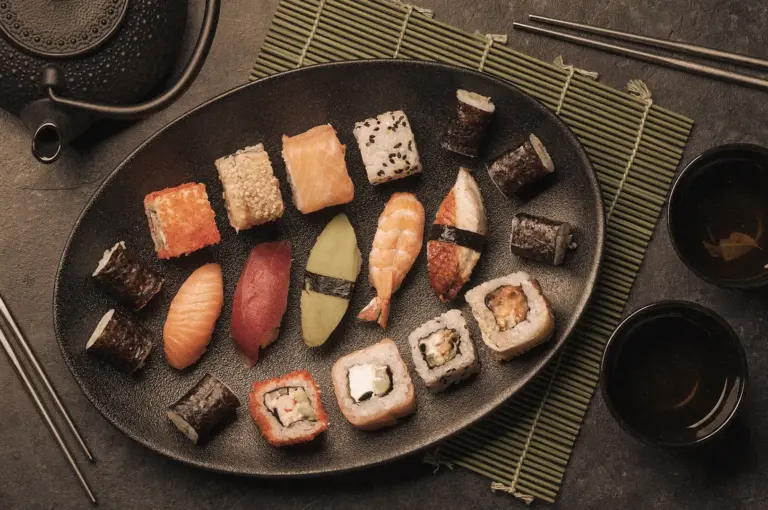
Hosomaki means “thin roll”. It’s a small cylinder with the nori on the outside, about 2.5 cm across, built on a half sheet of nori with generally one filling. That’s the whole design: one ingredient, framed cleanly.
Futomaki means “thick or fat roll”. It runs 5–6 cm across, uses a full sheet of nori, and carries two to four or five fillings chosen for complementary taste and colour. The sheet size is the tell: a full sheet gives you futomaki, a half sheet gives you hosomaki. There’s a middle child too: chumaki, the medium roll, around 3.5 cm with two or three fillings.
Where Thin and Thick Rolls Come From: Edo Origins and the Tokyo-Osaka Divide
Rolled sushi emerged in the 18th century, during the Edo period. From there it split along regional lines, and that split still shapes what’s in front of you.
The thin, single-filling hosomaki became the Edo (now Tokyo) style, the Kanto approach. The thick, multi-filling futomaki became the Osaka style, the Kansai approach. If you want the historical thread that ties the Tokyo counter to what you eat today, what does edomae actually mean today is the piece to read.
One roll sits at the root of all of it: kanpyomaki, made with sweet-simmered dried gourd. In the early Meiji era it was effectively the only norimaki (the seaweed-wrapped roll) on offer. Kanpyo has been eaten in Japan since the Edo period, and most of it still comes from Tochigi Prefecture.
How Each Roll is Made: Nori, Rice and the Makisu
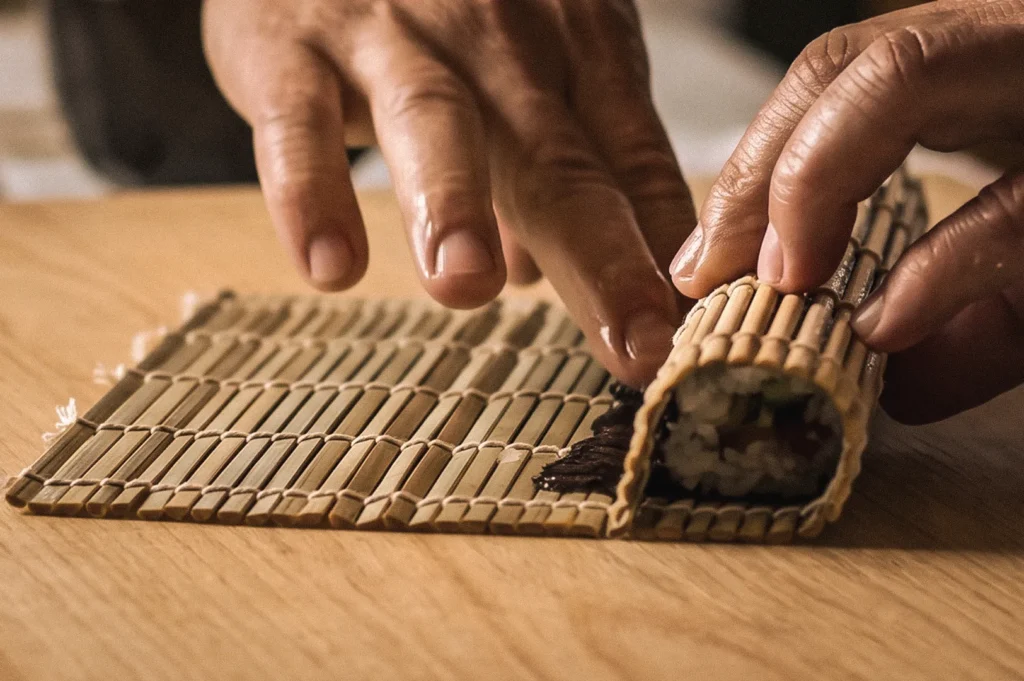
Both rolls start on a makisu, a bamboo mat that gives the roller even pressure across the whole length. Without it, the rice packs unevenly and the round loses its shape under the knife. The mat is the difference between a clean spiral and a squashed one.
The cut is where the two rolls part ways. Hosomaki is sliced into six even pieces with a sharp knife wiped wet between passes; some chefs cut eight. Futomaki is halved first, then each half is cut into three or four thick rounds, so you get a stouter piece with the filling pattern on show. That wet knife matters: dry steel drags and tears the nori instead of parting it.
Hosomaki vs. Futomaki: The Differences Side by Side
Line them up and the contrast is clean. Here’s the difference that matters, feature by feature:
- Nori sheet: half sheet (hosomaki) vs full sheet (futomaki)
- Diameter: about 2.5 cm vs 5–6 cm
- Fillings: generally one vs two to five
- Regional roots: Kanto/Tokyo vs Kansai/Osaka
- Cutting: six (or eight) even pieces vs halved then three to four thick rounds
- Eating: one bite vs a recognised exception; two or three bites are fine
- Rough calories: about 20–30 kcal per hosomaki piece vs around 64 kcal per futomaki piece
So the takeaway is simple: futomaki is not just a big hosomaki. They’re distinct categories with different sheet sizes, filling counts, regional homes, cutting styles and etiquette.
Classic Rolls to Order: Tekkamaki, Kappamaki, Negitoro and Festival Futomaki
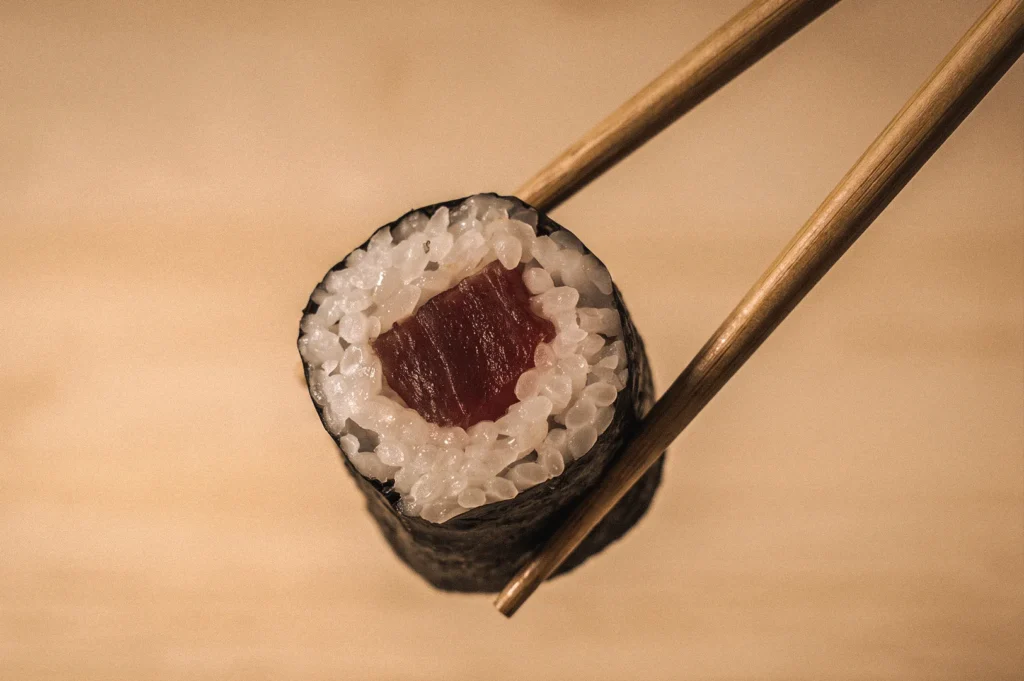
Start with the hosomaki trio worth knowing by name. Tekkamaki is raw tuna, traditionally lean akami, and the name is widely traced to the tekkaba: Edo and Meiji-era gambling dens where it was eaten as a quick one-handed snack. Kappamaki is cucumber, named after the kappa, a water imp said to love cucumbers, and it works as a palate cleanser between raw-fish courses.
Negitoromaki is chopped fatty tuna with scallion, and the name most likely comes from negiru: scraping the nakaochi, the meat clinging between the tuna’s bones, with a spoon. Real negitoro starts with that sweet, almost spreadable meat, retrieved by hand after the saku blocks are cut. Yield per fish is tiny, which is why most commercial negitoro is minced trim.
Traditional futomaki fillings lean cooked, pickled and vegetarian: kanpyo, tamagoyaki (sweet rolled omelette), simmered shiitake, cucumber, takuan (pickled daikon), sakura denbu and grilled eel. The festival version is ehomaki, an uncut futomaki eaten at Setsubun, around 3 February. You face the year’s lucky direction, make a wish, and eat the whole roll in silence: seven fillings for the Seven Lucky Gods. The Kansai custom went nationwide through convenience-store campaigns in the 1980s and 90s.
How to Eat Hosomaki and Futomaki at a Sushi Counter
Hosomaki is a one-bite piece. Futomaki is the accepted exception: two or three bites are fine, but keep holding it and don’t set it back down mid-roll. At a counter, maki tends to arrive late in an omakase, with tekkamaki often near the end before a closing piece of tamago.
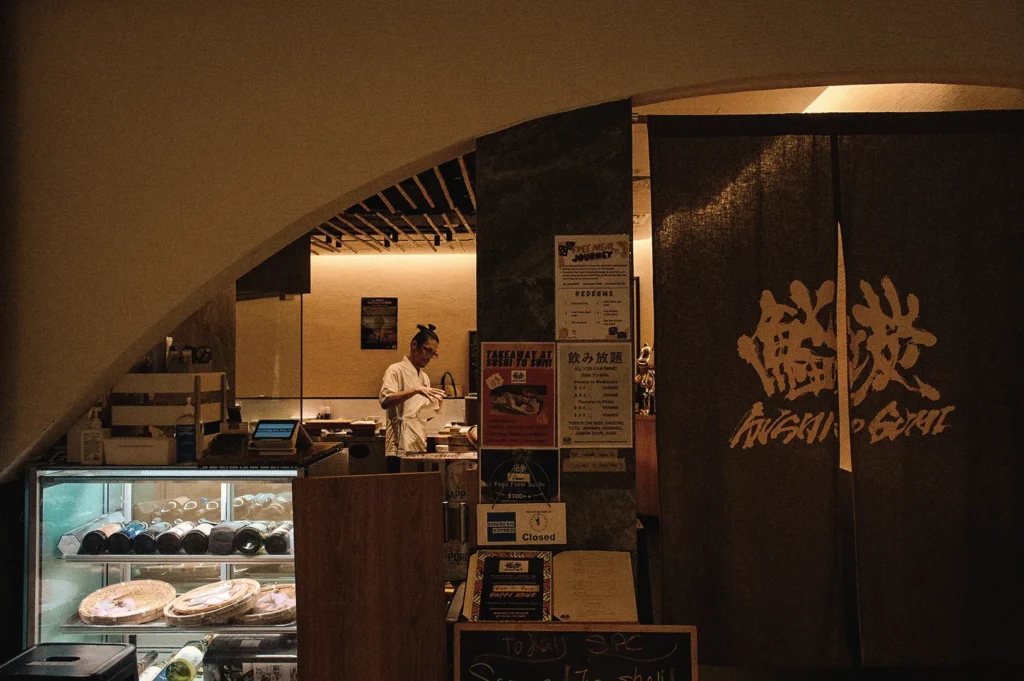
The quality lives in the sourcing, not the theatre. Sushi to Sumi is a standing sushi bar and charcoal-grilled seafood counter, backed by Araya Shoten, a Japanese fishmonger with sourcing lines reaching beyond Tokyo’s Toyosu Market up to Hokkaido. Because of that, negitoro can come from same-day, hand-scraped nakaochi off a specific tuna we can trace, and tekkamaki gets cut from an identified akami block rather than anonymous off-cuts. Plenty of diners find us after searching “best sushi restaurant Singapore” and expecting ceremony: what they get is traceable fish and lunch in 30–45 minutes.
Hosomaki vs. Futomaki: Your Questions Answered
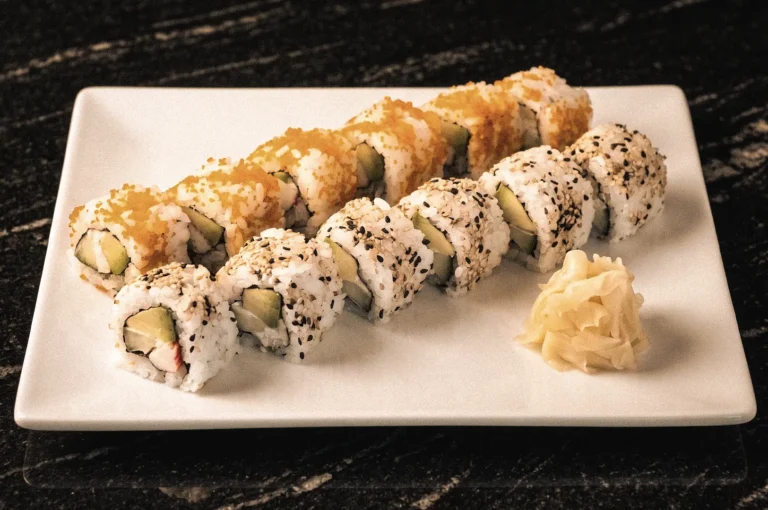
Is futomaki vegetarian? Often, yes. Traditional futomaki leans on cooked and pickled fillings (kanpyo, tamagoyaki, shiitake, cucumber, takuan) though grilled eel and sakura denbu appear too. It’s one of Japan’s most traditional rolls, not a modern Western one; the oversized cream-cheese rolls are uramaki, a separate largely American category.
What is the pink stuff in futomaki? Usually sakura denbu, a sweet pink fish floss, not pickled ginger.
Are you supposed to eat sushi rolls in one bite? Hosomaki, yes. Futomaki is the exception: two or three bites are acceptable, so long as you keep hold of it.
If you’d rather taste the difference than read about it, we’re at 20 Cecil St, one floor up. Book a spot at the bar.