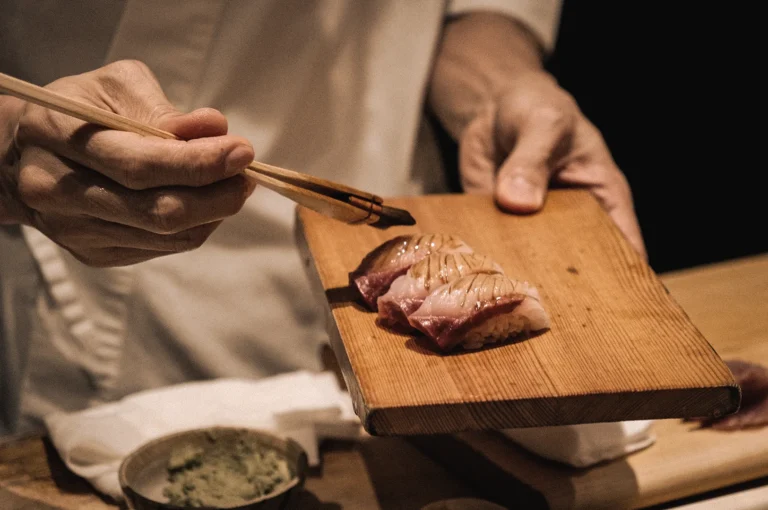

Here is the thing most people get wrong about aburi sushi: they think the fish is cooked. It isn’t. The flame touches the surface for five to ten seconds, no more, so the top turns golden and smoky while the centre stays raw and cool; closer to a medium-rare steak than anything from a pan. Aburi sushi is nigiri seared on one side, and once you know that, the mystery drops away.
You have almost certainly eaten it. Salmon aburi with mentaiko is a fixture on Singapore menus, often without the word attached. This piece explains what aburi actually is, where it came from, and why one version tastes far better than another.
What Does Aburi Mean?
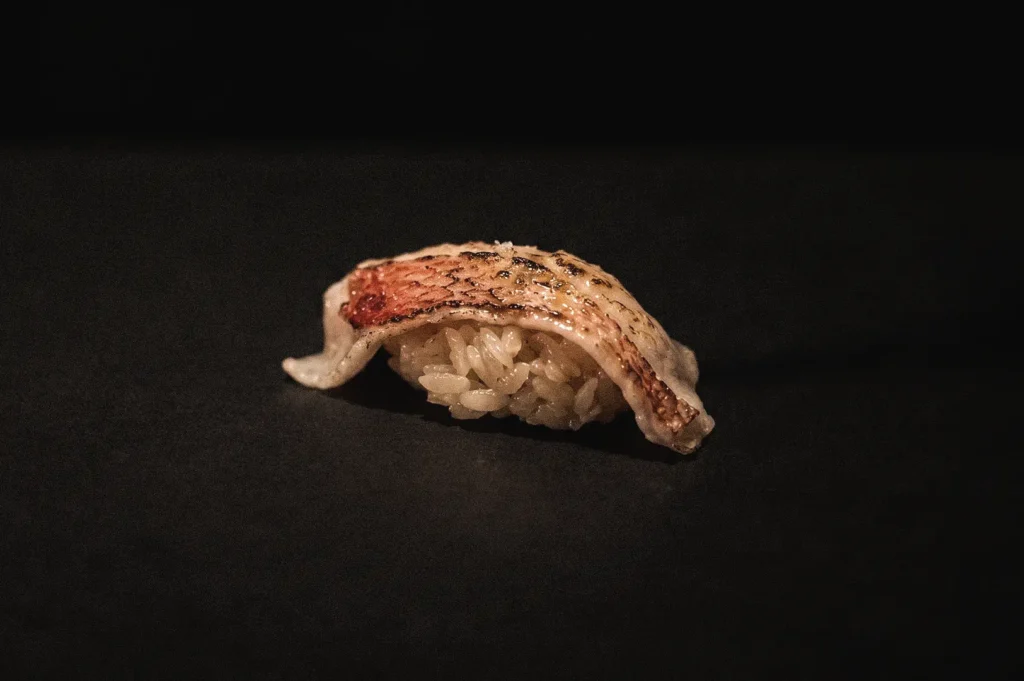
Aburi translates from Japanese as “flame-seared” or “scorched”. That is the whole aburi meaning in one word: fire, applied briefly.
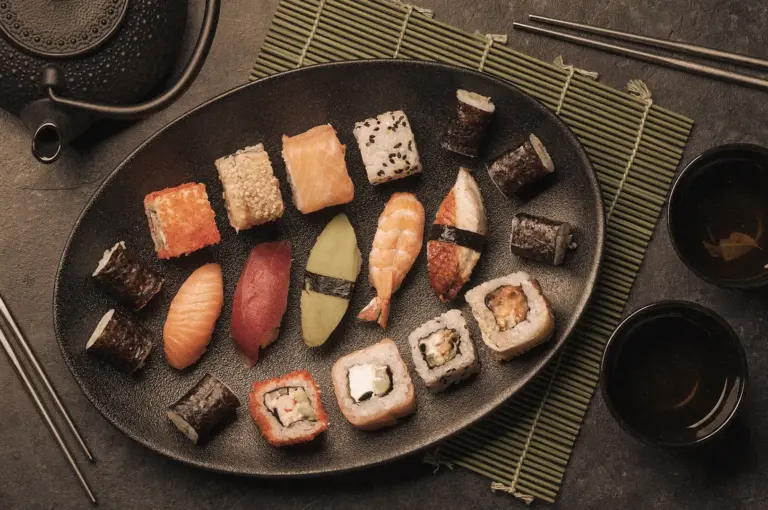
Aburi sushi is a subset of nigiri (a slice of fish over vinegared rice) with the topping seared on one side only. The surface chars lightly. The interior stays raw and cold. The point is contrast, not cooking, and that distinction runs through everything below.
Where Aburi Sushi Comes From
Aburi has real roots and a modern face, and it helps to separate the two. The searing itself belongs to the Edomae tradition; the Tokyo style built on preparing toppings, not just slicing them. Edo chefs cured kohada (gizzard shad) in salt and vinegar, simmered anago (conger eel) and glazed it with tsume (a sweet reduction), and marinated tuna as zuke (a soy soak). Flame-searing fatty toppings and shellfish sits comfortably in that repertoire.
Aburi as a menu headliner, though, is recent. The best-documented milestone is Seigo Nakamura’s Aburi Restaurants group, whose Vancouver restaurant Miku popularised flame-seared aburi oshi sushi in North America from 2008. Call it pioneered commercially, not invented outright.
Aburi salmon is doubly modern. Salmon is not an Edomae fish, it was never caught in Tokyo Bay, and it carried a parasite risk raw, so it only entered Japanese sushi from the 1980s, via Norwegian farmed salmon. The dish everyone knows best is, in fact, one of the newest.
How Aburi Sushi is Made
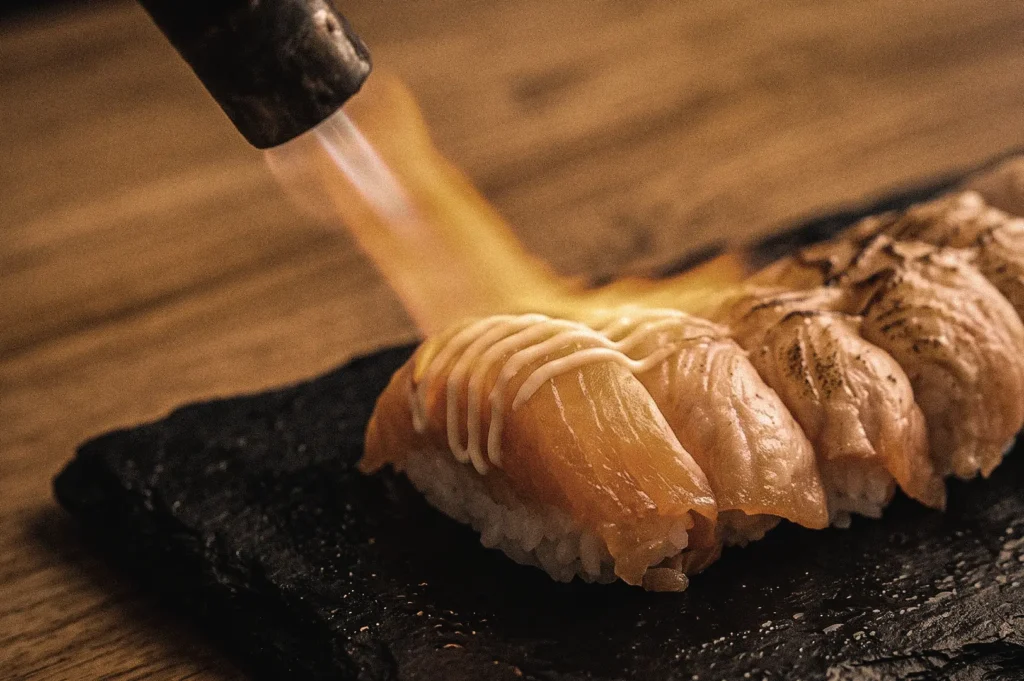
The order matters: form first, sear second. The chef shapes the nigiri, then passes a flame swiftly over the topping: roughly five to ten seconds with a torch. It is a surface transformation, deliberately shallow. Cook it through and you have lost the point.
Most modern aburi is done with a handheld butane blowtorch. That is the common tool, but not the only one. Documented traditional methods include searing over binchotan (a dense Japanese charcoal), pressing a hot metal skewer against the fish, or passing it through an open flame.
The tool is not a footnote, either. Serious Edomae-leaning chefs reject gas torches because butane can leave a faint odour on the fish. Binchotan burns almost odourless and smokeless, at a steady 870 to 1,000°C, throwing off far-infrared radiant heat that crisps the surface while the flesh underneath stays cool and moist; and no flare-ups when the fat drips.
Why Flame-Searing Changes the Taste of Fish
Three things happen under the flame, and each one earns its place.
First, fat renders. Heat starts melting the fat in rich cuts (salmon belly, toro, engawa) making them more buttery and releasing flavour compounds that only fat carries.
Second, the Maillard reaction kicks in. That is the browning that gives seared surfaces their smoky aroma and deeper savour, the same chemistry behind a crust on grilled meat. Any sugar-based sauce caramelises here too.
Third, you get contrast. A warm, crisp top against cool raw fish and rice held at body temperature; melt against tenderness, aroma against clean flesh. That is the whole appeal in one bite.
There is a purist reading worth knowing. The best chefs don’t sear to make fish richer; they sear to control its fat so the piece stays balanced. Which is also why only certain fat-rich cuts take the flame well.
Classic Aburi Sushi Toppings to Try
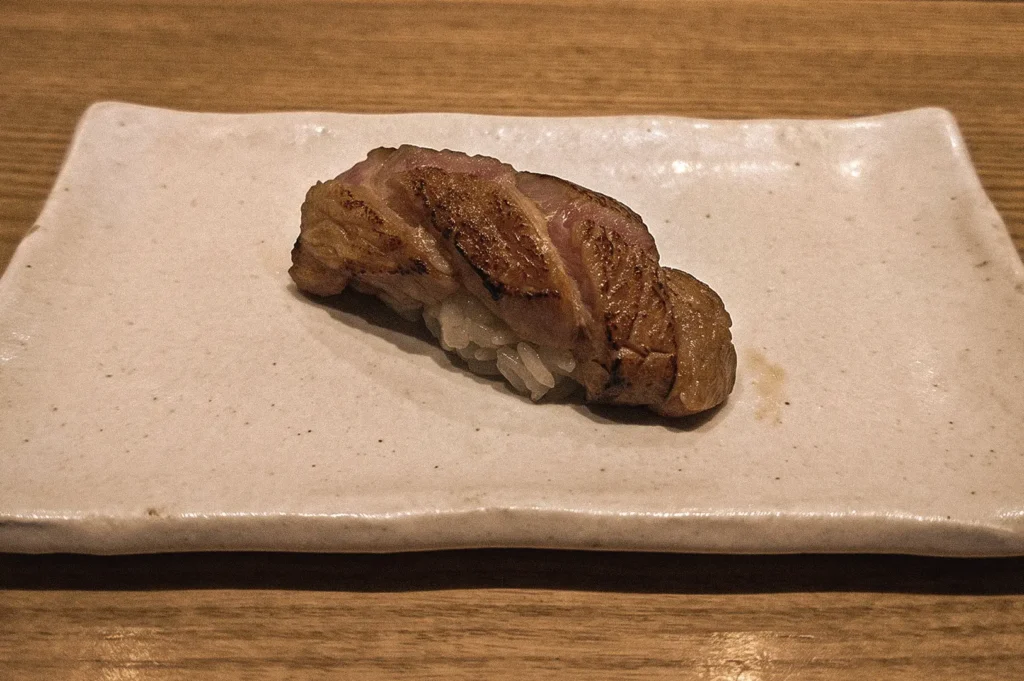
Fat is the deciding factor. The toppings that reward searing are the ones with enough oil to render.
- Salmon — the most popular by far, especially the belly.
- Otoro and chutoro — fatty tuna, where the fat partially melts under the flame.
- Engawa — the flounder fin muscle, often called best eaten aburi; there are only about four per fish.
- Hotate — scallop, where a quick sear draws out its natural sweetness.
- Unagi, plus hamachi, saba and skin-on madai.
Not everything belongs near a flame, though. Delicate toppings are served exactly as they arrive, untouched by heat; if you want to see how that works, read how uni is served at a sushi counter. Some ingredients are ruined by fire; the skill is knowing which.
Aburi vs. Nigiri vs. Tataki: What is the Difference?
These three get muddled, so here is the clean version.
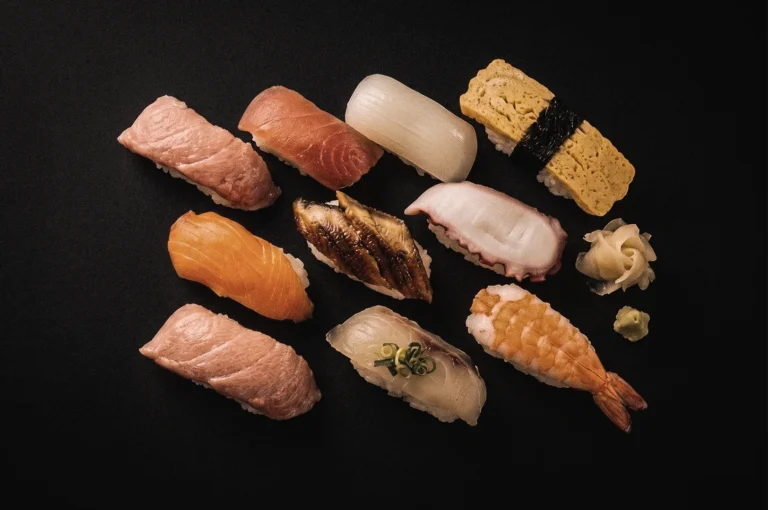
Nigiri is a raw topping pressed over rice. Aburi is that same construction with the topping seared on one side; so aburi is a preparation applied to nigiri, not a separate kind of sushi. It also applies to oshi (pressed) sushi and to maki toppings. Think of seared nigiri and aburi as the same idea.
The aburi vs tataki question is different. Both use high heat, but the purpose splits. Aburi is an aromatic finish, served straight away as sushi. Tataki is seared on the outside, then chilled, sliced, and always served with seasonings; katsuo no tataki, the straw-seared bonito of Kochi, is the classic example. One is warm and immediate; the other is cooled and dressed.
How to Eat Aburi Sushi (and Where it Shines in Singapore)
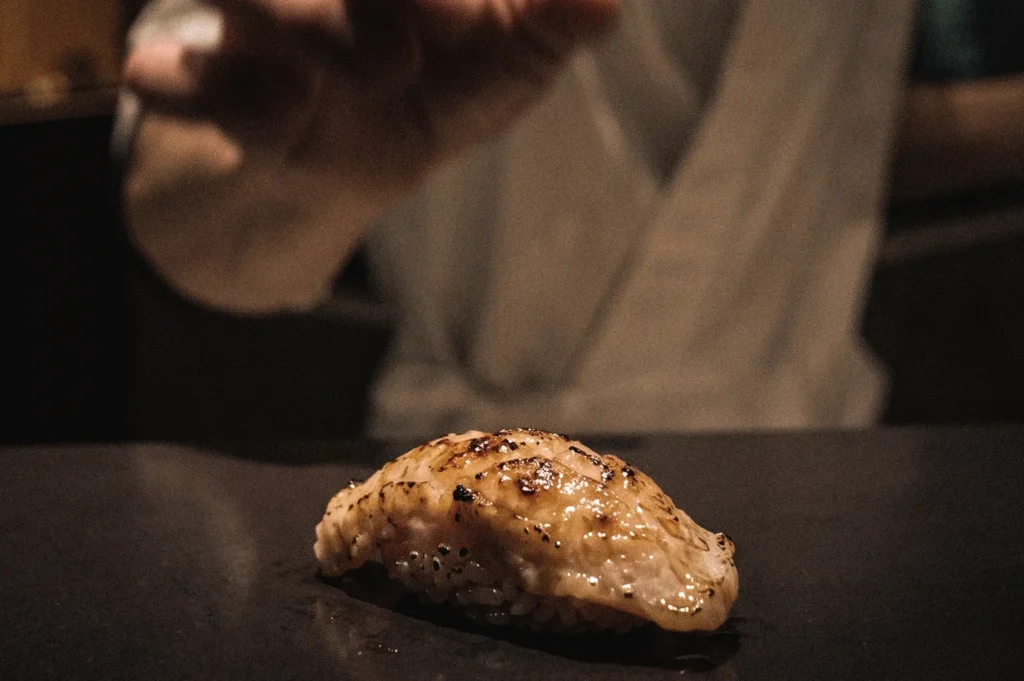
Eat it like nigiri: promptly, ideally in one bite. Aburi is usually pre-seasoned or sauced (ponzu (a citrus-soy dressing), mentaiko mayo, sea salt, yuzu kosho) so it often needs no soy sauce at all. It does not keep. The contrast of warm surface and cool centre fades within minutes, so the moment it lands is the moment to eat it.
A fair warning for anyone who avoids raw fish entirely: aburi is not cooked. Only the surface is seared; the centre is still raw, which means it needs properly handled, sushi-grade fish. Its gateway appeal is real, though; the sear tames the strong raw taste and famously wins over hesitant eaters, but treat it as raw, not safe-because-cooked.
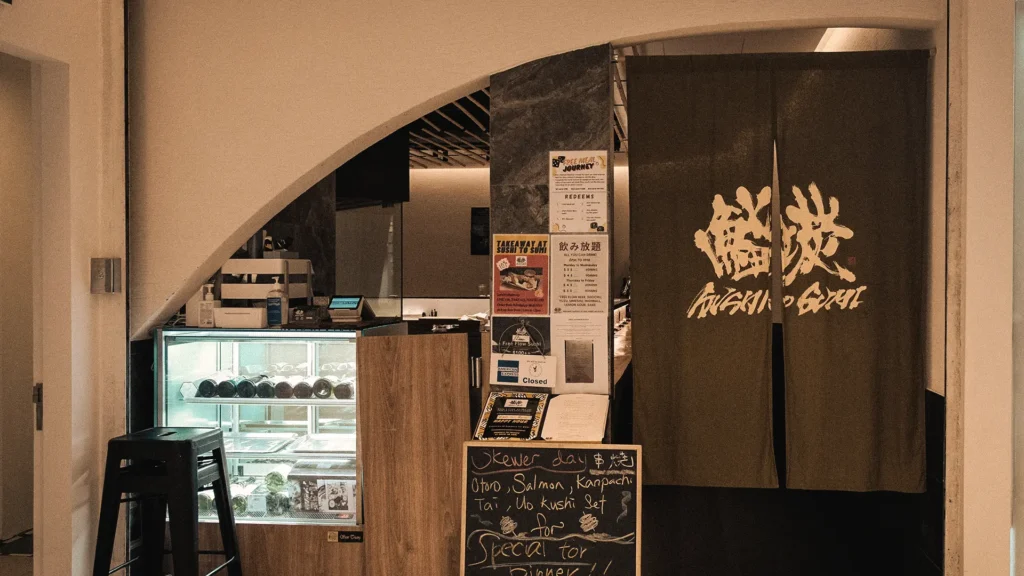
This is where the fuel earns its keep. “Sumi” means charcoal, so the name Sushi to Sumi is the whole story: a standing sushi bar and charcoal-grilled seafood counter at 20 Cecil St, PLUS Building #02-01, searing over binchotan rather than gas. Backed by Araya Shoten, a Japanese fishmonger sourcing beyond Tokyo’s Toyosu Market up to Hokkaido, the kitchen lands the fat-rich cuts that take a sear, and the menu changes daily with what arrives. Nothing goes to waste, either: the grilled collars and the day’s bones become other dishes entirely.
Aburi sushi is worth ordering when the fish is fatty, the fuel is charcoal, and the piece reaches you the second it is torched. If you’d rather taste the difference than read about it, we’re at 20 Cecil St, one floor up. Book a spot at the bar.