
Here is the mistake that ruins the piece before you’ve tasted it: flipping a gunkan topping-side-down into the soy dish, the way you’d dip nigiri. The roe spills, the rice waterlogs, and the best part of the bite ends up in the bowl. Gunkan sushi is built differently from anything else on the counter, and once you understand the little nori wall, you’ll never dip it wrong again.
What is Gunkan Sushi?
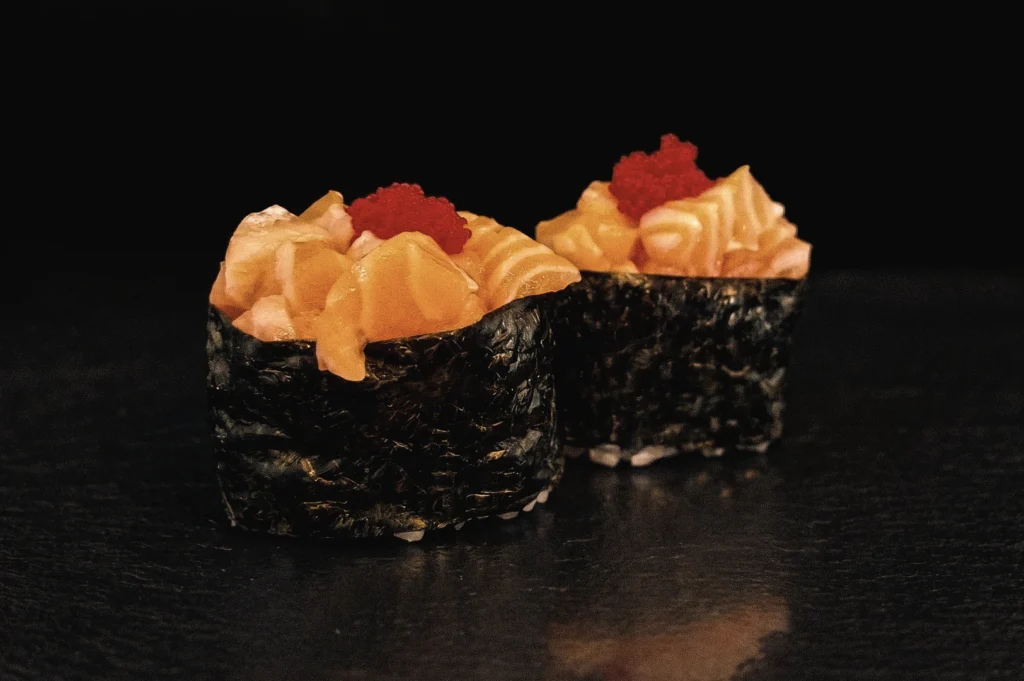
Gunkan means “warship” or “battleship“, and the full name is gunkan maki, “warship roll”. Look at one side-on, an oval of rice wrapped in a dark band of nori, and you’ll see the hull it’s named for. That’s why the English menus call it battleship sushi.
The nori collar is the whole idea. A strip of nori is wrapped around the sides of the rice so it stands taller than the rice itself, forming a small cup. Loose toppings get spooned into that cavity. The wall isn’t decoration; it’s structural, holding things that could never sit on a bare rice mound.
A Modern Invention: The 1941 Origin of Gunkan at Ginza Kyubey
People assume gunkan is ancient Edomae tradition. It isn’t. It was invented in 1941 at Kyubey in Ginza, Tokyo, by the founder Hisaji Imada, and Kyubey still trades in Ginza today.
The story goes that a regular brought sea urchin down from Hokkaido and asked whether Imada could make sushi from it. Uni is soft and crumbly, impossible to press onto rice like a solid slice. Imada’s fix was to wrap the rice in a collar of nori and rest the uni on top, and that first cup became the gunkan. Not centuries of ceremony; one good idea, solving one awkward ingredient.
How Gunkan is Made: Rice, Nori and the Battleship Shape
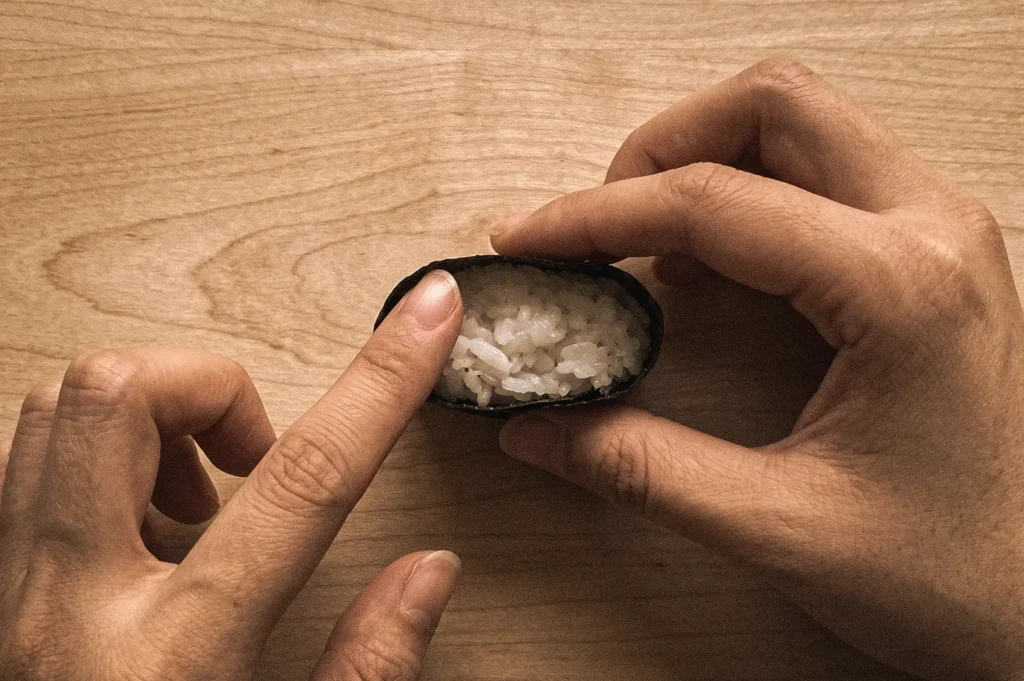
The build is small and exact. A chef hand-forms an oval of vinegared rice, roughly 20g, then cuts a strip of nori and wraps it around the sides so it rises above the rice line. The seam is sealed with a dab of water or a single crushed grain of rice, and a shallow well is pressed into the top before the topping goes in.
The nori itself is measured, not guessed. Standard sheets carry perforation lines about 3–3.3cm apart, and chefs cut strips along them. Gunkan usually arrives two pieces to an order, meant to be eaten in one bite each, and eaten soon, which we’ll come back to.
Classic Gunkan Toppings, From Uni and Ikura to Kani Miso
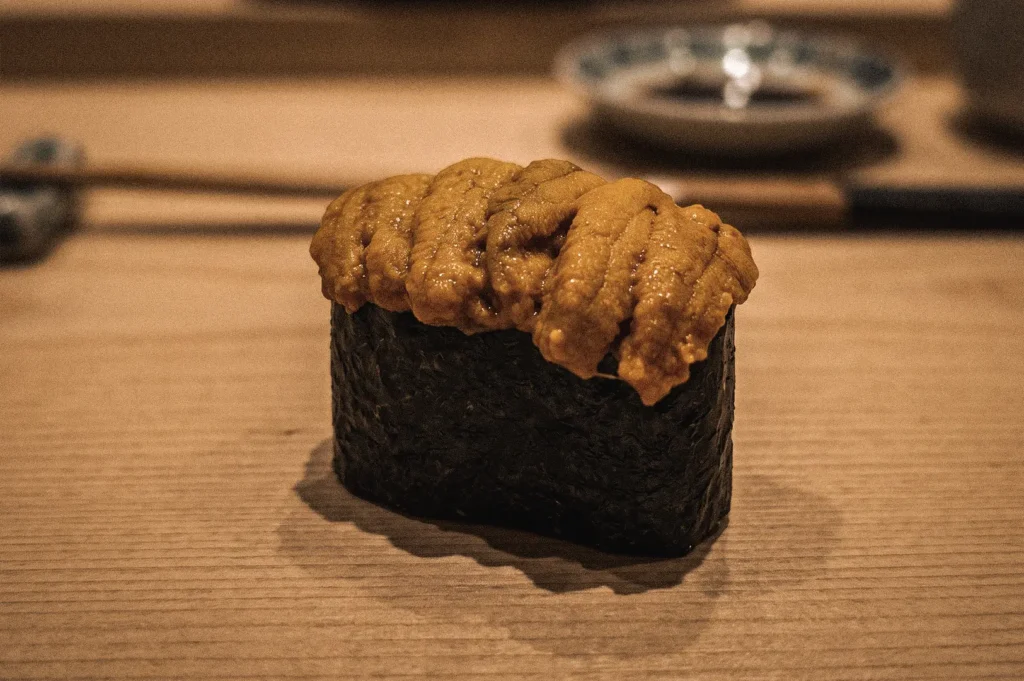
This is where gunkan earns its keep, because the collar lets it carry the richest things in the sea. Uni and ikura, salmon roe, lead the roster, alongside tobiko, negitoro, chopped scallop, shirasu whitebait, and the winter oddities: shirako, cod milt, and kani miso. Conveyor-belt counters add spicy tuna, natto, corn mayo and quail egg.
Kani miso deserves a correction, because the name misleads. It contains no miso and it isn’t crab brains: it’s the crab’s mid-gut gland, the hepatopancreas, which simply happens to look like miso. It’s usually taken from snow crab or horsehair crab, and it rides the winter crab season from November to March.
The rest of the calendar matters too. Uni peaks in summer, June to September, with Hokkaido bafun uni from around Rebun and Rishiri. Fresh ikura is an autumn topping, arriving with the salmon run; shirako is winter-only, December to February. Depending on what’s on top, a gunkan can be raw, cured or fully cooked.
Here’s the craft detail worth knowing. Uni is bought in wooden boxes at Toyosu’s morning auction, graded by species, colour, firmness and whether the tongues are intact. Bafun uni is small, deep orange, kombu-fed, intensely sweet; murasaki uni is larger, paler and cleaner. Lower grades are firmed with alum, which leaves a metallic edge, so a fishmonger-backed bar can insist on no-alum uni and switch species as the season turns. Ikura tells a similar story; it starts as sujiko, the whole roe sack harvested in autumn, teased off the membrane, salt-firmed and marinated in soy as shoyu-zuke, with the marination strength a house signature. A shop with its own sourcing lines cures its ikura to its own recipe rather than buying it in a tub.
Gunkan vs. Nigiri vs. Maki: What is the Difference?
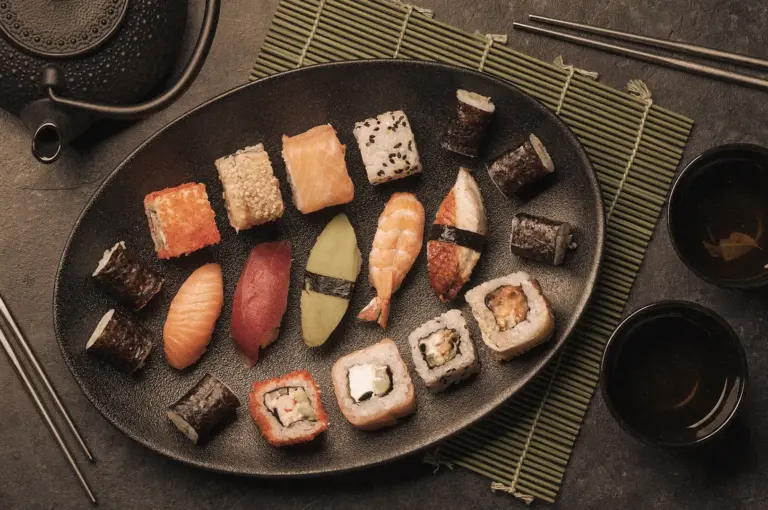
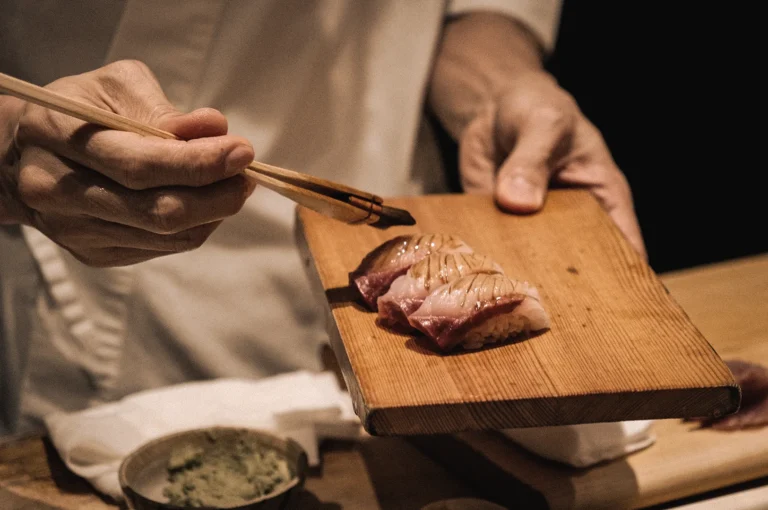
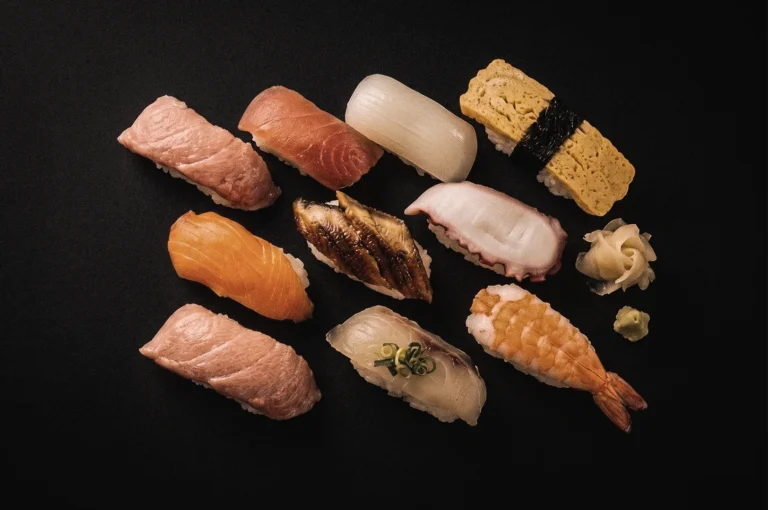
All three get muddled, so here’s the plain version. In the gunkan vs nigiri question, both are hand-formed, but nigiri is a rice mound with one solid slice on top and no collar, while gunkan adds the nori wall and a loose topping. That wall exists precisely because the topping can’t be pressed on.
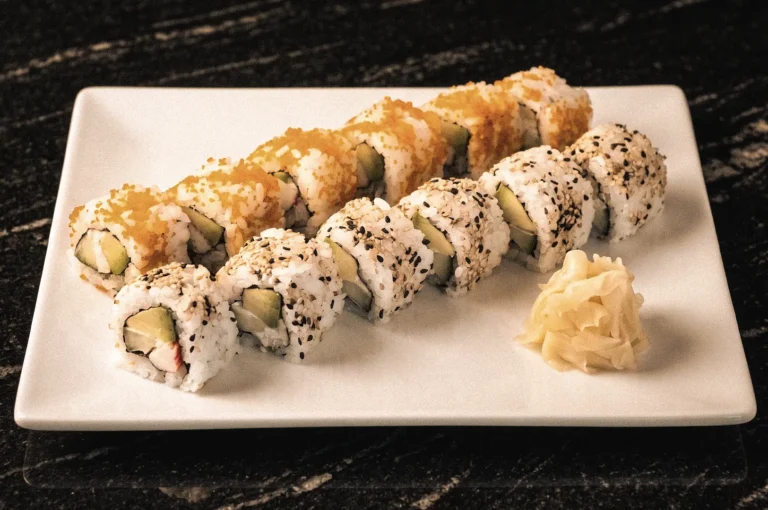
Maki is the other confusion. Maki is rolled inside a nori sheet on a bamboo mat and sliced into rounds; gunkan is open-faced, with the topping on show. Despite the “maki” in its name, nothing is actually rolled, which is why the classification is genuinely debated. On a progression, gunkan tends to arrive mid-to-late, because its toppings are among the richest things you’ll eat all meal. It’s a good example of why simplicity in Japanese food requires precision; the form looks basic and hides a lot of judgement.
How to Eat Gunkan Sushi (Soy Sauce Rules Included)
Eat it in one bite, and eat it promptly. The crisp nori holds its texture for only tens of minutes before it turns leathery, which is why some restaurants won’t put gunkan on a delivery menu at all. A soggy collar is a wasted piece.
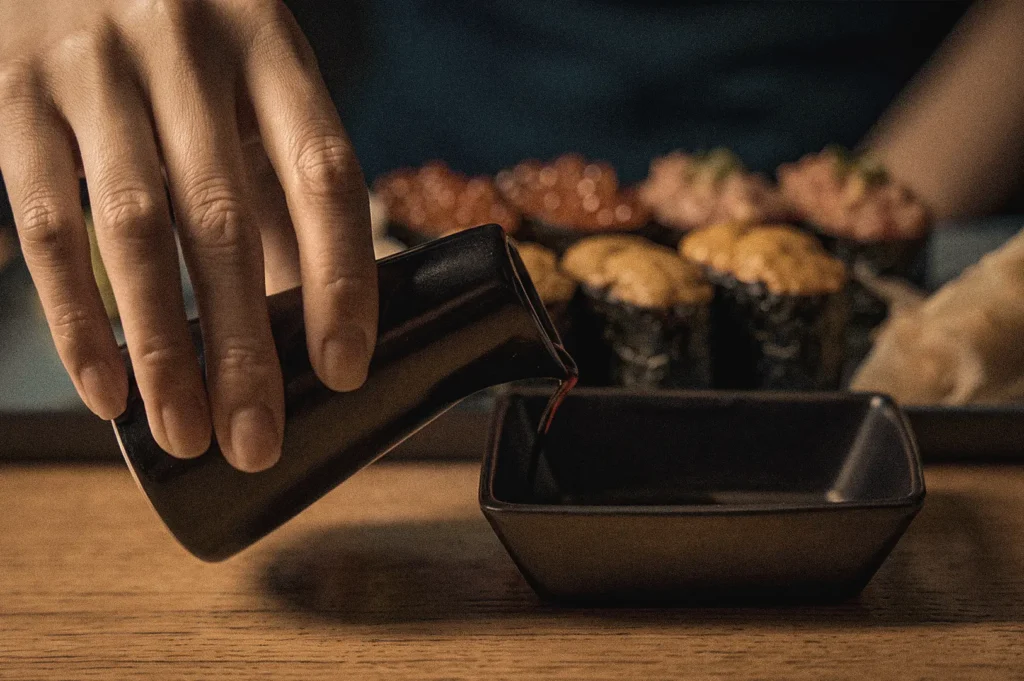
Soy sauce needs a workaround. Since you can’t flip it topping-side-down without losing the topping, dip a slice of gari, pickled ginger, in the soy and brush it over the top, or drip a little soy directly onto the topping. Never soak the rice side. The same restraint applies to cured toppings generally; if you’re curious how curing works elsewhere on the counter, our guide to kobujime covers it.
Gunkan Sushi FAQs
Is gunkan sushi raw? It depends on the topping. Uni, ikura and negitoro are raw; shoyu-zuke ikura is cured; natto and corn mayo are cooked or vegetarian. Gunkan describes the shape, not the state of the fish.
Why is it called battleship sushi? Because the oval rice base wrapped in a tall band of dark nori looks like a warship’s hull side-on. Gunkan means warship, and “battleship sushi” is just the English translation of that shape.
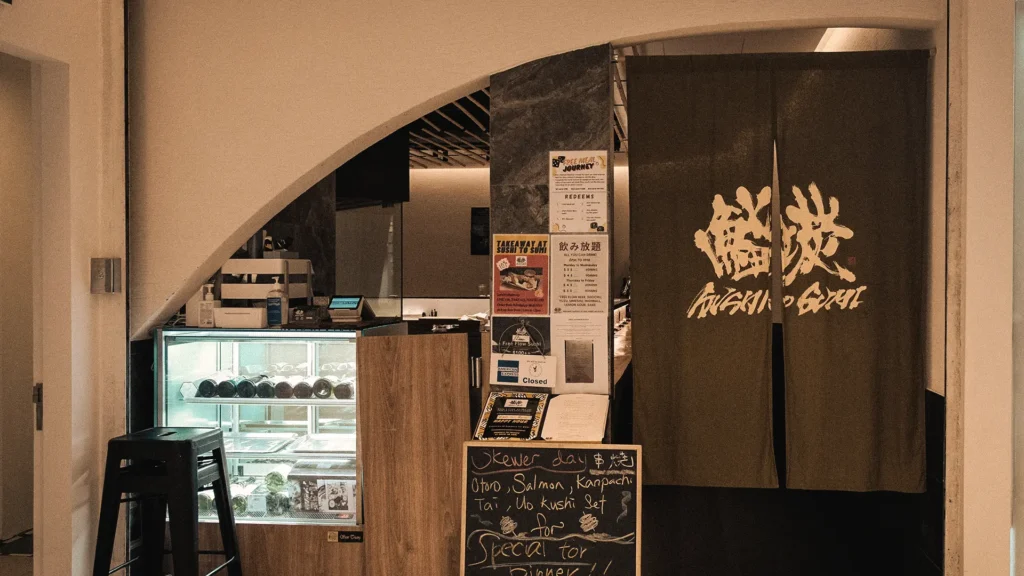
What justifies the price? The toppings. Auction-grade uni, no-alum and graded by species, or ikura cured in-house from autumn sujiko, cost real money and change with the season. That’s the argument for a fishmonger-backed bar: Sushi to Sumi is backed by Araya Shoten, with sourcing lines reaching beyond Tokyo’s Toyosu Market up to Hokkaido, so the daily-changing menu follows the same seasons: bafun uni in summer, ikura in autumn, kani miso in winter. Lunch runs 30–45 minutes at around $108, at 20 Cecil St.
If you’d rather taste the difference than read about it, we’re at 20 Cecil St, one floor up. Book a spot at the bar.