
Here is the mistake most people make: they think nigiri is always raw fish. It isn’t. The word describes a shape and a technique, not a temperature, and once you understand that, the whole counter stops being intimidating.
What is Nigiri Sushi?
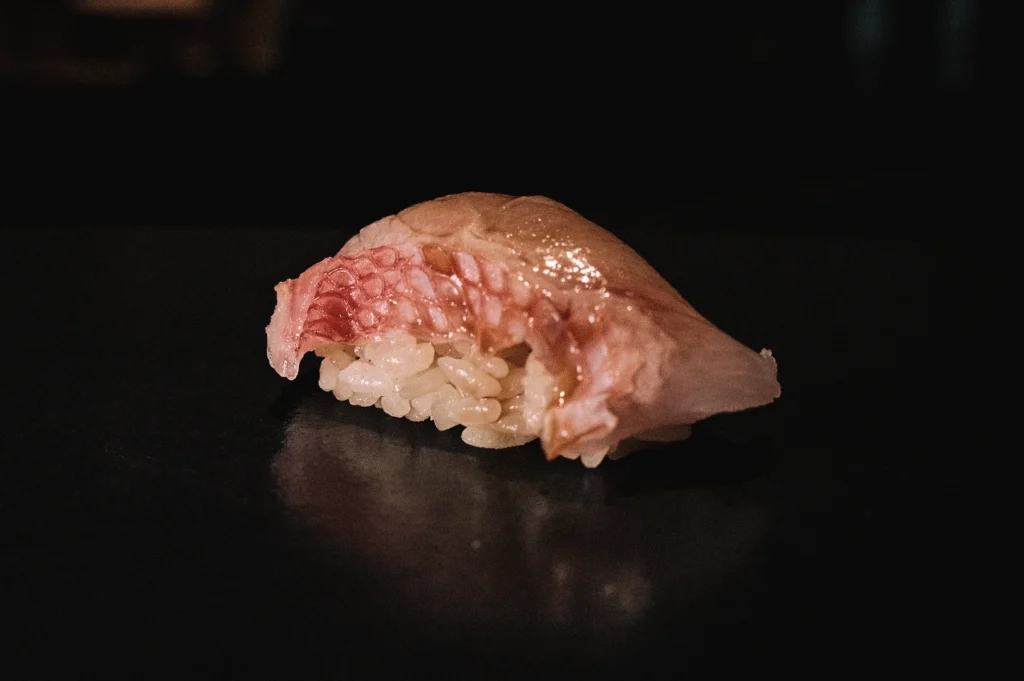
Nigiri sushi is hand-pressed sushi: an oblong mound of vinegared rice with a topping draped over it. The full name is nigirizushi, from the verb nigiru, “to grasp or press”. That is the whole idea in one word: a chef’s hand doing the work.
Each piece has two parts. There’s the shari, the short-grain rice seasoned with rice vinegar, sugar and salt, and the neta, the topping laid on top. A single piece runs roughly 15–20g of shari to 12–18g of neta, and nigiri usually comes in pairs. Slippery toppings like tamago, unagi and tako get a thin band of nori to hold them in place.
A Short History: Nigiri was Edo-Period Fast Food
Nigiri didn’t start in a hushed dining room. It started at a street stall. Hanaya Yohei is credited with inventing or popularising it around 1824, near Ryogoku Bridge in old Edo; today’s Tokyo.
Those early pieces were sold from yatai, roadside stalls, and eaten quickly, often standing up. This is the honest ancestor of every standing sushi bar you’ll see now. The original pieces were far larger too, later halved into the two-bite size we know.
Nigiri also closed the book on an older, slower way of eating fish. Before it, narezushi fermented fish with rice for months, and haya-zushi used vinegar for a quick sourness. Without refrigeration, Edo chefs marinated their toppings in soy (zuke, a soy marinade), salt-cured them, or seared them. The workarounds became the craft.
How Nigiri is Made: Shari, Neta and the Chef’s Hands
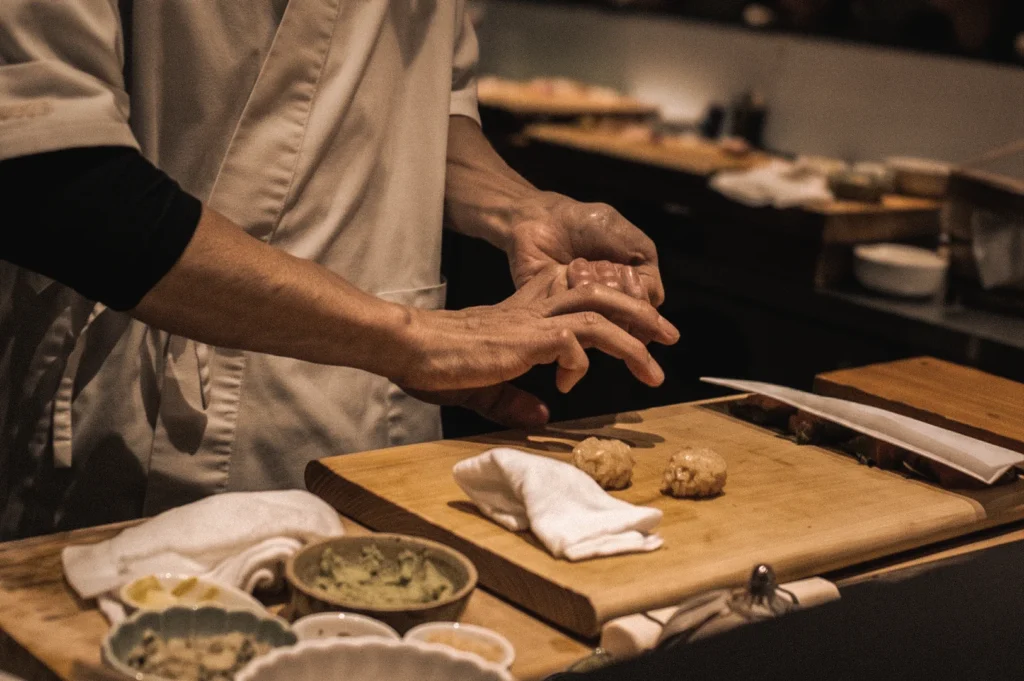
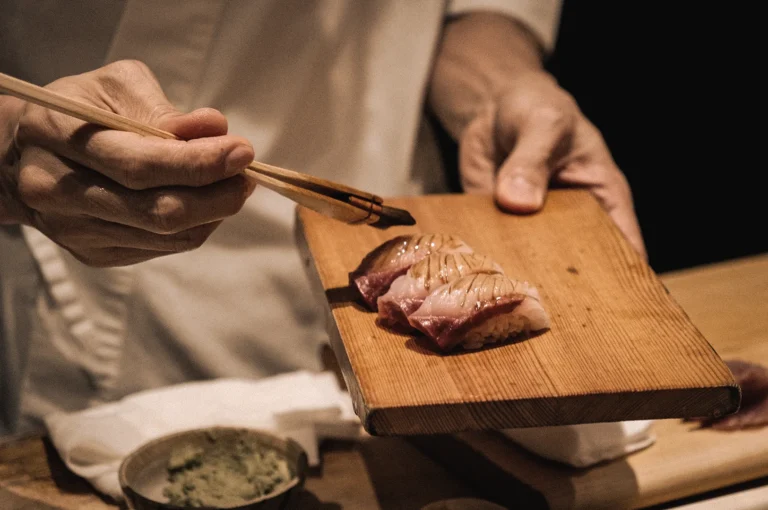
The core skill is hand pressure. The rice has to be firm enough to hold its shape from counter to mouth, yet loose enough to fall apart the moment you bite. That balance takes years to get right, and you can feel the difference immediately when it’s wrong.
Temperature is the quiet part nobody talks about. The rice leaves the chef’s hand at hitohada (roughly body temperature) set against fish that is cool but never fridge-cold. Warm rice against cool fish softens the topping’s fat, so the piece eats as one seamless bite rather than two separate textures. A good chef tunes shari temperature to each species, not to a stopwatch.
Wasabi sits between the rice and the fish, not on top. The chef applies it in an amount judged to the species, and it does double duty: a measured kick of heat, plus a bit of glue to bind neta to shari.
Nigiri vs Sashimi vs Maki: What is the Difference?
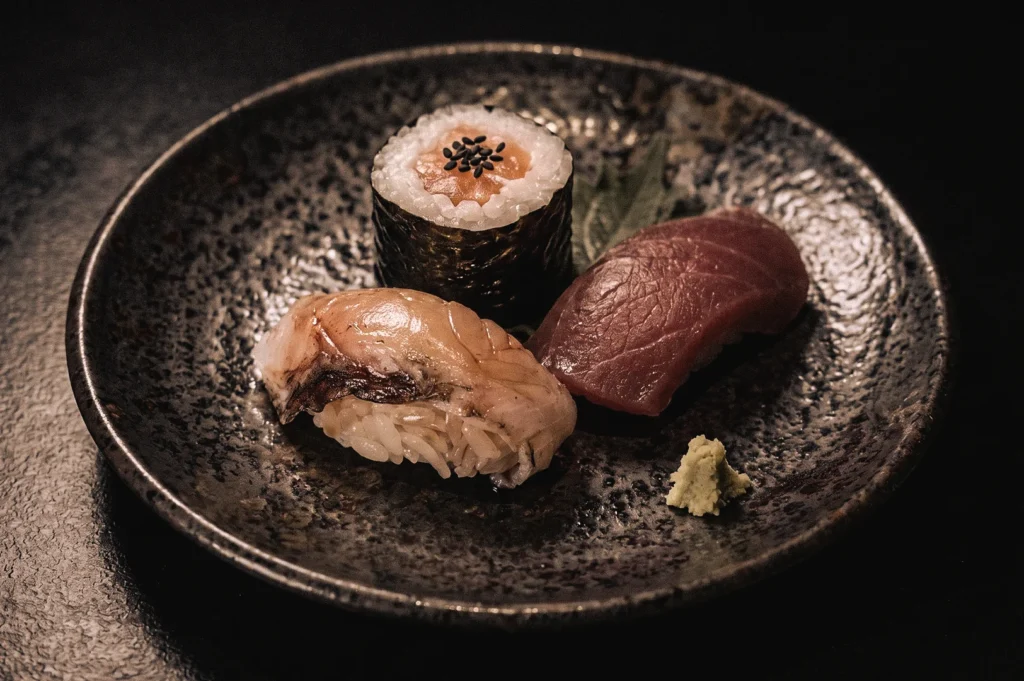
This trips up almost everyone, so let’s settle it plainly. In the nigiri vs sashimi question, sashimi is sliced raw fish on its own: no rice, which technically means it isn’t sushi at all. Sushi is defined by the vinegared rice, not the fish.
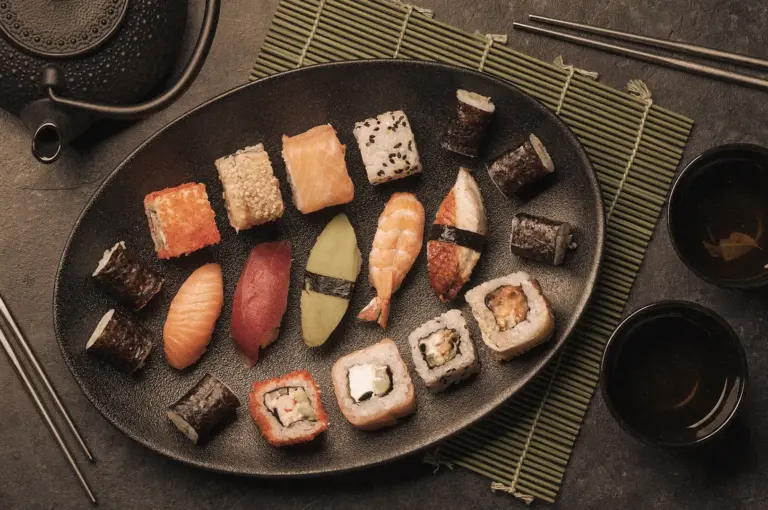
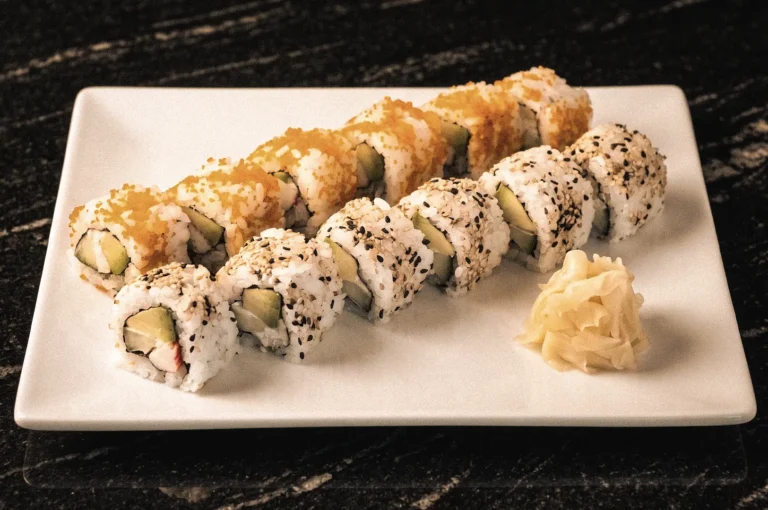
The nigiri vs maki difference is just as simple. Maki is rice and fillings rolled inside nori and sliced into rounds. Nigiri sits in the middle: hand-pressed rice with a topping, no roll, no bowl. Once you see it that way, a sushi menu reads like a map rather than a puzzle.
How to Eat Nigiri: Hands, Soy Sauce and the One-Bite Rule
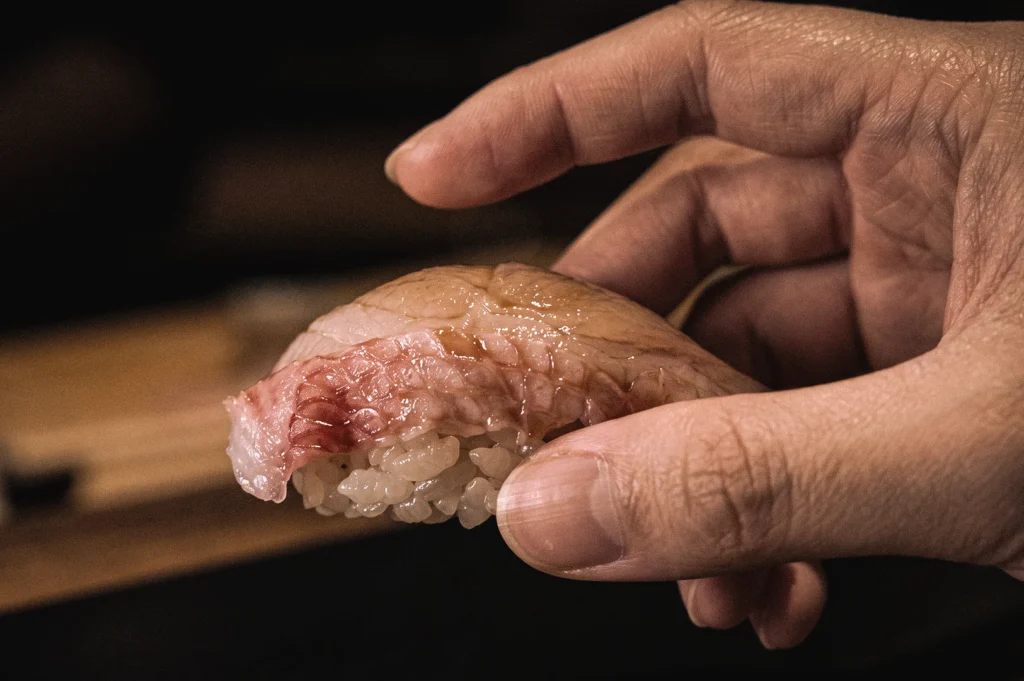
Fingers are welcome. Hands are the traditional way to eat nigiri, a straight legacy of those street stalls, and chopsticks are perfectly fine too. Nobody at a proper counter minds either choice.
Soy sauce is where good pieces go to die. Turn the piece over and dip the fish side only; dipping the rice oversalts it and breaks the shari apart in the dish. If the chef has already brushed on nikiri, a sweetened soy glaze, don’t dip at all; the seasoning is done.
Then eat it in one bite, ideally fish-side down onto the tongue, and eat it promptly. That warm-rice-against-cool-fish balance only holds for a short window before the temperatures equalise and the piece goes flat. The gari, the pickled ginger, is a palate cleanser between pieces; not a topping to pile on.
Ordering Nigiri at a Standing Counter: Where to Start
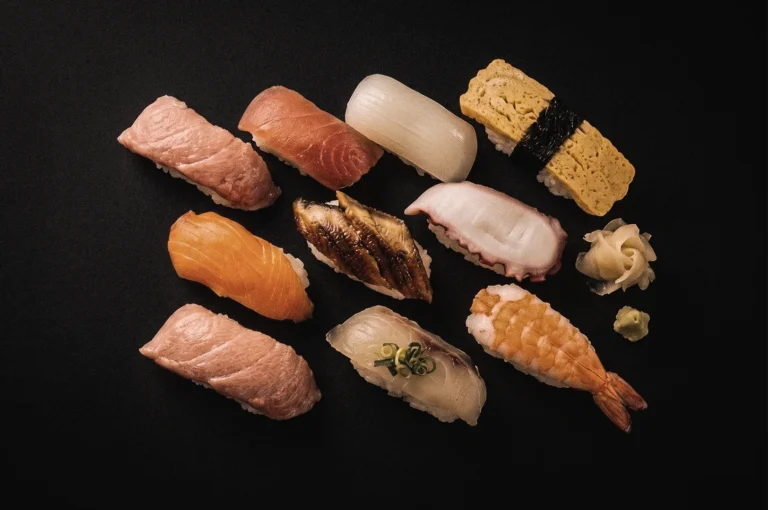
Start with the misconception again, because it shapes what you order: not all nigiri is raw. Maguro (tuna), salmon and hamachi (yellowtail) are served raw, yes. But ebi is boiled shrimp, unagi and anago are cooked eel, tamago is a sweet omelette, and aburi pieces are flame-seared. For loose toppings like uni, ikura and negitoro, there’s gunkan-maki (a rice base wrapped in a nori wall to hold everything in) invented in 1941 at Ginza Kyubey.
Forget the idea that just-caught fish makes the best nigiri, too. Many classic toppings improve with controlled ageing or curing: tuna and flounder are aged for umami, kohada is cured in salt and vinegar, and Edo chefs were marinating fish long before fridges existed.
“Fresh” is about careful handling, not hours since the catch.
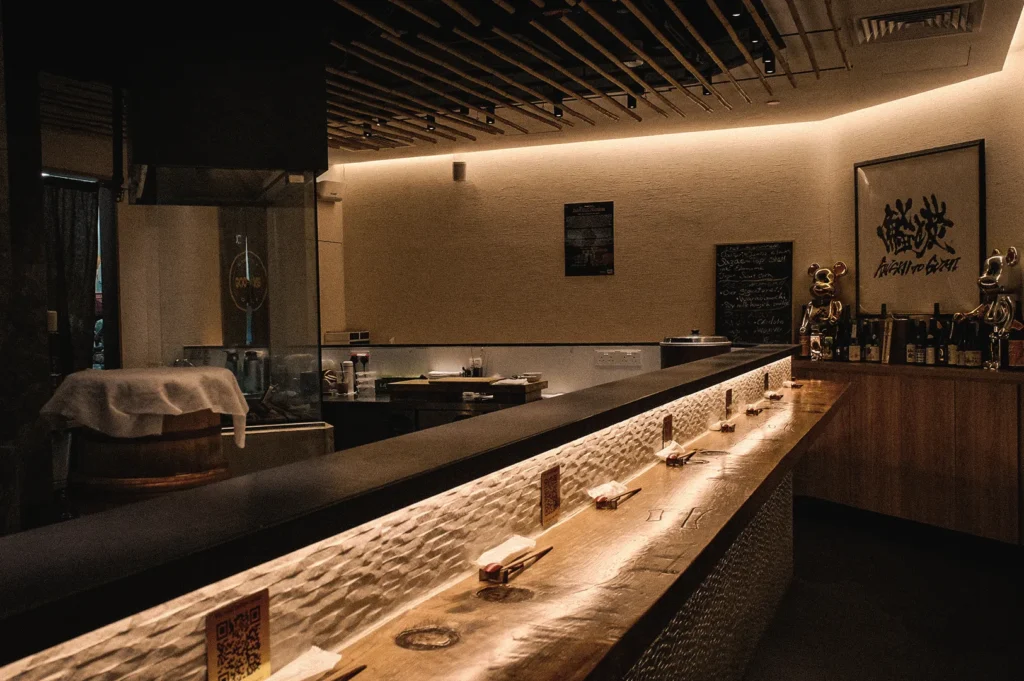
That handling is where a fishmonger-backed bar earns its keep. Sushi to Sumi is standing sushi and charcoal-grilled seafood on Cecil Street, backed by Araya Shoten, a Japanese fishmonger with sourcing lines reaching beyond Tokyo’s Toyosu Market up to Hokkaido. Because the chain from market to counter runs in hours, the chef (not the clock) sets each fish’s serving temperature, cut and thickness. If you’re curious, ask the chef about how tuna cuts progress through a meal, from lean akami to the fattier cuts, read in sequence across a lunch.
The menu changes with what’s running each day, and lunch takes 30–45 minutes at around $108. It’s genuinely built for quality sushi for lunch in Singapore’s CBD; a standing bar at 20 Cecil St, PLUS Building #02-01, where you eat well and get back to your afternoon.
Nigiri Sushi Questions, Answered
Is nigiri always raw fish? No. Nigiri means hand-pressed, not raw. Ebi, unagi, tamago and aburi pieces are all standard nigiri, and what makes it sushi is the vinegared rice, not the topping.
Do you eat nigiri with your hands or chopsticks? Either. Hands are traditional and completely acceptable, chopsticks work fine, and no one at the counter will judge you for picking one over the other.
Is nigiri supposed to be eaten in one bite? Yes. Modern pieces are sized for a single bite, and eating it that way (fish-side down, soon after it’s served) keeps the rice and fish in the balance the chef intended.
If you’d rather taste the difference than read about it, we’re at 20 Cecil St, one floor up. Book a spot at the bar.