
By the time a plate of Edomae sushi reaches the counter, the fish may have already spent hours, sometimes days, being prepared for that one bite. That is the part many people miss. Traditional sushi was never simply about cutting the freshest fish and placing it on rice.
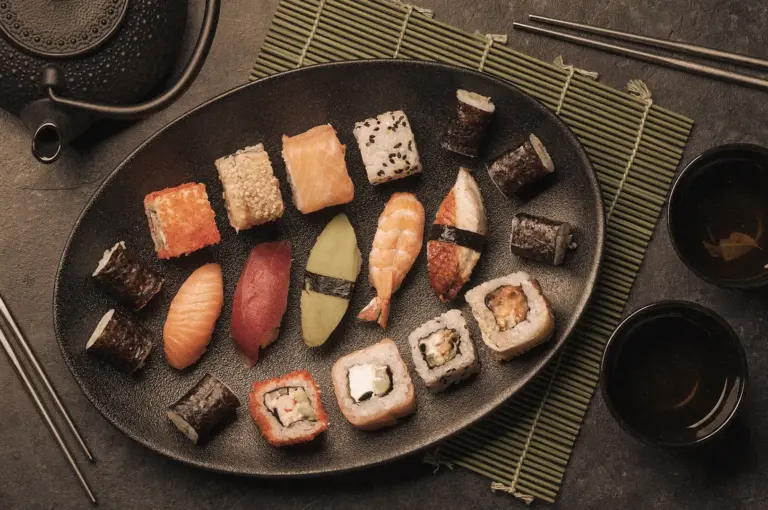
Edomae sushi is the Tokyo style built around hand-formed nigiri, warm seasoned rice, and fish treated with careful preparation before serving. The word “Edomae” means “in front of Edo”, referring originally to the waters in front of Edo Castle, now Tokyo Bay, where seafood was once caught. Today, it also means the Edo-style sushi tradition: a way of handling fish, not just where it came from.
The idea behind Edomae is simple. The chef does not just receive the fish. The chef reads it, then decides what it needs.
The Origins of Edomae Sushi in Edo-Period Tokyo
Edomae sushi history begins in the early 1800s, when Edo was a crowded, fast-moving city and sushi was closer to street food than a formal dining experience. Vendors sold it from yatai, small street stalls where customers ate standing up, usually in a few bites before moving on.
Nigiri changed everything. Hanaya Yohei (1799–1858) is widely credited with inventing nigiri sushi around 1824 at his stall in the Ryogoku district of Edo. Instead of waiting months for fermented fish, he pressed vinegared rice by hand and topped it with prepared seafood. It was ready in minutes.
If you want to understand the form itself first, start with our guide to nigiri sushi.
Before nigiri, sushi meant preservation. Narezushi used fish packed in fermented rice for months. Later came hayazushi, or “fast sushi”, which used vinegar to create a quicker version. Nigiri removed fermentation entirely.
The original pieces were not the small, refined bites many people know today. Edomae nigiri was roughly two to three times larger, with sharper seasoning from more vinegar and salt and less sugar. It was designed to fill someone up during a working day.
The Craft Behind the Counter: How Edomae Chefs Prepare Fish (Zuke, Shime, Ni, Yaki)
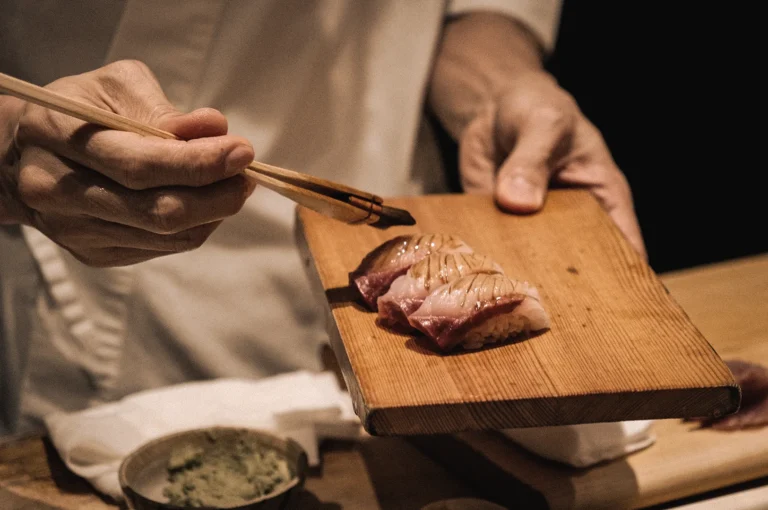
Before refrigeration, Edo chefs had a problem: fish arrived fresh, but not always at its best immediately. Their answer was shigoto, the preparation work that transformed seafood through curing, marinating, simmering and ageing.
These techniques were not just about preservation. They changed the fish.
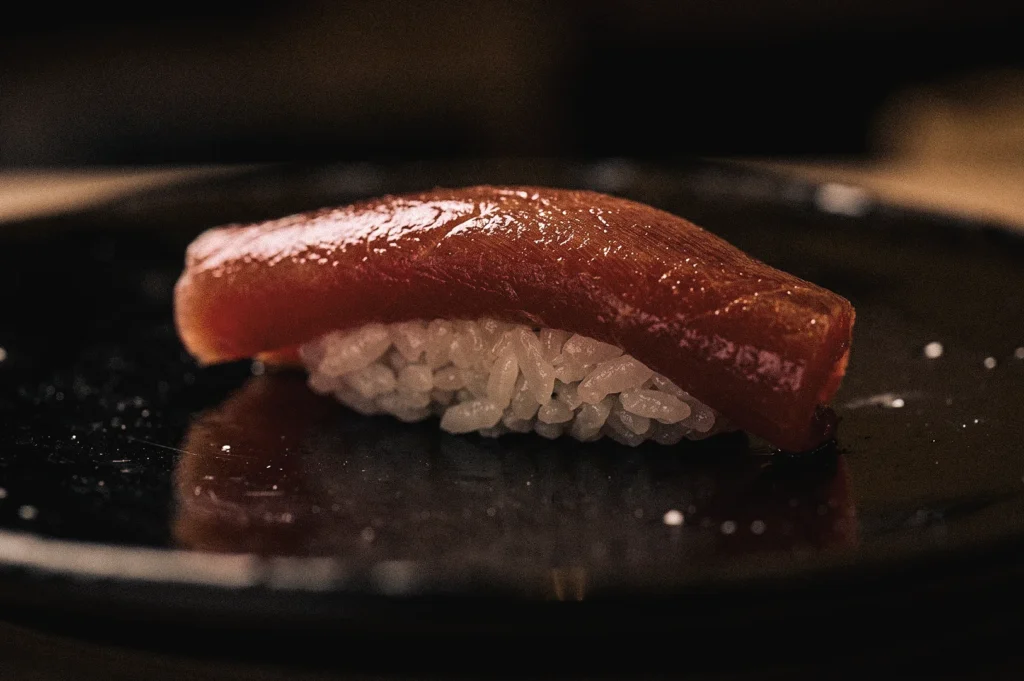
Zuke, meaning marinating, is most famously used for lean tuna. Akami, the lean part of the tuna, is often soaked briefly in soy to deepen its flavour.
Shime, or shime-jime, means curing with salt and vinegar. Kohada and saba are classic examples. The salt firms the fish, while the vinegar balances the flavour and brings out its character.
Ni means simmering. Anago, the saltwater conger eel, is gently cooked until tender, then finished with tsume, a sweet-savoury glaze made by reducing the cooking liquid with soy, mirin and sugar.
Yaki and aburi refer to grilling and flame-searing. The outside gets heat, but the aim is not to hide the fish. It is to sharpen what is already there.
This is where a fishmonger’s eye matters. Araya Shoten selects fish at source, with sourcing lines beyond Tokyo’s Toyosu Market to Hokkaido, so preparation starts with understanding the individual fish. Kohada’s salt cure and vinegar soak depend on its size and fat. A small shinko may need only a fraction of the time of a full-grown kohada. Read the fish, then choose the technique.
Classic Edomae Sushi Toppings to Know
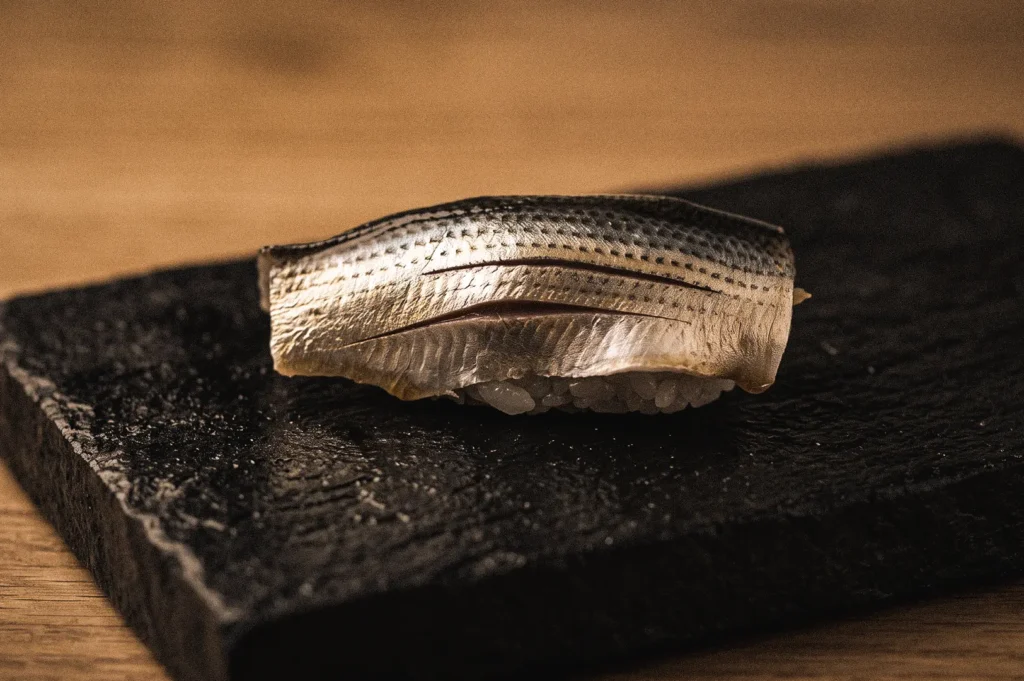
The best way to understand Edomae sushi toppings is to look at the work behind each one.
Kohada, or gizzard shad, is the classic test of a sushi chef’s skill. It is cured with salt, then marinated in rice vinegar. The timing changes with every fish because size and fat matter. Young shinko, the early-summer version of kohada, is especially prized; one nigiri may need four or five tiny fillets.
Kohada is also unusual because it loses value as it grows. It is a shusse-uo, or “promotion fish”, where the name changes through its life. Shinko becomes kohada, then nakasumi, and finally konoshiro, which is more commonly grilled or used in home cooking.
Anago takes the opposite route. It is never served raw. The eel is simmered in soy, mirin, sake and sugar until soft, then often briefly grilled and brushed with tsume. Many traditional shops keep replenishing the same sauce for years because the glaze carries the memory of the kitchen.
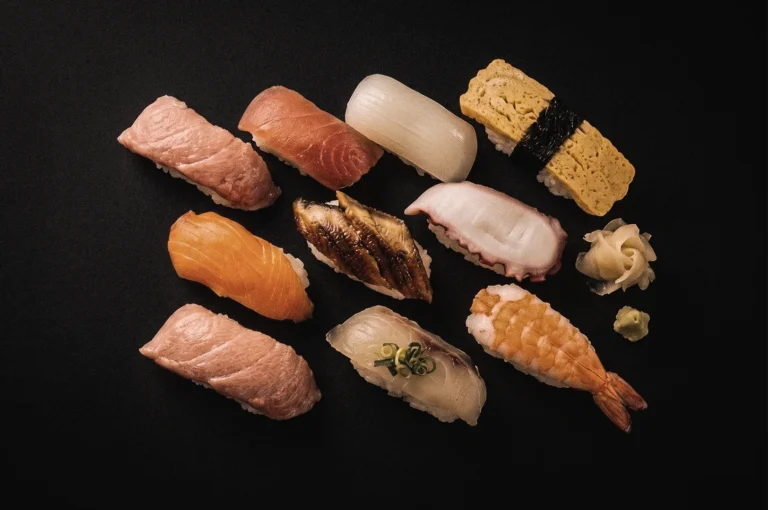
Other classic Edomae toppings include kuruma ebi, boiled carefully and chilled; maguro served as zuke; ni-hamaguri, simmered clam; saba; aji; and tamago.
One detail surprises many diners: toro was not always the prized cut. In the Edo period, fatty tuna was difficult to preserve and was often discarded. Akami was the valued portion.
Edomae Sushi vs Kansai Sushi: How Japan’s Two Great Sushi Traditions Differ
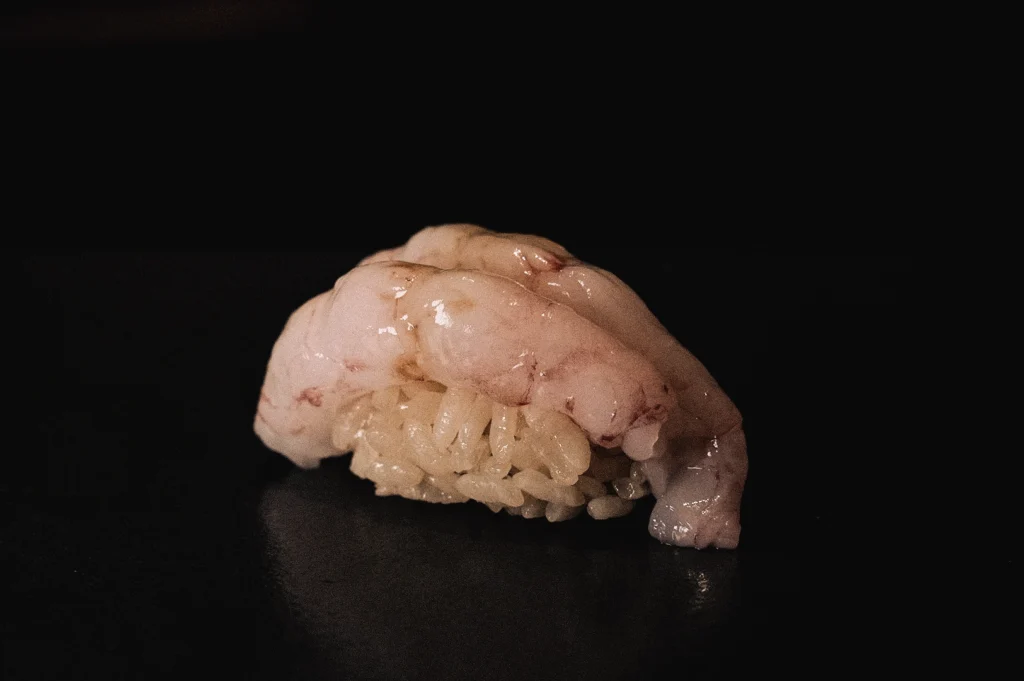
Edomae vs omakase is a common point of confusion, but they describe different things. Edomae refers to the sushi style and preparation methods. Omakase refers to leaving the selection to the chef.
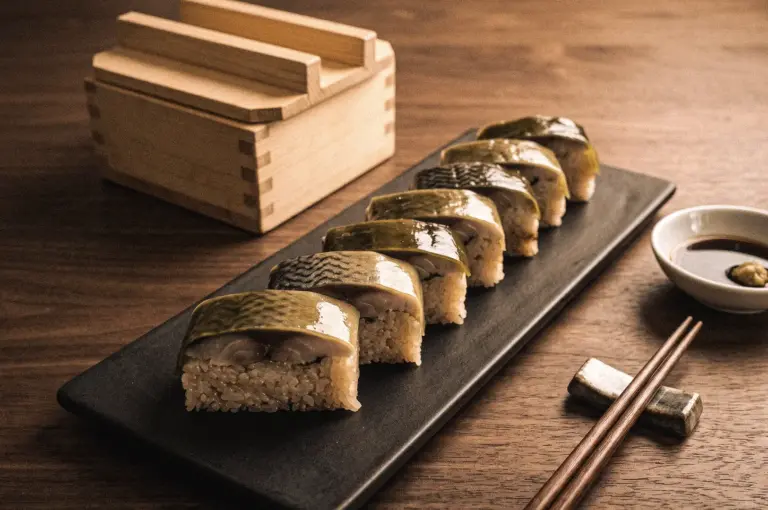
Japan’s other great sushi tradition developed in Kansai, around Osaka and the former Kamigata region. While Edomae is built around hand-formed nigiri, Kansai traditions favour pressed and moulded sushi.
Oshizushi, or box-pressed sushi, is the best-known example. Battera, mackerel pressed sushi topped with pickled kelp, is another. The name comes from the Portuguese word bateira, meaning “small boat”. Kansai sushi traditionally uses sweeter rice and seafood from the Seto Inland Sea.
A Meiji-era saying captured the difference neatly: “Edo’s nigiri, Kamigata’s box sushi.”
Edomae became the image many people now associate with traditional sushi: warm rice, hand-formed pieces, and fish prepared by the chef before it reaches the plate.
How to Eat Edomae Sushi (and What to Expect at a Standing Sushi Bar)
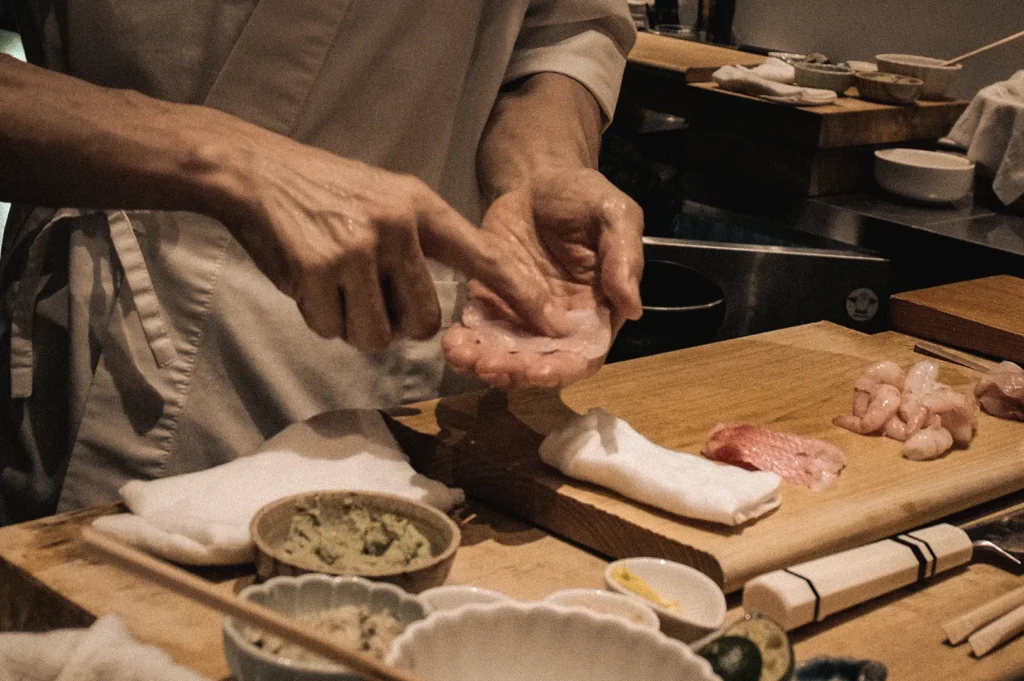
Edomae sushi was born standing up. Edo workers did not sit through long meals. They stopped at a stall, ate a few pieces, and carried on.
That logic still works today. A standing sushi bar keeps the focus on the counter, the chef and the fish. The format removes the distance between preparation and eating.
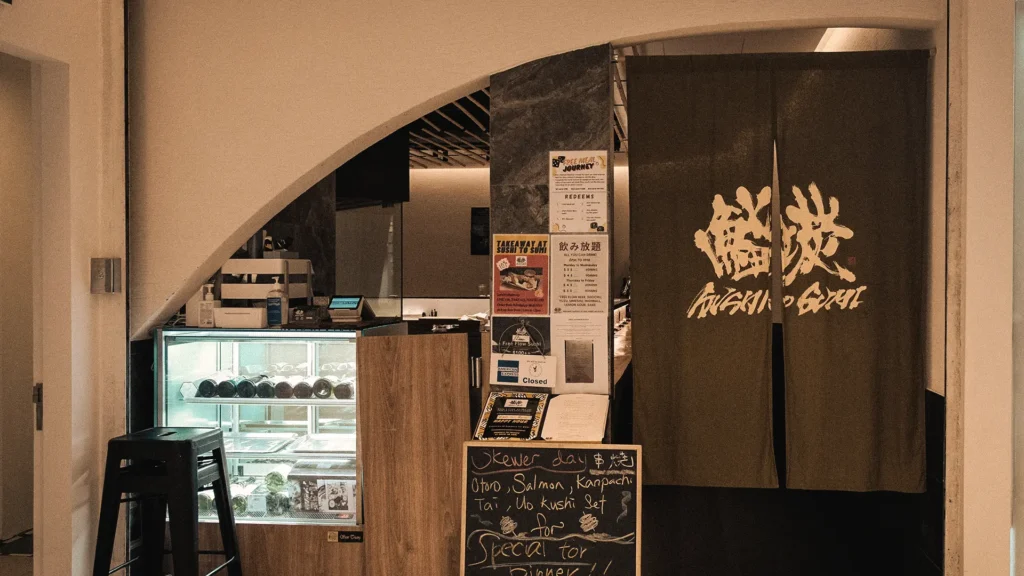
At Sushi to Sumi, that means a standing sushi bar in Raffles Place where the fish comes from a fishmonger-backed operation. The menu changes with the season, with seafood selected around availability rather than a fixed list that never moves.
You can learn more about the tradition behind the format in why there are no chairs.
The counter experience is straightforward. Watch the preparation, eat the piece while it is at its best, and move on to the next one. No ceremony needed.
The same idea carries through at our sushi counter in Singapore: Edomae technique, seasonal fish and charcoal-grilled seafood, served in the centre of Raffles Place. Lunch takes 30–45 minutes, because good sushi does not need to take all evening.
Edomae Sushi FAQs
Is edomae sushi always raw fish? No. That is one of the biggest misconceptions. Edomae sushi was built around prepared fish. Curing, marinating, simmering and ageing were essential parts of the tradition. Some toppings are raw, but many of the classics are changed by the chef before serving. The idea that traditional sushi means untouched raw fish is a modern assumption. Preparation is where much of the flavour comes from.
Does edomae mean the fish comes from Tokyo Bay? Originally, yes. The word referred to seafood caught in the waters in front of Edo. Today, Edomae describes the style and techniques. The fish can come from the best waters across Japan. What matters is how the chef handles it.
Is Edomae sushi the same as omakase? No. They often appear together, but they mean different things. Edomae describes the sushi itself: hand-formed nigiri, seasoned rice and prepared toppings. Omakase describes the dining format, where the chef chooses what to serve. That is why an omakase counter can be Edomae-style, but the two words are not interchangeable.
Edomae sushi started as quick street food, but the principles remain the same: understand the fish, prepare it properly, and serve it at the right moment. If you’d rather taste the difference than read about it, we’re at 20 Cecil St, one floor up. Book a spot at the bar.